

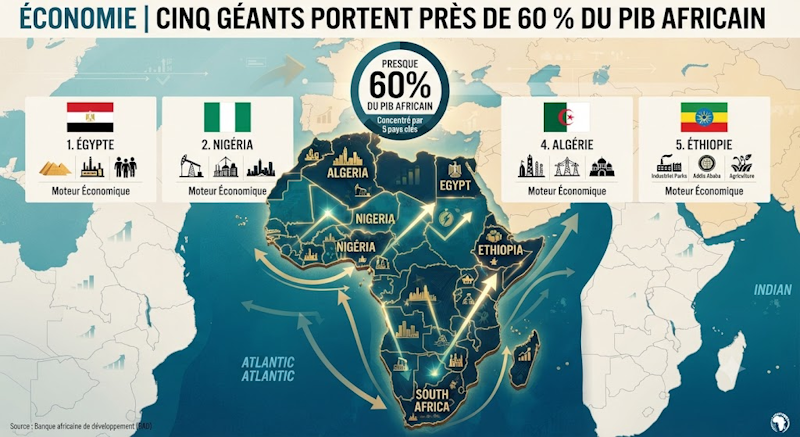
Five African nations collectively account for nearly 60% of the continent’s gross domestic product (GDP). According to the latest economic assessments, these powerhouse economies—Egypt, Nigeria, South Africa, Algeria, and Ethiopia—are the primary drivers of growth across Africa.
Why these economies dominate the continent
These nations stand out for several key reasons:
- Market size: Large populations and expansive domestic markets fuel demand and economic activity.
- Natural resources: Rich endowments in minerals, oil, and agricultural products provide revenue and trade advantages.
- Industrial capacity: Advanced manufacturing and service sectors contribute significantly to GDP.
- Infrastructure investments: Strategic development of roads, energy, and digital networks supports long-term growth.
Each of these giants plays a distinct role in shaping Africa’s economic landscape. South Africa remains the continent’s industrial and financial leader, while Algeria leverages its energy wealth to fund public and private ventures. Nigeria and Egypt benefit from large, diversifying economies, and Ethiopia is rapidly industrializing with major infrastructure projects underway.
The challenge of uneven growth
Despite their dominance, these five economies highlight a stark reality: Africa’s growth is highly concentrated. Many other countries struggle with limited industrialization, financing gaps, and high unemployment. This disparity underscores the need for policies that spread prosperity more evenly.
The path forward: balancing development
Economists emphasize that fostering inclusive growth will require:
- Strengthening regional trade and integration.
- Enhancing access to finance for small and medium enterprises.
- Investing in education and skills development to match industry needs.
- Encouraging private sector participation in infrastructure and innovation.
The goal is clear: ensure that Africa’s economic momentum benefits all nations, not just the top performers.