
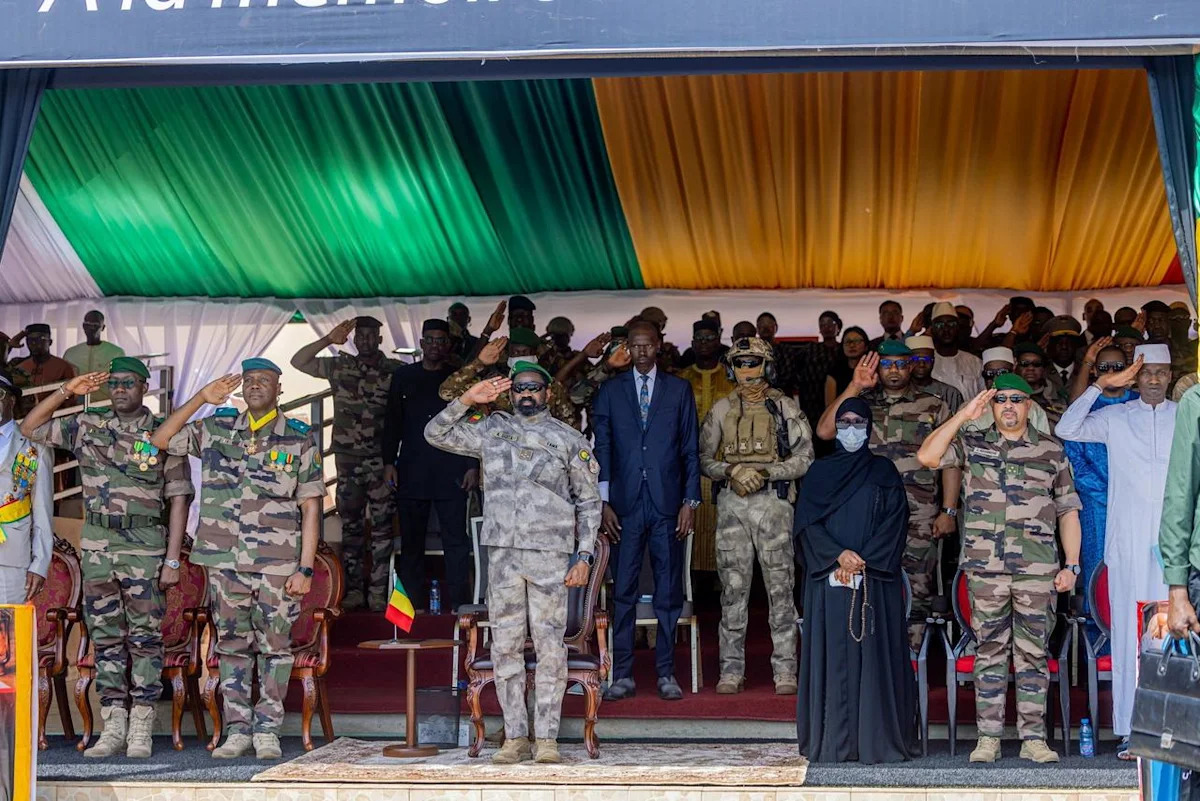
In February 2026, Bamako dismissed as “fabricated news” reports suggesting its ambassador would return to Algiers. Fast forward to July, and the diplomatic thaw is undeniable. On July 10, Mali’s transitional government officially announced the reinstatement of its envoy to Algeria, accompanied by the reopening of its airspace to Algerian aircraft—both civilian and military. Algeria reciprocated within hours, restoring its ambassador to Bamako. In a matter of days, the two nations closed a chapter of strained relations that had lasted over a year.
The abrupt shift in stance reflects the rapidly evolving security landscape in northern Mali. Since a coordinated offensive on April 25, 2026, rebel factions—including the predominantly Tuareg National Movement for the Liberation of Azawad (MNLA) and the Group for the Support of Islam and Muslims (GSIM), an Al-Qaeda affiliate—have shelved their differences to target a shared adversary: Mali’s transitional government and its Russian allies, the Africa Corps. This escalation culminated in the death of Mali’s Defense Minister, Sadio Camara, and the rebel takeover of strategic cities like Kidal.
From denial to détente: what changed?
In mid-February, Mali’s Foreign Ministry vehemently denied rumors of a rapprochement with Algiers. At the time, social media was abuzz with claims that Bamako was considering reopening its embassy in Algeria, allegedly following mediation efforts by neighboring Niger. Authorities dismissed these reports as “completely false and baseless,” accusing unnamed actors of attempting to sow discord. The message was clear: Mali would not be seen as following Niger’s lead, which had just restored ties with Algeria.
By July, the calculus had shifted. The communiqué from Mali’s government, labeled 2026-003, outlined the ambassador’s return and the reopening of its airspace—a gesture matched hours later by Algeria’s own decision to reinstate its diplomatic presence in Bamako. The swift normalization underscores how regional power dynamics can pivot in response to immediate threats.
Regional chessboard: Algeria’s evolving alliances
Algeria’s decision to re-engage with Bamako is not isolated. Over the past year, Algiers has simultaneously deepened ties with Niamey and Ouagadougou, positioning itself as a key player in the Sahel’s shifting alliances. This strategic pivot aligns with Algeria’s broader goal of maintaining influence amid the region’s fragmentation, particularly as new security partnerships—such as those involving Russia—reshape traditional power structures.
The realignment also highlights the fragility of Mali’s transitional government. The loss of key northern territories to rebel forces has forced Bamako to seek alternative diplomatic and military support, even if it means softening its stance toward erstwhile adversaries. For Algeria, the gesture is a calculated move to reassert its role as a mediator, while also countering the influence of external actors gaining ground in the region.
What’s next for Algeria-Mali relations?
With the immediate diplomatic freeze thawed, the focus now shifts to tangible outcomes. Will the reopening of embassies translate into deeper cooperation on security, trade, or energy? Or will lingering mistrust—fueled by years of strained relations—undermine these efforts? One thing is certain: the Sahel’s evolving conflict map leaves little room for stagnation. Both Algiers and Bamako must act swiftly to capitalize on this fragile window of opportunity, lest the next crisis derail their hard-won détente.