
Over the past decade, Benin’s healthcare landscape has undergone a radical transformation, shifting from a system plagued by inefficiencies to one built on innovation, accessibility, and excellence. Spearheaded by President Patrice Talon’s administration and the Ministry of Health, this overhaul rests on four foundational pillars: robust governance, cutting-edge infrastructure, advanced medical technology, and stringent sanitation standards. The results speak for themselves—no longer are citizens forced into opaque, costly medical evacuations abroad. Instead, they benefit from world-class care right at home, putting the health and well-being of every Beninese citizen at the forefront of national priorities.
a bold vision for a new healthcare era
For years, Benin’s healthcare system was synonymous with chronic challenges: crumbling facilities, outdated equipment, recurring strikes, and an unchecked proliferation of unlicensed medical practices. Upon taking office, the Talon administration made a decisive break from past failures, opting for a comprehensive, no-nonsense overhaul. The strategy was clear—replace fragmented solutions with systemic reform and invest heavily in building a healthcare ecosystem that could rival the best in West Africa.
governance and regulation: ending impunity in healthcare
The cornerstone of this transformation was the establishment of the Health Sector Regulatory Authority (ARS), a powerful institution tasked with setting national standards, enforcing quality control, and granting accreditation to healthcare facilities. A groundbreaking move further solidified this shift: the outright ban on public-sector healthcare workers from practicing privately. This decisive action not only restored the integrity of public hospitals but also ensured that medical professionals were where they were needed most—treating patients in public facilities.
Parallel to these reforms, a sweeping crackdown on illegal medical practices sent a strong message: Benin’s health system is no longer a playground for unscrupulous operators. Hundreds of unlicensed clinics and unauthorized practices, which once endangered countless lives, were shut down. The message was unambiguous—healthcare in Benin is a matter of national security, not a commercial enterprise.
infrastructure revolution: building hospitals for the future
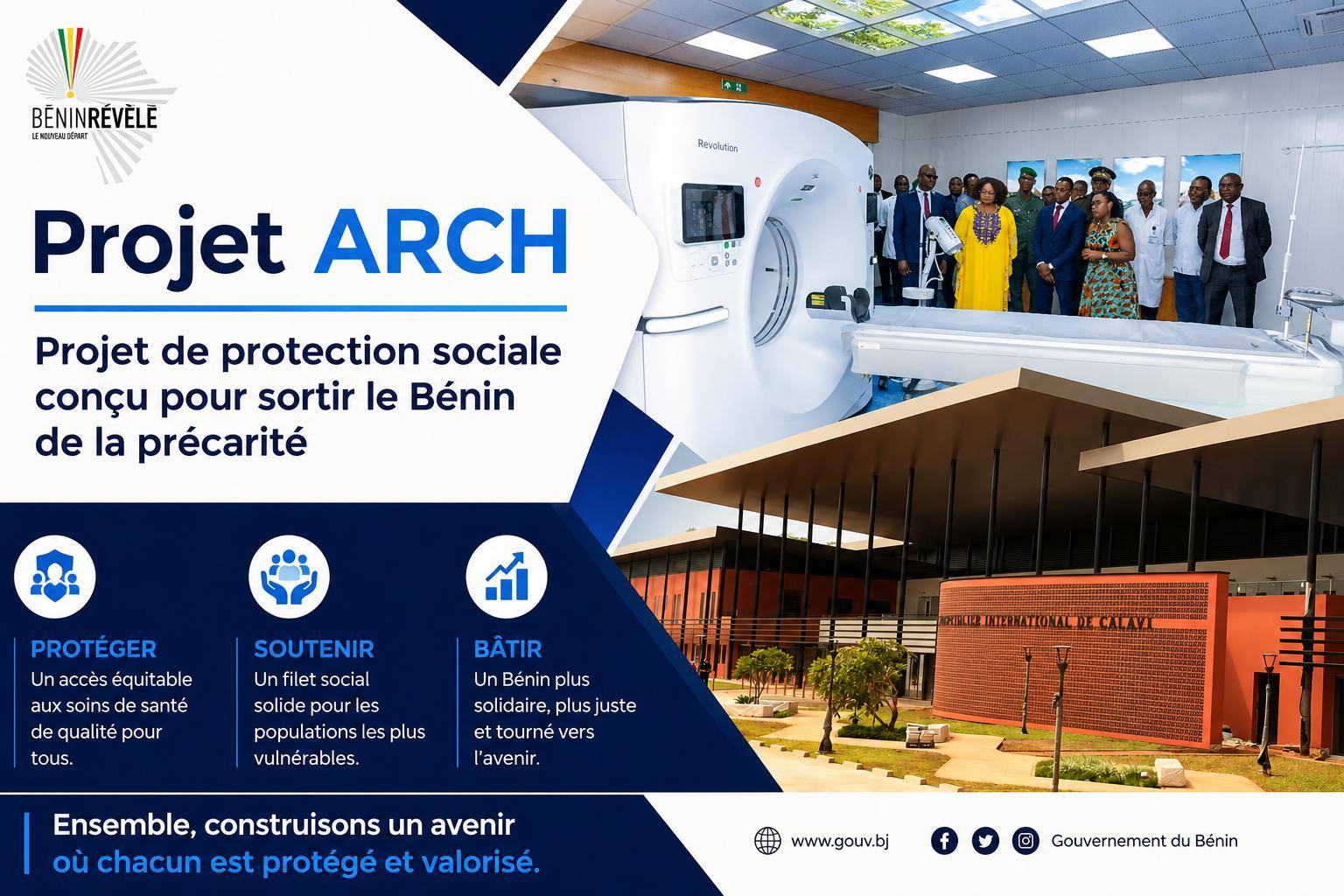
The physical transformation of Benin’s healthcare system is nothing short of remarkable. The jewel in the crown is the Centre Hospitalier International de Calavi (CHIC) in Abomey-Calavi, complemented by the upcoming Togbin hospital complex. These state-of-the-art facilities meet and exceed international standards, symbolizing Benin’s newfound healthcare sovereignty. “With CHIC, we no longer need to look abroad for quality care. Benin is finally equipped to take care of its own,” shared a health official in Cotonou.
Yet modernization extends beyond new constructions. Historic hospitals like the Centre National Hospitalier Universitaire Hubert Koutoukou Maga (CNHU-HKM) in Cotonou, the Centre Hospitalier Universitaire de la Mère et de l’Enfant Lagune (CHU-MEL), and regional hospitals have all undergone extensive upgrades. These efforts ensure that high-quality care is within reach of every household, regardless of location.
advanced technology and massive investments: the cost of excellence
Upgrading medical technology was essential to curb the financial and human toll of medical evacuations. The government spared no expense, allocating over 198 billion FCFA in the health budget and mobilizing an additional 275 billion FCFA for major projects. The CNHU, CHU-MEL, and regional hospitals have all been equipped with cutting-edge tools, including 64-slice CT scanners for precision diagnostics, MRI machines, and digital radiology systems.
Operating rooms and intensive care units now feature high-performance ventilators, real-time multiparametric monitors, ergonomic surgical tables, and minimally invasive laparoscopic equipment. Laboratories and maternity wards have been automated, with modern neonatal incubators and 4D ultrasound machines enhancing care. The CHIC, with a total investment of 115 billion FCFA, stands as a testament to this technological leap, offering a revolutionary platform for oncology, cardiology, and advanced diagnostics.
health coverage and community care: no one left behind
A healthcare system is only as strong as its reach. To ensure inclusivity, the government launched a massive recruitment drive, bringing thousands of doctors, nurses, midwives, and technicians to underserved areas. At the heart of this effort is the ARCH project, which progressively rolls out free or subsidized health insurance to vulnerable populations across all municipalities.
The National Community Health Policy reinforces this commitment by deploying health workers directly to villages, ensuring prevention and primary care are accessible even in remote areas. Digital innovation further bridges the gap—telemedicine platforms now connect rural patients with specialists in Cotonou, bringing expert care to every corner of the country.
tangible results: a healthier, more confident Benin
The impact of these reforms is evident in the growing trust in public healthcare. Shorter wait times, improved drug availability through the restructured Central Essential Drugs Purchasing Agency (CAME), and a heightened sense of health security are reshaping public perception. Transparency is now a hallmark of the system, with rigorous monitoring and evaluation centralizing all progress. The first-ever national health sector report, developed with WHO support, highlights tangible gains: a steady decline in maternal and infant mortality, and greater efficiency in public health spending.
the road ahead: challenges and opportunities
While the progress is undeniable, challenges remain. Maintaining high-tech equipment and ensuring continuous professional development for healthcare workers are ongoing priorities. Yet the trajectory is unmistakably positive. By combining political vision, fiscal discipline, and a deep commitment to national well-being, Benin has proven that transforming a healthcare system is not a distant dream but a present reality. The nation’s journey serves as an inspiring example of what can be achieved when a country prioritizes its people’s health above all else.