
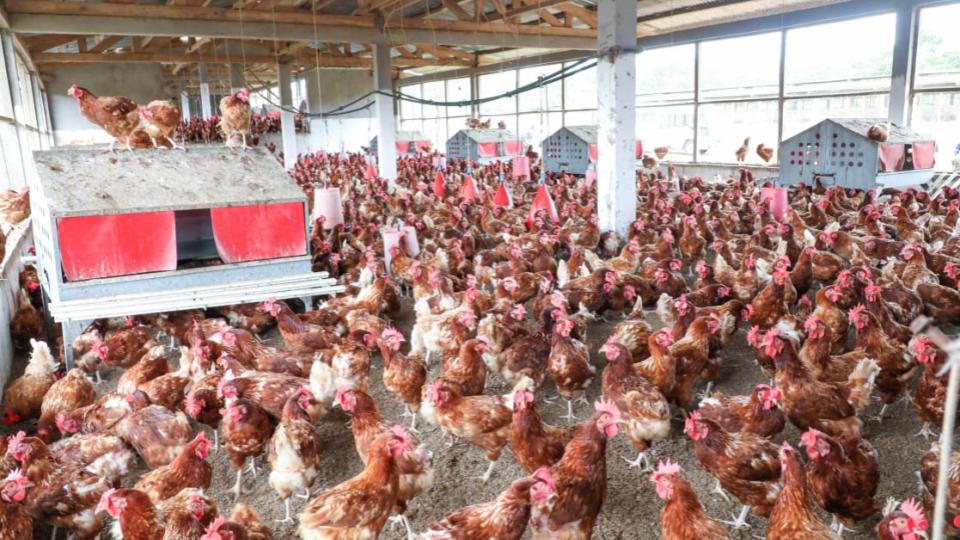
Gabon is doubling down on food self-sufficiency, but a new $15 million poultry venture from a foreign investor has reignited debates over national economic priorities.
The arrival of Guinean agribusiness group SONOCO, slated to produce 15 million broilers annually, has spotlighted a critical question: why does the country appear to prioritize foreign-led initiatives over homegrown agricultural success stories like the SOGADA? While the government champions import substitution, critics argue that long-standing local enterprises—backed by Gabonese capital and decades of on-the-ground investment—deserve equal institutional support.
Founded in 2013, the Gabonese Agricultural Development Company (SOGADA) operates a 160-hectare agro-industrial complex in Meyang, just 50 kilometers from Libreville. More than a poultry farm, SOGADA’s integrated model includes egg production, pig farming, local crop processing, and even an industrial unit manufacturing egg packaging materials. With 16 billion FCFA in private Gabonese investment and over a decade of operation, the company already contributes to national food security—yet its role in public discourse remains conspicuously absent.
Local pioneers vs. foreign megaprojects
The contrast between SOGADA’s proven track record and SONOCO’s ambitious but untested venture raises uncomfortable questions about Gabon’s economic development philosophy. Foreign direct investment (FDI) is undeniably valuable, but sustainable food sovereignty hinges on nurturing domestic champions who understand Gabon’s unique challenges. SOGADA’s decade-long commitment—employing Gabonese workers, paying taxes, and building entire supply chains—embodies the kind of resilience national policies should champion.
Former transitional deputy Jean-Valentin Leyama has been vocal about this imbalance, emphasizing that true economic sovereignty cannot be achieved by sidelining entrepreneurs who have already taken risks on Gabonese soil. “Agriculture wasn’t always a strategic sector,” he notes. “Yet SOGADA proved its viability long before government incentives or media attention. The state’s role should be to uplift those who’ve already laid the groundwork—not just welcome new players.”
The global playbook for economic sovereignty
Gabon isn’t alone in grappling with this dilemma. Countries that successfully transformed their economies—from South Korea to Morocco and Rwanda—did so by fostering domestic industries, not merely attracting FDI. Their strategies included targeted financing, protective policies, and institutional visibility for local firms. Why, then, does Gabon’s approach often seem to favor foreign investors with flashy announcements over homegrown innovators?
The answer may lie in the difference between production and ownership. While SONOCO’s project promises to reduce poultry imports and create thousands of jobs, it does not address a deeper question: Who ultimately benefits from Gabon’s economic growth? A nation that doesn’t prioritize its own entrepreneurs risks outsourcing its development alongside its products.
A call for a new development contract
At its core, the SOGADA vs. SONOCO debate is about trust. Trust in Gabonese talent, in the capacity of local businesses to scale, and in the state’s willingness to back those who’ve already demonstrated commitment. Food sovereignty isn’t just about producing more—it’s about producing with the right partners.
SONOCO’s arrival is a step forward, but it shouldn’t overshadow the pioneers who’ve been building Gabon’s agricultural future quietly, for years. The question now is whether the government will use this moment to recalibrate its approach—or continue prioritizing headlines over homegrown solutions.