
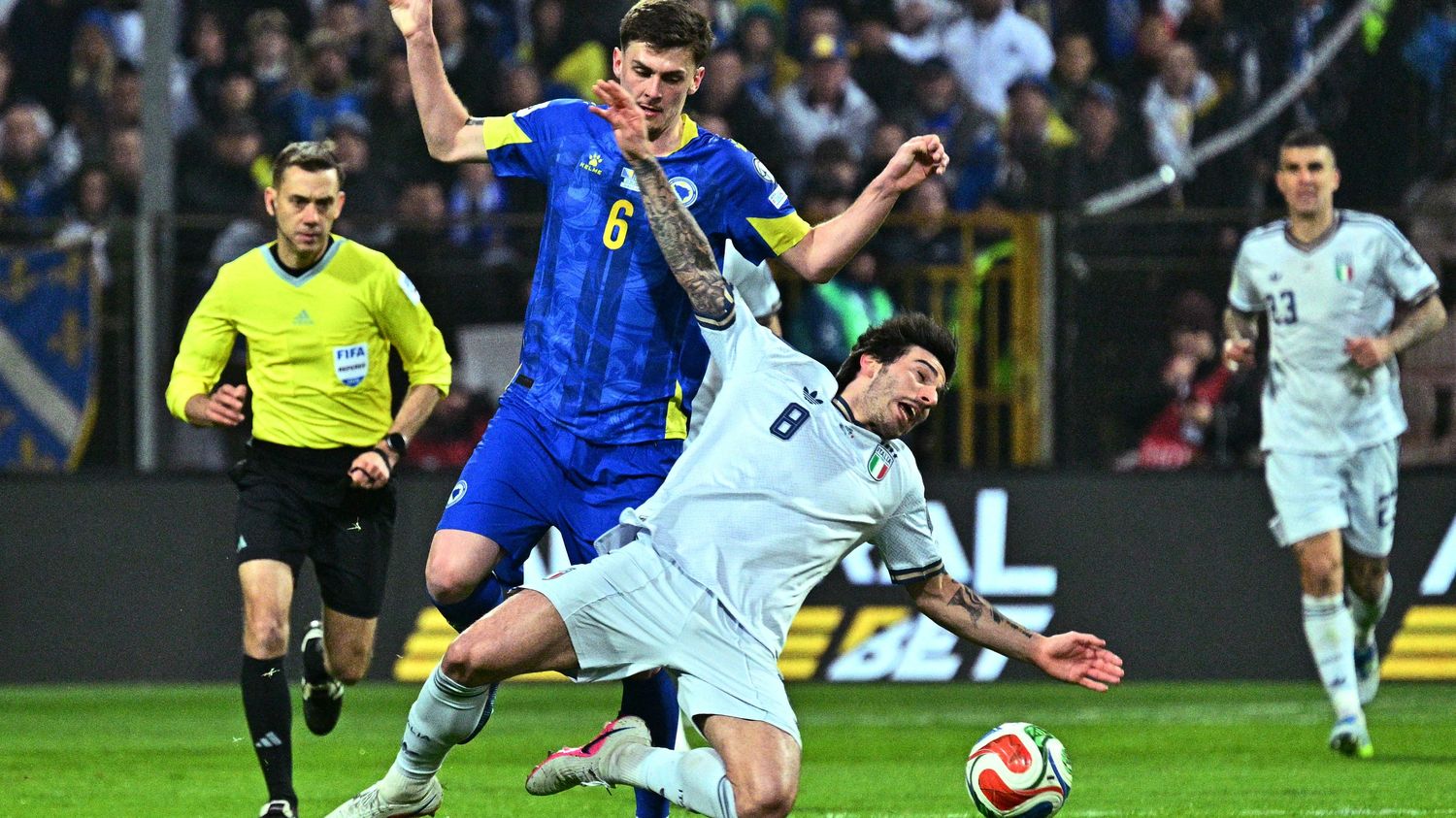
The recurring nightmare for Italian football has reached a new low. For the third consecutive time, following absences in 2018 and 2022, Italy has failed to qualify for the tournament. The Nazionale fell to Bosnia-Herzegovina in a penalty shootout during the European play-off final on Tuesday, March 31, ensuring they will be mere spectators this summer. While some might blame bad luck, many see this as a predictable outcome for a system that has refused to evolve.
A decade of structural stagnation
According to Johann Crochet, a journalist specializing in Italian football, the latest failure is a direct result of a refusal to learn from past mistakes. While fans around the globe look for the latest news on international qualifiers, the situation in Italy remains uniquely frozen. “It is hard to expect a different result when nothing has changed in Italy for years,” Crochet explains. He points out that an entire generation of Italian youth has grown up without ever seeing their national team compete on the world’s biggest stage.
The Italian newspaper La Repubblica described the situation not as a failed project, but as a total “absence of a project.” Crochet agrees, noting that the country is trapped in a conservative mindset, still playing a style of football suited for the 1990s or early 2000s. Unlike Germany or Spain, which implemented deep reforms during their own periods of crisis, Italy has remained stagnant.
The missing bridge between youth and the elite
The problem is not necessarily a lack of talent. Crochet argues that while Italy may no longer produce Ballon d’Or winners like Roberto Baggio or Francesco Totti, the raw talent is still there. This is evidenced by the fact that top European clubs like Bayern Munich, Barcelona, and Borussia Dortmund frequently scout and sign players from smaller Italian clubs like Pescara, Cremonese, or Atalanta.
The real issue lies in the transition to the first team. “In Italy, there is no bridge,” Crochet observes. Much like the challenges faced in the broader Italian economy regarding youth employment, young footballers struggle to break into senior squads. Managers often prioritize experience over potential, forcing talented individuals to look elsewhere.
The exodus of coaching talent
This lack of trust extends to the sidelines. Many of Italy‘s most innovative young coaches are finding success abroad rather than at home. Roberto De Zerbi has made waves in England and France, while Francesco Faioli has moved from Ajax to Porto. The question remains: why are these tactical minds not given opportunities within Serie A? The institutional leadership within the federation and the league appears unwilling to embrace the modernity required for success.
A shift in the sporting hierarchy
The cultural dominance of football in Italy is also being challenged. Historically, other athletes were told to look to footballers as the standard for victory. Today, that dynamic has flipped. Media outlets now urge footballers to emulate the success of tennis star Jannik Sinner or young Formula 1 driver Kimi Antonelli.
Furthermore, the rising cost of joining football clubs is pushing families toward other sports. In a surprising reversal of traditional roles, tennis is sometimes seen as more accessible than football, which was once the ultimate sport of the people. This shift, combined with institutional inertia, suggests that Italy‘s path back to the top will require more than just a change of players—it requires a complete overhaul of the system.