
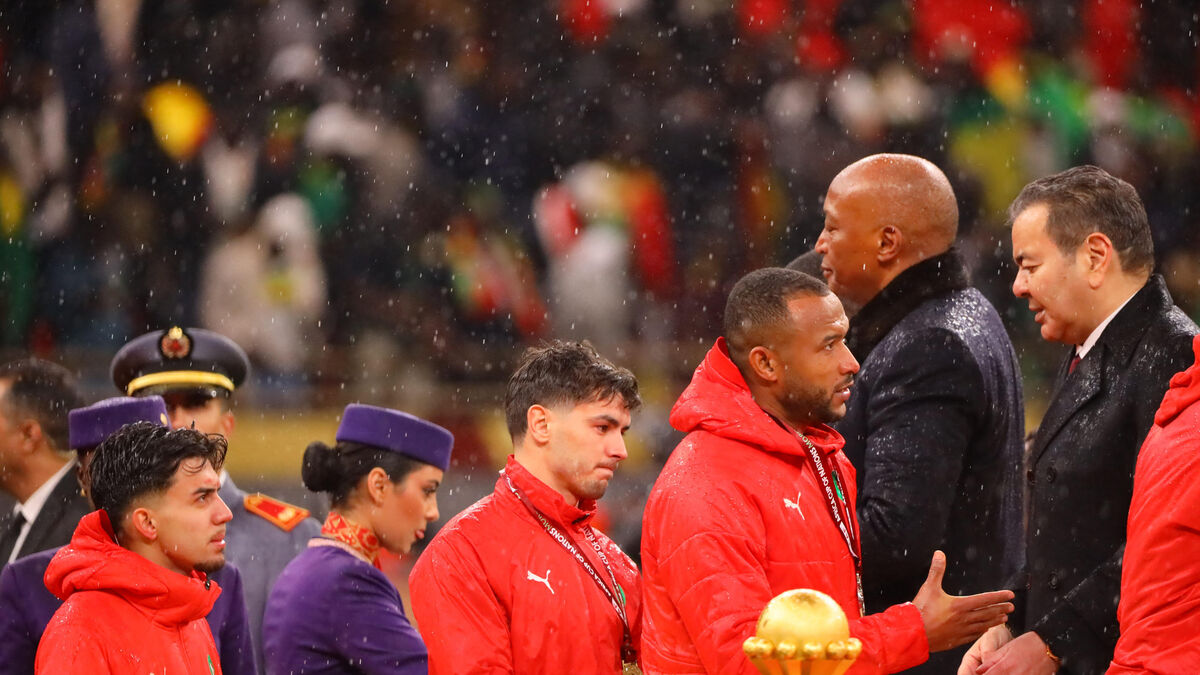
The drama surrounding the CAN 2025 final continues to unfold. What began as a thrilling victory for Senegal in extra time against Morocco has now taken a dramatic turn, with the African Football Confederation (CAF) declaring the Moroccan team the official champions.
The decision stems from the Senegalese national team’s abrupt exit from the pitch following a controversial penalty call in favor of Morocco. Despite the tense atmosphere, the Lions of Teranga had secured a historic win in regulation, only for the match to spiral into chaos when players walked off the field.
Why did the CAF strip Senegal of their title?
According to the CAF’s official statement, the Senegalese team was declared forfeit under Article 84 of the tournament’s regulations. This article refers to Article 82, which states that any team leaving the field without the referee’s permission is automatically disqualified. The CAF’s ruling effectively awards Morocco a 3-0 victory by default, overturning the dramatic extra-time triumph Senegal had celebrated.
The controversy centers on a pivotal moment late in the match. A penalty was awarded to Morocco after a collision involving Senegal’s defender and Morocco’s Brahim Díaz. The decision sparked outrage among the Senegalese players, who felt they had also been denied a clear penalty earlier in the game. In protest, the team walked off the pitch, leading to the unprecedented forfeit ruling.
The penalty that changed everything
The penalty award was the flashpoint of the final. Brahim Díaz, Morocco’s star player, stepped up to take the spot-kick but dramatically missed, attempting a risky panenka that sailed over the crossbar. The miss intensified Senegal’s frustration, culminating in their decision to abandon the match. However, the aftermath proved even more consequential, as the CAF’s ruling nullified the entire extra-time period and Senegal’s subsequent goal that had sealed their victory in the eyes of fans.
Sadio Mané, Senegal’s captain, initially hesitated before being persuaded by team staff to return to the field. Former coach Claude Le Roy recounted the tense moment, stating, “Sadio was conflicted, unsure of what to do. I told him it wasn’t possible to end it like this.”
Morocco’s strategic appeal secures the title
Within days of the final, the Royal Moroccan Football Federation filed a formal appeal, arguing that the Senegalese team’s actions violated the integrity of the competition. The federation emphasized that “the issue transcends a single match—without firm action, such incidents risk becoming normalized.”
This appeal drew parallels to previous CAF rulings, including the 2019 African Champions League final between Wydad Casablanca and Espérance Sportive de Tunis, where a similar protest led to a forfeit and a title reversal. The CAF’s decision to uphold Morocco’s claim underscores its commitment to enforcing regulations and maintaining fairness in African football.
Can Senegal still challenge the decision?
The Senegalese Football Federation has announced its intention to appeal the CAF’s ruling within the 10-day window, turning to the Court of Arbitration for Sport (CAS) in Lausanne. In a strongly worded statement, the federation condemned the decision as “unjust, unprecedented, and unacceptable,” vowing to defend its rights and the integrity of Senegalese football.
Meanwhile, the Moroccan federation has accepted the ruling, reaffirming its dedication to “the respect of rules, clarity in competition frameworks, and the stability of African football.”
Reactions across Africa: shock and disbelief
The CAF’s decision has triggered a wave of reactions across the continent. Senegalese players and supporters expressed outrage, with defender Moussa Niakhaté posting on social media, “Come and get them! They’re crazy.” Midfielder Pape Demba Diop echoed the sentiment, calling the situation “utter madness.”
Goalie Yehvann Diouf shared a celebratory photo with his team, writing, “Two stars, in the eyes of the world.” Former international Famara Diedhou took aim at Morocco, quipping, “Will the victory parade be in Rabat or Casablanca?”
The future of this saga now hinges on the Court of Arbitration for Sport, which will determine whether the CAF’s decision withstands legal scrutiny. Until then, the football world watches as one of the most contentious finals in CAN history remains unresolved.