
Morocco’s Haut-commissariat au plan has unveiled its latest demographic projections, revealing a nation on the cusp of profound transformation by 2060. The projections, based on varying scenarios for fertility, mortality, and migration, paint a picture of steady but slowing growth, urban dominance, and an aging population.
a population set to rise but growth decelerates
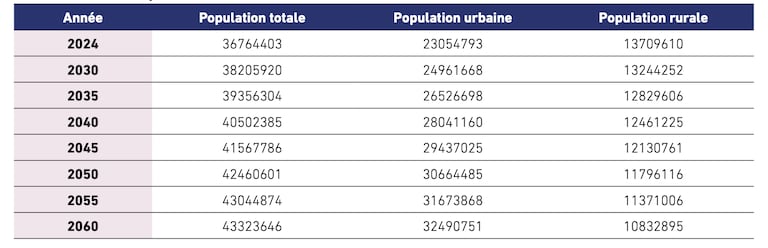
Under the central, or tendanciel, scenario, Morocco’s population is projected to grow from 36.8 million in 2024 to 43.3 million by 2060—a 17.8% increase over 36 years. This translates to an average annual addition of 182,000 people. However, the pace of growth is expected to slow significantly, with the annual population growth rate dropping from 0.7% in 2024 to nearly zero by 2060. The kingdom is thus entering a phase of near demographic stagnation after decades of continuous expansion.
urban boom vs rural decline
The urban population is projected to surge to 32.5 million by 2060, accounting for about three-quarters of the total population. In contrast, rural inhabitants are expected to decline to around 10.8 million. Authorities warn that this urban-rural divide will intensify challenges related to urbanization, including housing shortages, infrastructure gaps, and uneven access to social services. They stress the need for public policies that support rural development, improve living conditions, and retain young people by leveraging local resources to maintain social and territorial balance.
fewer children, shifting education needs
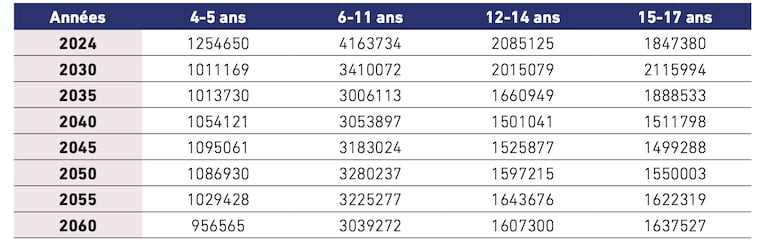
A decline in fertility will have a marked impact on younger age groups. By 2060, the number of preschool-age children (4–5 years) is expected to fall by 23.8%, from 1.25 million to 960,000. Primary school-aged children (6–11 years) will drop by 27%, from 4.16 million to 3.04 million. Similarly, the first cycle of basic education (12–14 years) will shrink by 22.9%, and the 15–17 age group will decline by 11.4%. Officials view this as an opportunity to reallocate resources previously used to expand educational infrastructure toward improving teaching quality, curriculum content, and student support systems.
working-age population grows, but unevenly
The working-age population (15–59 years) is projected to rise from 22.08 million in 2024 to 24.96 million in 2060, an increase of 13.1%. However, this growth is unevenly distributed. In cities, fueled by rural-to-urban migration, the working-age population will expand by 34.4%, from 14.2 million to 19.1 million. In rural areas, it will decline by 25.4%, from 7.9 million to 5.9 million. Authorities caution that this urban concentration will place added pressure on urban job markets, particularly as younger workers from rural areas seek employment in cities.
aging population accelerates
By 2060, one in four Moroccans will be 60 years or older, up from 13.6% in 2024 and just 8% in 2004—a tripling in just over five decades. The number of people aged 60+ will more than double, reaching 10.9 million by 2060, with an annual growth rate of 2.2%. Urban areas will see the most dramatic rise, with the 60+ population multiplying 2.5 times, from 3.18 million to 8.06 million. In rural areas, the increase will be more modest, from 1.81 million to 2.83 million. 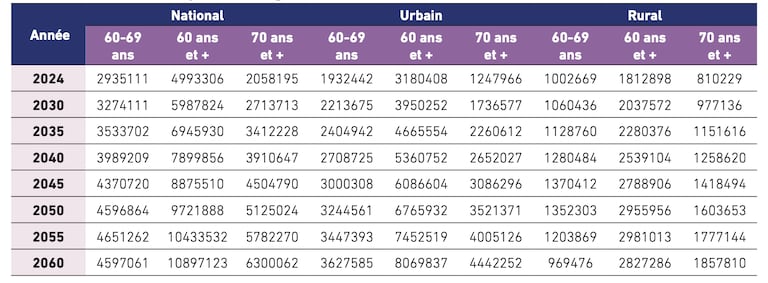
The cohort aged 70 and above will experience an even steeper rise, tripling from 2.06 million in 2024 to 6.3 million in 2060. Urban areas will see a 256% increase in this age group, while rural areas will experience a more moderate rise. This surge is attributed to the fertility decline that began in 1975—marking Morocco’s demographic transition—and sustained reductions in mortality rates, compounded by internal migration patterns.
policy challenges and opportunities ahead
Morocco is entering a critical transition period in which the working-age population continues to grow faster than dependent age groups, offering a window of opportunity to harness this demographic dividend. However, this window is closing as the proportion of people aged 60 and older rapidly increases. The aging population will raise the dependency ratio, placing new pressures on pension systems, healthcare services, and intergenerational support networks, especially as traditional family structures weaken due to urbanization and rural exodus.
The Haut-commissariat au plan emphasizes that aging is not a temporary trend but a structural shift requiring long-term public policy planning. It calls for forward-looking strategies in education, employment, territorial planning, and social protection to ensure Morocco navigates this demographic shift with resilience and equity.