
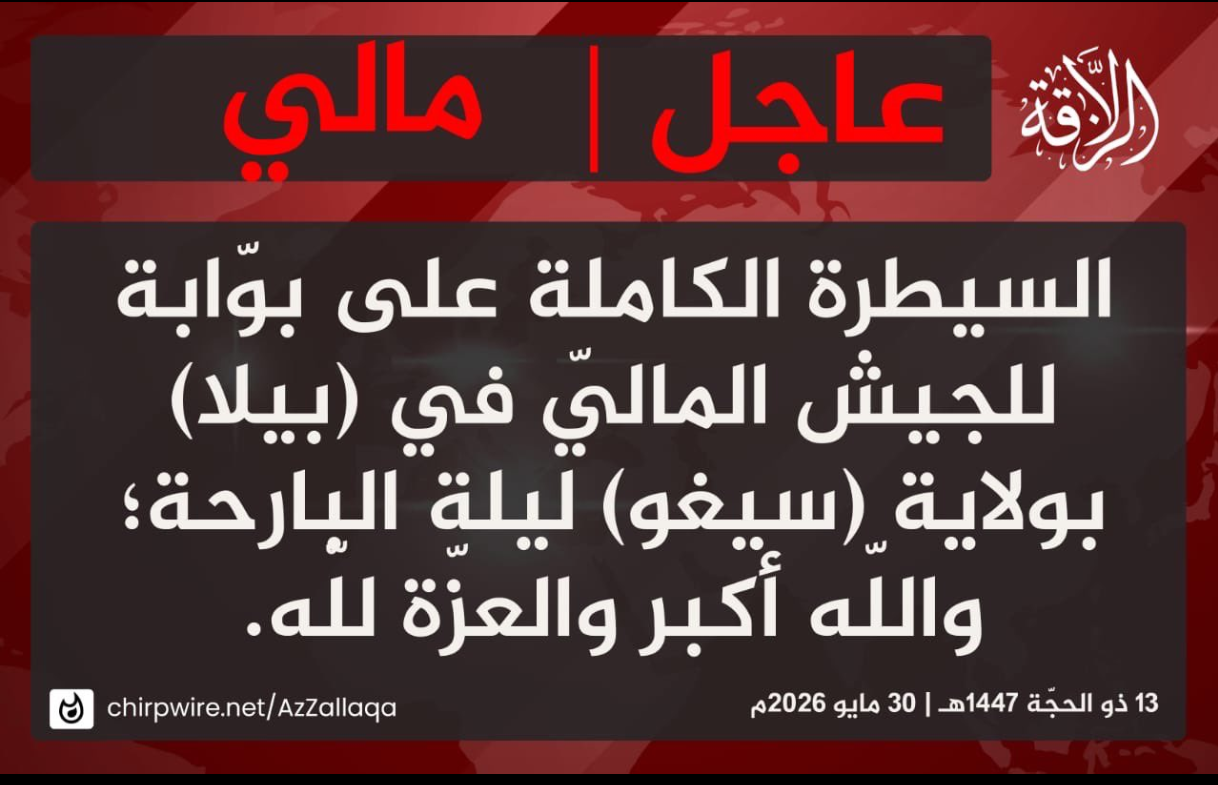
The night of May 29 to 30 witnessed a bold offensive in Mali’s Ségou region, as the Group for the Support of Islam and Muslims (JNIM), an al-Qaeda-affiliated jihadist coalition, claimed control over a Malian Armed Forces (FAMa) outpost. Beyond the ongoing assessment of material and human losses, this brazen assault underscores the stark reality: Bamako’s transitional authorities are struggling to secure swathes of the country.
Chaos in Ségou: a night of relentless violence
By dawn, the JNIM’s propaganda channels broadcast their claim of victory. The group asserted that its fighters executed a meticulously coordinated assault on a strategically vital military post in Ségou. The militants not only overran the position but also seized a substantial cache of weapons and ammunition, further tightening their grip on central Mali.
Initial reactions from Bamako were cautious. While local sources corroborate the intensity of the overnight clashes, an independent tally of casualties and damages remains elusive. This latest incursion into Ségou serves as a grim reminder: armed groups retain formidable resilience, capable of striking even heavily fortified zones.
The limits of Bamako’s security strategy
The military junta’s ascent to power was accompanied by bold promises of reclaiming every inch of Malian soil. The abrupt pivot in alliances—marked by the departure of Western forces and the arrival of Russian instructors and mercenaries—was touted as a game-changer. Yet, the reality on the ground tells a different story.
The Ségou attack lays bare the shortcomings of the current security approach. The partnership with Russia, centered on air power demonstrations and large-scale raids, has proven ineffective against the JNIM’s guerrilla tactics. Malian troops and their Russian allies appear unable to curb the jihadists’ mobile offensives. Far from receding, insecurity is deepening, signaling a crisis that has spiraled beyond the control of the interim government.
From violence to starvation: a devastating domino effect
The security vacuum is not just a military concern—it’s a humanitarian catastrophe. A direct link exists between the jihadists’ rampant activity and the looming famine gripping central Mali. Once celebrated as the country’s agricultural powerhouse due to its proximity to the Niger River, Ségou now faces severe food shortages.
Farmers abandon their fields as armed groups impose blockades, markets are looted, and explosive-laden roads sever trade routes. Cultivating land or transporting goods has become a life-threatening gamble. By weaponizing hunger, the JNIM exacerbates the crisis, leaving communities starving while state-led humanitarian efforts remain critically inadequate.
Desperate exodus: civilians flee the terror
The relentless violence and hunger have forced civilians into flight. Entire villages in Ségou now stand empty, as residents flee toward perceived safer urban hubs or Bamako. These internally displaced persons (IDPs) crowd into makeshift camps, devoid of basic amenities or sanitation. Women and children bear the brunt of this crisis, as the state’s dwindling social services leave them abandoned to the mercy of overstretched local NGOs.
The JNIM’s attack on May 29–30 in Ségou shatters the illusion of progress peddled by Mali’s military leadership. The official narrative of a strengthening armed forces clashes with the grim truth: the war is stagnating. By fixating on a purely military solution and an unproductive Russian partnership, the junta risks eroding the nation’s social fabric beyond repair. Without a holistic strategy—one that prioritizes civilian protection, restores public services, and combats famine—the country’s future hangs by a thread.