
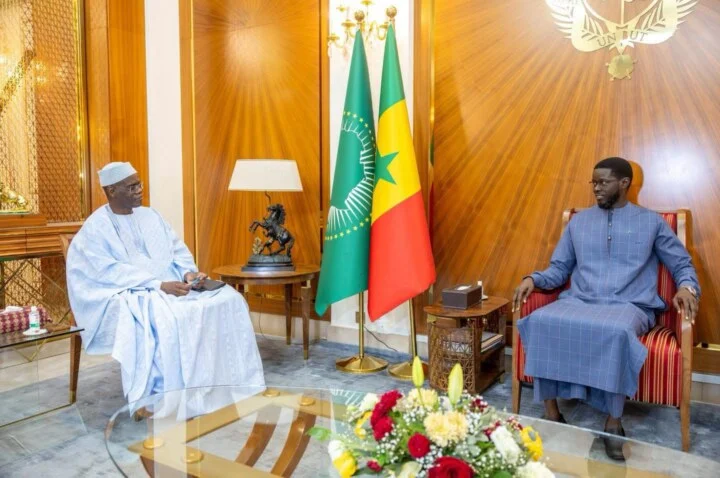
The newly formed Senegalese government, led by Prime Minister Ahmadou Al-Aminou Lo, has sparked discussions following the announcement by the PASTEF-Les Patriotes party of its decision not to participate in the executive. Despite this withdrawal, several ministers in the cabinet maintain close ties to Ousmane Sonko, raising questions about political cohesion within the administration.
Controversy surrounds government composition amid party withdrawal
On June 1, 2026, PASTEF-Les Patriotes, the political movement founded by Ousmane Sonko, publicly declared its refusal to be part of the government headed by President Bassirou Diomaye Faye. The party cited disagreements over the executive’s structural framework as the primary reason for its absence, emphasizing that no PASTEF members would officially hold ministerial positions. Yet, the cabinet’s composition reveals a contrasting narrative.
Ministers with PASTEF affiliations integrated into the government
Several appointees in the new administration are widely recognized in Senegalese political circles as being closely aligned with the ideals championed by Ousmane Sonko and the coalition that supported President Bassirou Diomaye Faye’s 2024 presidential bid. Among them are Yankhoba Diémé, who has been assigned the role of Minister of Armed Forces, Cheikh Tidiane Dièye as Minister of Hydraulics and Sanitation, Ibrahim Sy overseeing Health and Public Hygiene, Marie Angélique Mame Selbe Diouf in charge of Family and Social Solidarity, and Déthié Fall as Minister of Infrastructure.
The presence of these figures underscores their perceived alignment with either the presidential movement or allied political factions that played a pivotal role in securing Bassirou Diomaye Faye’s election victory. However, the government also includes technocrats and independent political figures such as Cheikh Diba, Cheikh Niang, and Boubacar Camara, whose backgrounds do not directly link them to PASTEF’s partisan affiliation.