
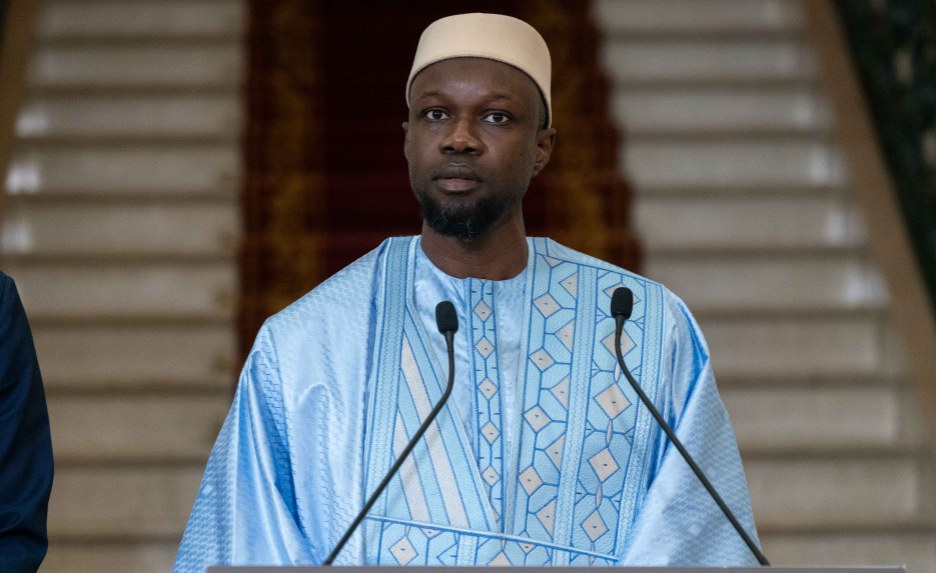
The political landscape of Senegal and the broader West African region has been shaken by an unprecedented event. On Friday, May 22, 2026, President Bassirou Diomaye Faye made a historic decision, terminating the mandate of his Prime Minister and longtime political mentor, Ousmane Sonko. This decisive move dissolved the entire government and abruptly ended the dual executive leadership that had steered the nation since the political shift of April 2024.
Constitutional decree seals the break
The announcement sent shockwaves across the country when President Faye signed Presidential Decree No. 2026-1128, formally ending Ousmane Sonko’s tenure as head of government. The decree invoked specific constitutional articles—42, 43, 53, and 56—of the Senegalese Constitution, underscoring the legal foundation of the president’s authority to appoint and dismiss the Prime Minister at will.
The decree’s first article explicitly states, « The functions of Mr. Ousmane Sonko as Prime Minister of the Republic of Senegal are hereby terminated. » This direct language leaves no room for interpretation, and the decision took immediate effect. Constitutional provisions triggered a chain reaction, compelling the resignation of all ministers and state secretaries. However, outgoing officials were instructed to manage day-to-day affairs until a new government is formed.
From mentor to subordinate: the rise of a unique political duo
To grasp the magnitude of this rupture, it’s essential to revisit the extraordinary alliance between the two leaders. Ousmane Sonko, the charismatic leader of the PASTEF party, had waged a fierce opposition campaign against the previous administration. Facing judicial harassment and disqualification from the 2024 presidential race by the Constitutional Council, Sonko made a strategic pivot.
While both were detained during a wave of political arrests, Sonko named his close ally and party secretary-general, Bassirou Diomaye Faye, as his substitute candidate for the « systemic rupture » project. The slogan « Diomaye is Sonko » became the rallying cry of a movement that swept the nation, propelling Faye to a landslide first-round victory on March 24, 2024.
Upon his inauguration on April 2, 2024, President Faye appointed Sonko as Prime Minister via Decree No. 2024-921. This marked a historic moment: a political mentor becoming the institutional subordinate of his protégé, creating an unprecedented bicameral governance model in African politics.
The seeds of discord: from unity to division
Publicly, the duo maintained an image of harmony, but the realities of governance soon exposed deep divergences. Sonko, a staunch sovereignist and fiery orator, repeatedly challenged international agreements, pushed for renegotiating mining and oil contracts, and advocated for a break with traditional partners. Meanwhile, President Faye faced the practical demands of macroeconomic management, regional diplomacy, and reassuring global financial markets.
Tensions came to a head on September 6, 2025, when a government reshuffle—formalized by Decree No. 2025-430—revealed internal power struggles. The reshuffle, intended to ease friction, instead exposed a battle for control over key ministries between Sonko’s inner circle and technocrats aligned with the president.
This uneasy cohabitation—where the president held constitutional legitimacy and the Prime Minister embodied popular legitimacy—created an unstable equilibrium. Sonko’s persistent influence over presidential decisions ultimately raised a critical question: who truly held power at the apex of the Senegalese state?
A new chapter for Senegal
With this dismissal, President Faye reclaims full control of the state apparatus, freeing himself from his former mentor’s moral oversight. The move signifies his definitive assumption of the full scope of presidential authority.
The next steps remain uncertain. Will Ousmane Sonko adopt a conciliatory stance, choose a quiet exit, or resume an aggressive opposition role, backed by his still-active electoral base? The composition of the incoming government, expected within hours, will offer the first clues about the direction President Faye intends to take in the remainder of his term.