
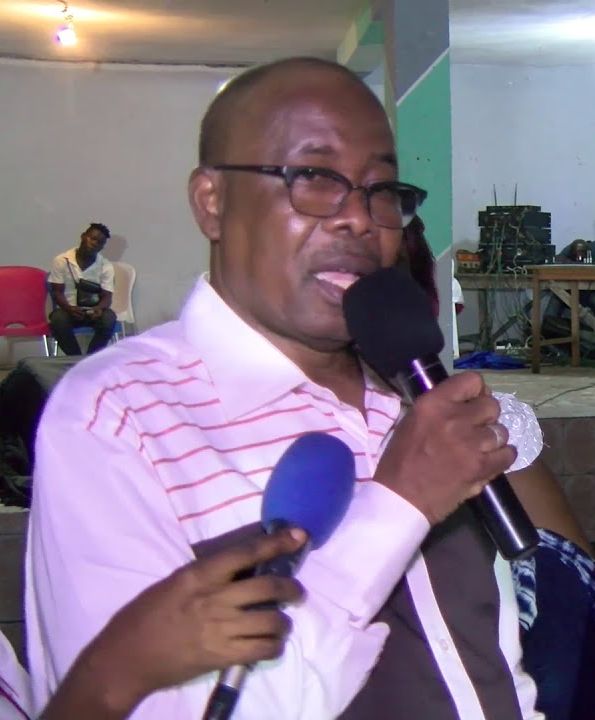
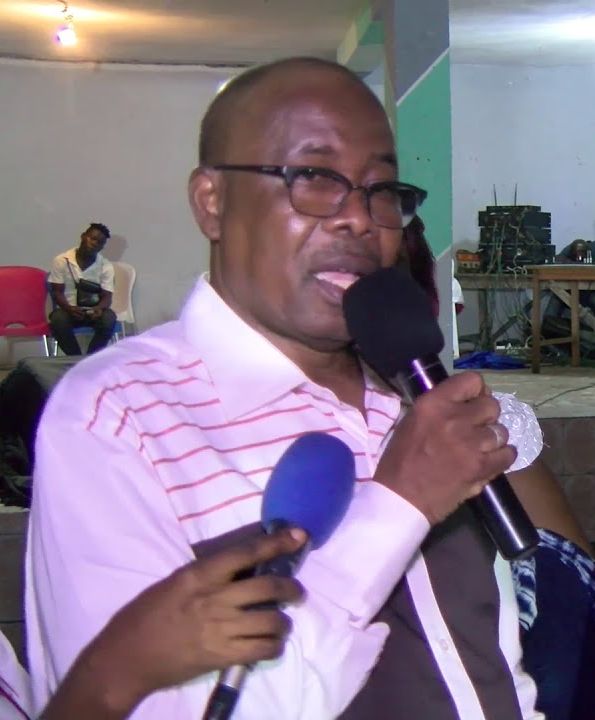
Emerging from humble beginnings and confronting life’s hardships early on, Babily Dembélé has carved out a significant presence as a multi-faceted figure in Côte d’Ivoire. This architect, politician, entrepreneur, and social advocate embodies a journey defined by unwavering perseverance, deep faith, and an unyielding drive for self-improvement.
Born into a family facing extreme poverty, Dembélé’s early life was shaped by animist traditions before he embraced Catholicism and later Islam. The son of a farmer and a homemaker, his childhood was marked by severe material challenges. His father, forcibly relocated from Kouto to Dimbokro for labor, eventually settled in Brofodoumé, welcomed by the BECHE family. Despite their struggles, his parents instilled in him profound values of hard work, dignity, and steadfast determination.
As a young boy, Babily Dembélé quickly encountered the harsh realities of existence. Sent to live with a relative in Sassandra, he endured exceptionally difficult conditions, sometimes sleeping in a chicken coop. These early trials, however, became a powerful catalyst for resilience, fueling his ambition to succeed. A pivotal moment arrived with his encounter with a French priest, Father Alib, who, moved by the boy’s plight, offered crucial moral support and educational guidance. Demonstrating exceptional diligence and academic prowess, Babily Dembélé soon distinguished himself among the brightest students of his era.
During his academic career, he notably studied alongside Maître Boga Doudou, who would become a prominent lawyer, and Adama Koné, a close relative of Ambassador Aboubacar Koné. All three earned their baccalaureate in the same year, subsequently pursuing different paths. While Boga Doudou chose law, Babily Dembélé dedicated himself to the sciences. His extraordinary talent became evident when he was honored as a national laureate in mathematics in 1977-1978. This significant achievement captured the attention of President Félix Houphouët-Boigny, who hosted Dembélé and his mother, personally pledging support for his academic endeavors. With this crucial backing, he enrolled at the Academy of Sciences in Paris, where he pursued several years of study, ultimately earning a diploma as an expert architect.
Driven by an insatiable thirst for knowledge, he furthered his education at Al-Azhar University in Égypte, obtaining a degree in the anthropology of African and Western cultures. This dual scientific and cultural background profoundly shaped his perspective on development and fostering dialogue between diverse communities. Upon his return to Côte d’Ivoire in the mid-1980s, President Houphouët-Boigny directed him towards the African Development Bank. This marked the beginning of an international career, during which he contributed to numerous infrastructure projects across 53 African nations, focusing on buildings, roads, and bridges.
In 1995, President Henri Konan Bédié appointed him as a special advisor, overseeing religious affairs, political parties, and civil society. This role provided him with invaluable political and diplomatic expertise. Like many Ivorian leaders, Babily Dembélé experienced the profound impact of the country’s political crises. Following the 1999 coup d’état, he was arrested and imprisoned for over a month. The politico-military crisis of 2002 then compelled him into a five-year exile in France.
Despite these challenging periods, his commitment to Côte d’Ivoire remained steadfast. In 2007, at the behest of Laurent Gbagbo, he returned to the nation and assumed the role of Special Representative to Arab countries. Concurrently with his political activities, Babily Dembélé ventured into various private sector projects. Notably, he acquired the company CIAD-Primo and initiated an ambitious real estate development, constructing 800 homes across 40 hectares in M’Pouto, located within the Riviera commune, representing an investment estimated between 5 and 7 billion FCFA.
Deeply dedicated to promoting peaceful coexistence, he also played a significant role in funding the construction of several places of worship, including 11 mosques and 7 churches. His notable involvement in religious affairs was particularly evident in 1999 when he facilitated the journey of 2,000 pilgrims to La Mecque and Médine by chartering a Saudi Arabian aircraft, which substantially reduced the cost of the pilgrimage for participants.
Click here to subscribe to Ivoir’Hebdo, Côte d’Ivoire’s leading investigative newspaper and top seller
Babily Dembélé’s journey today stands as a testament to a man who transformed adversity into opportunity. From his challenging childhood to his influential roles in politics, economy, and social spheres, he embodies resilience, achievement, and a profound commitment to human development and harmonious living.