

As the South African justice system prepares to rule on Kémi Séba’s case—arrested in April while attempting to enter Zimbabwe illegally—the Ivorian writer Venance Konan questions whether this social media sensation (with 1.5 million followers) truly embodies modern panafricanism. This moment invites a deeper look at the movement’s history and its current transformations.
By Venance Konan
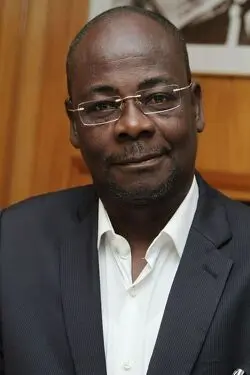
What connects a black panafricanist activist with a white South African racist supremacist? The controversial figure Kémi Séba—born Stellio Gilles Robert Capo Chichi in Benin with Nigerien diplomatic credentials—was recently detained in South Africa alongside his 18-year-old son and François Van der Merwe, a white supremacist nostalgic for apartheid. While leading the NGO “Urgences panafricanistes,” Séba gained fame through fierce anti-French rhetoric, opposition to the CFA franc, and antisemitic statements, which led to the revocation of his French citizenship. According to available information, he was attempting to enter Zimbabwe illegally—possibly heading to Europe afterward—while facing Beninese charges for “apology for state security crimes and incitement to rebellion” after supporting soldiers involved in a failed December coup. An international arrest warrant has been issued against him.
Russian propagandists and supporters of Sahel dictators
Kémi Séba, Franklin Nyamsi, and Nathalie Yamb represent the loudest voices of panafricanism in Francophone Africa. Yet these three figures also serve as Russia’s most vocal propagandists on the continent and staunch supporters of the military juntas in the Alliance of Sahel States (AES)—Mali’s Assimi Goïta, Burkina Faso’s Ibrahim Traoré, and Niger’s Abdourahamane Tiani. Does contemporary panafricanism now mean fighting France only to align with Russia and back undemocratic regimes?
To understand this shift, we must revisit the movement’s origins. Panafricanism emerged in the early 20th century among Black intellectuals in America and the Caribbean. It became a driving force behind anti-colonial struggles in Africa, with leaders like Kwame Nkrumah of Ghana, Sekou Touré of Guinea, and Patrice Lumumba of Congo. The ideology also united students in the Federation of Black African Students in France (FEANF), founded in 1950, which quickly adopted political stances advocating decolonization and African unity. Its strong opposition to the Algerian war drew French repression, including reduced scholarships and police surveillance. The FEANF was dissolved in 1980.
The decline of unity and rise of division
Panafricanism was seen as the driving force behind African independence movements, culminating in the creation of the Organisation of African Unity (OAU) in 1963—a milestone toward continental unity. However, post-independence nationalism took precedence, leading to fragmentation rather than integration. Conflicts such as Eritrea’s secession, Sudan’s division, and failed attempts like Biafra and Casamance revealed the continent’s deep divides. In 2002, Libyan leader Muammar Gaddafi attempted to revive the OAU by transforming it into the African Union (AU), but the project stalled after his death in 2011 during the NATO intervention. The AU, founded in 2002, introduced the New Partnership for Africa’s Development (NEPAD) to accelerate integration, yet this initiative has largely faded into obscurity.
From civil wars to anti-African xenophobia
Today, panafricanism appears more as a rhetorical tool than a lived reality. Political leaders across Africa—from Côte d’Ivoire’s Laurent Gbagbo, who founded the Party of African Peoples (PPA-CI), to Senegal’s ruling PASTEF—proclaim their panafricanist credentials. Yet in practice, African nations often turn against one another: South Africa deports African migrants, while West African Sahel states and ECOWAS members engage in hostile standoffs. Civil wars persist in the Horn of Africa, Sudan, and the Great Lakes region, while xenophobia festers across the continent.
The urgency of authentic panafricanism
Where have all the panafricanists gone? Today, only Séba, Nyamsi, and Yamb remain prominent in the public sphere—loud voices on social media. The first, of Beninese origin, lost French citizenship. The second, Cameroonian-French, faces sanctions for anti-French rhetoric, and the third, of Cameroonian-Swiss descent, is targeted by the European Union for similar reasons. They claim persecution for their anti-Western stance, particularly against France. But where is the true panafricanism in serving Russian interests on the continent? Is liberation achieved by submitting to a new form of domination? Are the atrocities committed by Russian mercenaries in the Sahel not evidence enough of this contradiction? And what of their support for brutal dictatorships that silence dissent through imprisonment, disappearance, or death?
According to leaked conversations, Séba accuses Nyamsi and Yamb of opportunism, claiming they are now in the pay of Faure Gnassingbé, Togo’s president. Séba himself, despite his anti-French stance, reportedly regrets losing his French citizenship. This version of panafricanism appears tainted, opportunistic, and even dishonest. Yet, as predatory global powers reshape the world order, Africa faces a stark choice: unite swiftly or risk further fragmentation. Perhaps it’s time for an urgent panafricanism—one rooted in genuine solidarity rather than geopolitical manipulation.