
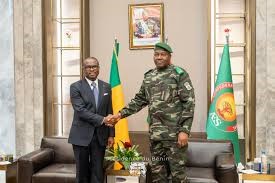
The Bénin’s President Romuald Wadagni embarked on an official tour across three West African capitals last week, marking a decisive step in reshaping the country’s regional engagement. The destinations—Abuja, Niamey, and Ouagadougou—were carefully chosen to address pressing security and economic challenges affecting the Sahel and Gulf of Guinea regions.
Security and trade at the heart of diplomatic overtures
Wadagni’s agenda prioritized two critical areas: security cooperation and economic revival. In Abuja, the focus was on strengthening the Lagos-Cotonou trade corridor, a vital artery for both nations that has faced disruptions due to regional instability. The two countries also discussed cross-border threats, including armed group activities in the Lake Chad basin, emphasizing the need for joint counter-terrorism efforts.
In Niamey and Ouagadougou, the discussions centered on transboundary security threats. The Bénin’s northern regions of Atacora and Alibori have seen increased jihadist incursions, making a solitary approach ineffective. Wadagni proposed resuming intelligence-sharing programs and reopening partially closed border markets to restore normalcy for local communities.
A pragmatic approach to fractured alliances
The diplomatic mission unfolded against a backdrop of shifting regional dynamics. While Nigeria remains a committed member of the ECOWAS, Niger and Burkina Faso have exited the bloc and formed the Alliance of Sahel States. This divergence posed a delicate balancing act for Bénin: maintaining credibility with traditional partners while avoiding isolation from neighbors sharing over 700 km of borders and daily human exchanges.
The Bénin’s strategy hinged on technical agreements rather than political posturing. Water resource management, energy projects, and cross-border mobility were highlighted as areas where immediate cooperation could yield tangible benefits. The goal? Creating interdependencies that make disengagement costly for all parties involved.
Challenges on the road ahead
Success hinges on more than just diplomatic goodwill. The real test will be in implementing security protocols for mixed patrol units and clarifying their legal frameworks. Rural communities, especially those near borders, are eager for tangible outcomes: safer roads, reopened markets, and a return to pre-crisis normalcy. Without visible progress by the end of 2027, Wadagni’s pragmatic approach risks losing credibility.
Can Bénin redefine its role in the Sahel?
The president’s gamble is high, but the stakes are higher. If executed effectively, this strategy could position Bénin as a regional facilitator, bridging divides between ECOWAS loyalists and the Alliance of Sahel States. Alternatively, the lack of concrete results could leave Bénin sidelined as instability continues to spread.
The coming months will reveal whether this diplomatic initiative can translate words into action—or if the region’s fractures will deepen further.