
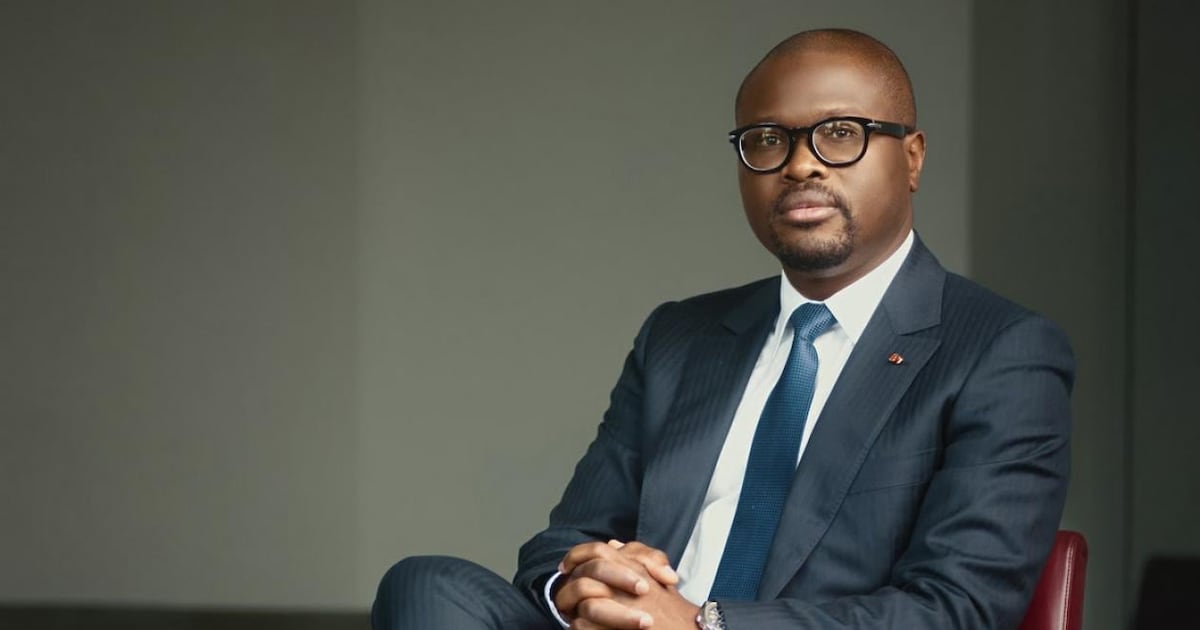
Romuald Wadagni, a discreet technocrat set to turn 50 next month, has officially begun his seven-year presidential mandate following a solemn swearing-in ceremony at the presidential palace in Cotonou, the nation’s economic hub.
The ceremony, held behind closed doors with no foreign heads of state in attendance—unlike recent inaugurations—marked the conclusion of an uncontested electoral process. Wadagni’s sole opponent, Paul Hounkpè of the Forces cauris pour un Bénin émergent (FCBE) party, has since aligned with the ruling majority after his campaign failed to gain significant traction.
The main opposition party, Les Démocrates, was barred from participating due to insufficient sponsorship signatures, leaving the political landscape dominated by the ruling coalition. In his inaugural address, Wadagni paid tribute to his predecessor while outlining key campaign promises, emphasizing the need for economic growth to translate into tangible improvements for ordinary citizens.
«A national economy’s success is only meaningful when it lifts the daily lives of its people,» he declared, adding, «To the young people of Bénin who refuse to accept outdated limitations and seek success through hard work here at home, I say this: Bénin believes in you and will provide the opportunities you deserve.»
Strengthening regional ties and addressing security challenges
Wadagni inherits a nation grappling with dual challenges: securing its northern borders against escalating jihadist violence and mending strained diplomatic relations with neighboring Sahelian states, particularly Niger. While his francophone background positions him as a bridge-builder, recent tensions have cast a shadow over regional cooperation.
During his address, he pledged resolute state action against threats to national cohesion, stating, «Bénin will neither yield to fear nor complacency. The government will stand firm against any force that endangers our unity and security.» He also called for collaborative efforts with neighboring countries to tackle shared threats.
The ceremony itself sent a subtle yet significant diplomatic signal. Niger’s Prime Minister, Ali Mahaman Lamine Zeine, attended and received warm applause, signaling a thaw in relations. Burkina Faso and Mali were also represented by their foreign affairs ministers, underscoring the importance of regional stability.
Freedom of expression under scrutiny
The new administration faces immediate scrutiny over its approach to civil liberties, especially press freedom, following criticism of the outgoing government’s crackdown on dissent. International observers, including Reporters Without Borders, have urged Wadagni to prioritize media freedom and release jailed journalists as a cornerstone of his governance.
With no elections scheduled for the next six years—a result of constitutional reforms aligning all national and local polls—the president’s actions will define Bénin’s political trajectory during this extended inter-electoral period.
A leader shaped by education and rural roots
Born on June 20, 1976, in Lokossa—a town in southwestern Bénin near the Togolese border—Wadagni grew up in an intellectual family. His father, Nestor, was a prominent economist, and his mother, an entrepreneur, instilled in him a deep connection to his homeland. Despite his global career, he has maintained ties to his roots, owning a farm he continues to oversee.
His academic journey led him from finance studies at Grenoble’s École supérieure de commerce in France to advanced training at Harvard University in the United States. Before returning to Bénin, he held a senior position at Deloitte, where he specialized in African operations.
From finance minister to president
In 2016, at 40, Wadagni was appointed Minister of Economy and Finance by then-President Patrice Talon. Tasked with overhauling the nation’s economic framework, he spearheaded reforms that halved the budget deficit to 3% of GDP, launched major infrastructure projects, and modernized key sectors.
His tenure earned Bénin recognition as a top performer in West Africa, with annual growth consistently exceeding 6% over the past decade. International investors responded positively, reinforcing the country’s appeal as a stable economic partner. When Talon secured re-election in 2021, he retained Wadagni, elevating him to the rank of State Minister.
Analysts describe Wadagni’s leadership style as pragmatic and results-driven, a contrast to more rhetorically inclined politicians. «He represents a new generation of leaders,» noted political commentator Lucien Fayomi. «Less focused on words, more on measurable impact. His discretion is not a weakness but a strategy suited to an era demanding efficiency over spectacle.»
Close associates describe him as a unifier, having secured backing from the two largest ruling parties and even former opponents during his campaign. One confidant remarked, «He is a consensus-builder, capable of bridging divides in a fragmented political landscape.»