
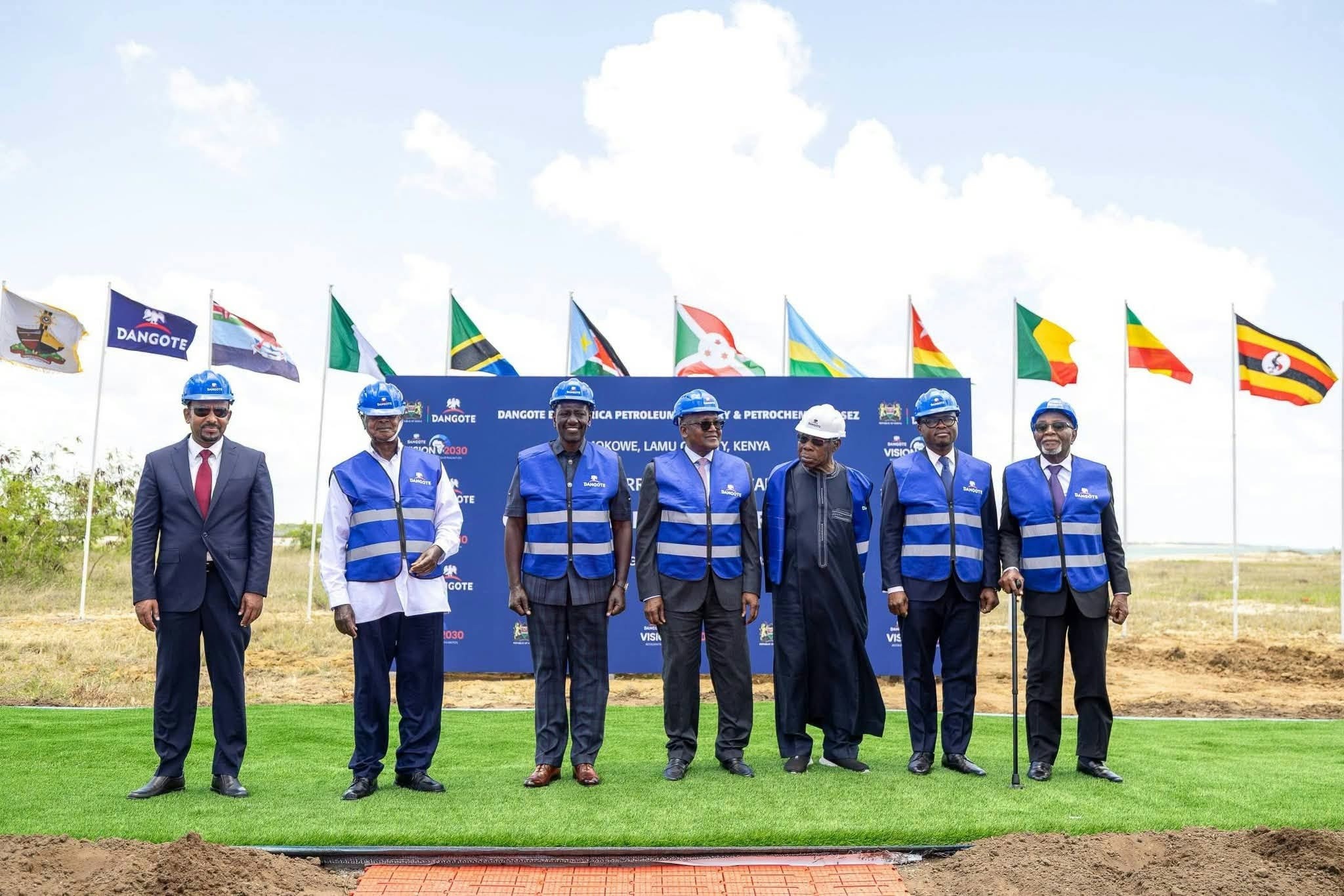
Lamu, Kenya — A defining moment for African industrial ambition unfolded on September 30, 2026, as Benin’s President Romuald Wadagni joined regional leaders at the groundbreaking ceremony for East Africa’s most ambitious oil refinery project. The $16 billion Lamu refinery, spearheaded by Nigerian billionaire Aliko Dangote, marks a decisive turning point in the continent’s pursuit of energy self-reliance and industrial transformation.
The rise of Lamu: A continental energy hub in the making
Perched on Kenya’s northern coast, Lamu is no longer just a historic Swahili port — it is rapidly becoming the epicenter of a $16 billion industrial gamble that could redefine East Africa’s energy landscape. The refinery, once operational, will process 700,000 barrels of crude oil daily, catapulting it into the ranks of Africa’s largest refining facilities and signaling a major shift toward local value addition in energy production.
The presence of President Wadagni alongside Ugandan President Yoweri Museveni, Togolese President Jean-Lucien Savi de Tové, Ethiopian Prime Minister Abiy Ahmed Ali, and Kenyan President William Ruto underscores the refinery’s continental significance. This gathering of leaders from West and East Africa reflects a shared vision: to build infrastructure that transcends national borders and fosters economic integration through energy independence.
A $16 billion bet on Africa’s energy sovereignty
The Lamu refinery’s cost — $16 billion (approximately 8,960 billion FCFA) — is matched only by its ambition. With a projected daily capacity of 700,000 barrels, the facility will not only meet regional fuel demand but also position East Africa as a net exporter of refined petroleum products. This comes at a critical juncture as African nations increasingly prioritize local refining to reduce reliance on costly fuel imports and bolster industrial competitiveness.
The project’s scale is unprecedented in East Africa. Upon completion, the refinery will be one of the continent’s largest, second only to South Africa’s Sapref refinery in capacity. Its development signals a bold step toward reducing Africa’s $40 billion annual petroleum import bill and strengthening energy security across the region.
Benin’s strategic stake in Africa’s industrial revolution
President Wadagni’s participation in the Lamu groundbreaking is more than symbolic — it represents Benin’s strategic alignment with Africa’s industrial renaissance. By engaging with this mega-project, Benin is positioning itself to tap into new economic opportunities, from energy trade to infrastructure development and downstream industrial growth.
For Benin, a nation actively expanding its energy sector, the refinery offers a blueprint for leveraging large-scale industrial projects to drive economic diversification. The collaboration model demonstrated in Lamu — with governments, private investors, and regional blocs working in unison — presents a replicable template for Benin and other West African economies seeking to accelerate industrialization.
What Benin stands to gain
- Energy supply diversification: Access to refined petroleum products at competitive prices, reducing import dependency.
- Industrial spillover: Opportunities to develop ancillary industries such as logistics, storage, and petrochemicals.
- Regional integration: Strengthened trade ties with East African partners through shared infrastructure and economic corridors.
- Investor confidence: Enhanced appeal to foreign and domestic investors in Benin’s burgeoning energy and industrial sectors.
The ripple effect: How Lamu’s refinery will transform East Africa
The refinery is expected to catalyze a wave of economic activity in Kenya and neighboring countries. Construction alone will generate thousands of jobs, while the operational phase will require a skilled workforce, training programs, and supply chain development. The project also aligns with Kenya’s Vision 2030 economic blueprint, which aims to transform the country into an industrialized middle-income nation.
Moreover, the refinery will serve as a cornerstone for East Africa’s burgeoning oil and gas sector. Its success could attract further investment in upstream exploration, midstream infrastructure, and downstream industries, creating a virtuous cycle of industrial growth.
Challenges and opportunities on the path forward
Despite its promise, the Lamu refinery faces hurdles common to mega-projects in Africa: financing risks, regulatory complexities, and environmental concerns. Yet, the presence of multiple African heads of state at the groundbreaking signals strong political will to overcome these challenges. The project’s success will hinge on robust governance, transparent partnership structures, and inclusive development strategies that benefit local communities.
For Benin, the lessons from Lamu are clear: participation in large-scale industrial projects is not just about economic gains — it’s about shaping the future of Africa’s energy landscape. By joining this historic initiative, Benin is not merely observing Africa’s industrial revolution — it is helping to lead it.
A new chapter for African energy independence
The Lamu refinery launch is more than a ceremonial milestone — it is a declaration of intent. For Africa, it represents a turning point: the moment when the continent shifts from being a consumer of refined products to a producer and innovator in energy. With Benin at the table, this transformation is not confined to East Africa; it is a pan-African movement toward self-sufficiency, industrialization, and economic resilience.
As the first shovels hit the ground in Lamu, the message is clear: Africa’s energy future is being built today — and Benin is playing a pivotal role in shaping it.