
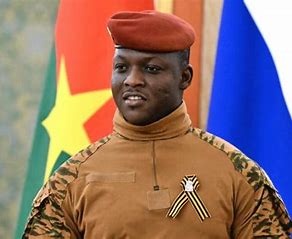
Ouagadougou witnessed a striking pronouncement on a recent Thursday, April 2, as Captain Ibrahim Traoré, head of Burkina Faso’s ruling military junta, openly urged the nation to abandon any notions of democracy. His direct statement, "Democracy is not for us," was delivered without equivocation to both local and international journalists, including representatives from Italy’s Rai public television and Britain’s Sky News.
An end to electoral prospects
This unequivocal dismissal by the young putschist, who seized power in a September 2022 coup, signals the definitive end of electoral prospects in the short to medium term. Traoré declared, "We are not even talking about elections first. People must forget the question of democracy."
This declaration follows the late March 2026 adoption of a "Charter of the Revolution." This document is designed to extend the junta’s rule by five additional years from July 2024 and explicitly permits Ibrahim Traoré to contest future presidential, legislative, and municipal elections.
The democratic charade concludes
The initial promise of a democratic transition, set to conclude in July 2024 following the first coup in January 2022, has now faded into a distant memory. Key democratic institutions have been systematically dismantled: the Independent National Electoral Commission (Céni) was dissolved in October 2025, and political parties were outright banned in February 2026.
A regime embracing its authoritarian turn
"We are not in a democracy," Traoré had previously stated last year. On Thursday evening, he reiterated this stance with overt confidence, asserting the "Revolution" superseded all democratic principles. Over a two-hour interview, the captain confirmed what many observers had long suspected: Burkina Faso has transitioned from a military-led interim period to an explicit, self-declared dictatorship.
The fate of his predecessor
Ibrahim Traoré also addressed the situation of his predecessor, former Lieutenant-Colonel Paul Henri Sandaogo Damiba, who was recently extradited from Togo. Accused of corruption and attempted coups, Damiba is now "in the hands of justice," according to the junta leader.
Contested security record
While Burkina Faso grapples with a nearly decade-long surge in jihadist violence, resulting in thousands of fatalities and hundreds of thousands displaced, the junta chief dismissed allegations of abuses. International NGOs have documented claims of atrocities committed by the Burkinabe army and the Volunteers for the Defense of the Homeland (VDP) against civilians, but Traoré simply responded that "there is no proof."
Rapprochement with Russia and press suppression
On the international front, Traoré reaffirmed his country’s alliance with Russia, which supplies military hardware, while denying the presence of foreign instructors on the ground. Domestically, since his ascent to power, the regime has steadily suppressed press freedom, suspending or banning numerous international media outlets and expelling journalists.
Burkina Faso descends into authoritarianism
By openly instructing his populace to disregard democracy, Ibrahim Traoré has shed any pretense. He now unreservedly commits to establishing a lasting military regime where political rights and fundamental liberties are sacrificed for a "revolution" whose tangible benefits, both in security and economic terms, remain unconvincing. Burkina Faso, once considered a beacon of democratic potential in the region, is increasingly descending into overt authoritarianism.