
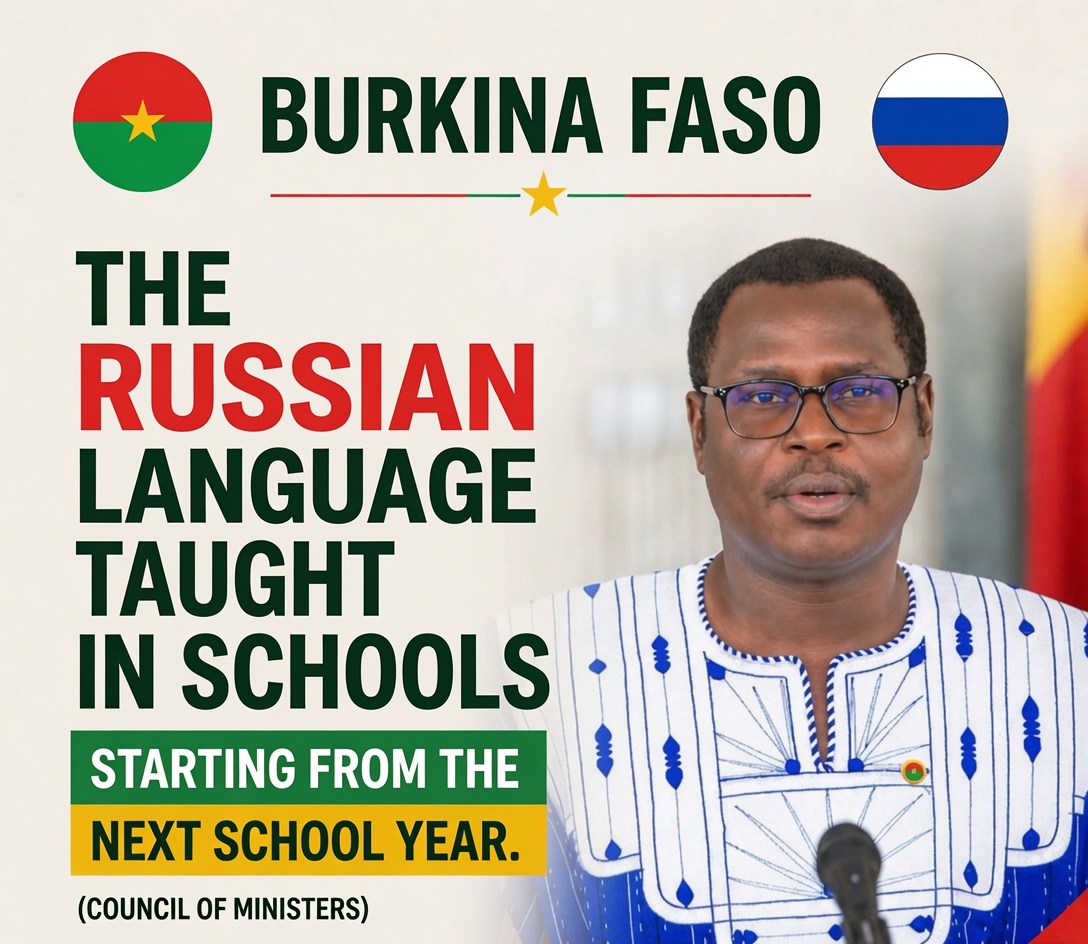
The government decides to introduce russian in the curriculum as a new diplomatic alliance forms
In a move that underscores a significant shift in Burkina Faso’s strategic partnerships, the transitional authorities have approved a decree mandating the inclusion of Russian language instruction in the national school system starting next academic year. While officials frame this initiative as an opportunity for cultural and economic expansion, it has ignited intense debate over the true motives behind the decision.
Pragmatism or hidden agenda?
Proponents of the policy argue that in an evolving global landscape, equipping the younger generation with multilingual skills is a pragmatic step. By fostering proficiency in Russian, Burkina Faso aims to strengthen future trade, technological, and academic exchanges with Eurasian partners. Given Moscow’s growing role as a key security ally, authorities present this educational reform as a logical extension of a vital partnership—one they claim is essential for combating the persistent terrorist threat gripping the nation.
Yet beneath the veneer of educational cooperation, concerns linger about the potential for disguised foreign control. Critics question whether this decree is merely the educational counterpart to a broader geopolitical realignment, one where Burkina Faso risks replacing one form of dependency with another. Shedding colonial legacies and Western paternalism should not, they argue, mean falling under a different sphere of influence.
A modern form of influence?
Several factors suggest this move may represent the early stages of a subtle, contemporary form of control:
- Cultural penetration as a political tool: Historical precedents show that introducing a foreign language through state decree often serves a broader agenda. By embedding Russian language and culture into Burkina Faso’s education system, Moscow may be cultivating a future generation of local elites who are more receptive to its media narratives and political messaging, thereby deepening its long-term influence.
- Echoes of Cold War tactics: During the Cold War, Soviet authorities imposed Russian language education in Eastern Bloc nations to standardize thought and reinforce political control. Applying a similar strategy in the Sahel today raises concerns that Burkina Faso is adopting a well-documented playbook for influence, where schools become extensions of geopolitical strategy rather than centers of learning.
- An unbalanced partnership: Genuine linguistic cooperation thrives on mutual benefit. However, in a nation heavily reliant on Russian military and logistical support to stabilize its territory, introducing Russian in schools may appear less like a strategic choice and more like a political concession to an indispensable ally.
Cultural identity at risk
The decision also raises questions about cultural priorities. Burkina Faso is home to a rich tapestry of local languages, many of which struggle for recognition and funding within the education system. By prioritizing an external language over national linguistic heritage, the government risks undermining efforts to decolonize minds and values, merely shifting dependency from one foreign power to another.
As Russia extends its reach into Burkina Faso’s military, mining, and now educational sectors, the nation faces the prospect of a more insidious form of colonization—one that is less overt but equally restrictive. The future of Burkina Faso hangs in the balance, contingent on the vigilance of its people. Will this bold move toward independence prove to be a step toward a different kind of servitude?