
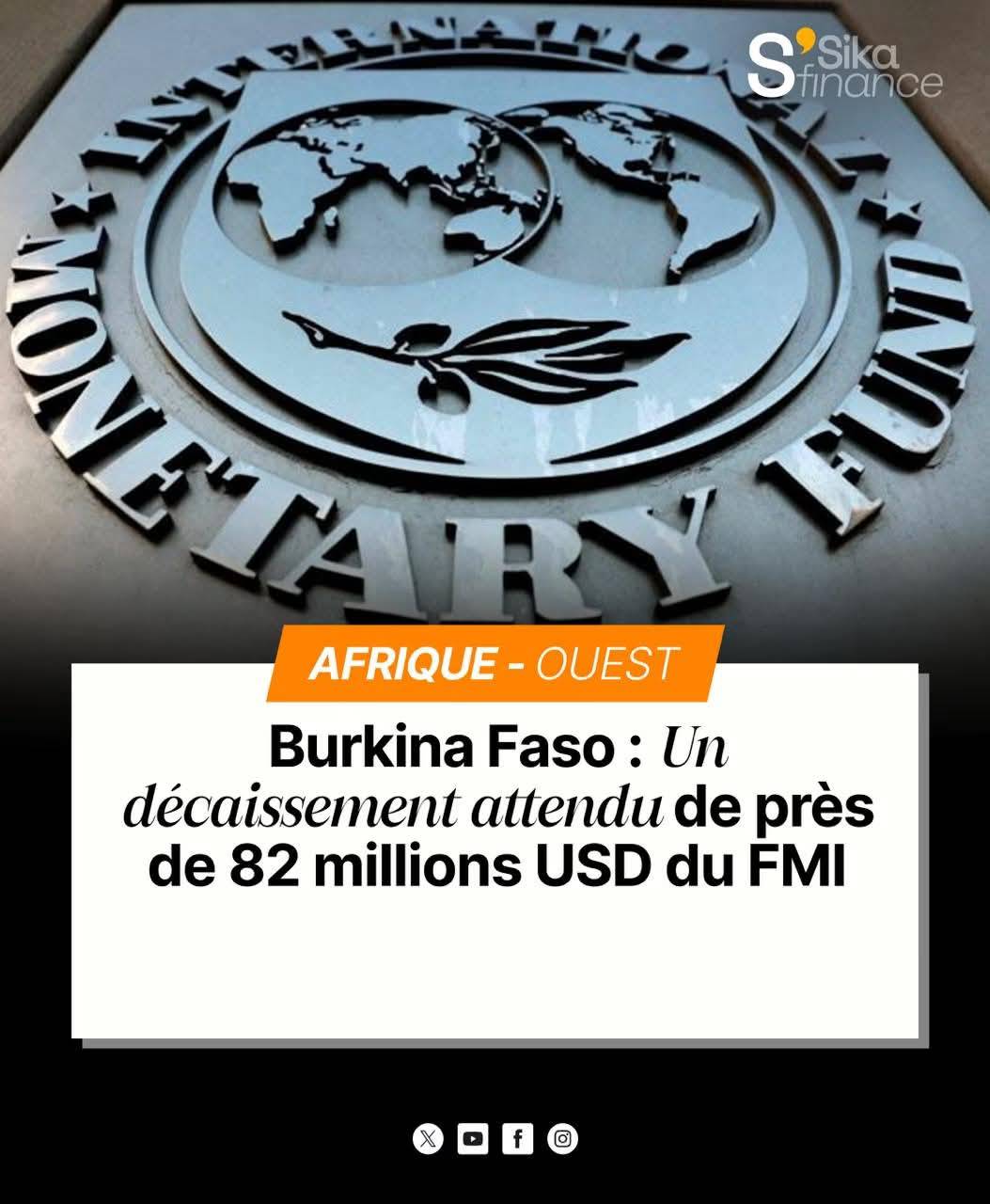
In a striking display of economic pragmatism, Burkina Faso’s transitional government is on the verge of receiving a substantial financial lifeline from the International Monetary Fund (IMF). After a rigorous technical assessment, the global lender has provisionally approved a disbursement of nearly $82 million—approximately 46.21 billion West African CFA francs—to support the nation’s strained public finances. Yet this financial rescue arrives at a pivotal moment, as Ouagadougou’s leadership faces mounting pressure to reconcile bold sovereignty claims with the harsh realities of an ailing economy.
Final approval still pending after IMF technical nod
The IMF’s preliminary agreement, announced following expert consultations, marks a critical milestone. However, the disbursement remains contingent on formal ratification by the Fund’s Executive Board. This procedural step underscores the unpredictability of international finance, where even approved programs can face last-minute scrutiny. The funds fall under the Extended Credit Facility (ECF), a mechanism designed to assist countries grappling with prolonged balance-of-payments crises.
Sovereignty rhetoric clashes with economic necessity
The government’s decision to seek IMF support exposes a glaring paradox. Since the military-led transition took power, officials have championed an uncompromising stance on national sovereignty, severing ties with former partners like France and scaling back cooperation with the European Union. Burkina Faso has also pivoted toward alternative geopolitical alliances, notably deepening engagement with Russia.
Yet when it comes to balancing the national budget and averting economic collapse, the limits of self-reliance become starkly evident. The IMF, often criticized by African sovereignists as a tool of Western dominance, has once again emerged as a critical financial backstop. The harsh arithmetic of public finance appears to override ideological posturing, forcing a pragmatic reckoning.
Security crisis cripples economic momentum
The urgency behind Ouagadougou’s IMF request stems from a decade-long insurgency that has ravaged the country. Armed groups now control vast swathes of territory, disrupting supply chains, restricting agricultural access, and throttling the mining sector—the backbone of Burkina Faso’s economy. Factories have shuttered, businesses have fled to more stable neighbors, and mass layoffs have drained state coffers of vital tax revenue. The result is a vicious cycle of unemployment and fiscal strain that threatens to derail recovery efforts.
Strict IMF reforms demanded for disbursement
To unlock the 46.21 billion CFA franc tranche, Burkina Faso’s authorities have no choice but to accept stringent conditions set by the IMF. Traditional demands include tightening fiscal discipline, boosting domestic revenue collection, and trimming public expenditure. Subsidies on energy and civil service wages are frequently targeted, alongside calls for greater transparency in governance. The transitional government must now submit to periodic audits of its economic performance, a stark contrast to its public pledge of non-interference in state affairs.
The high-stakes gamble of financial diplomacy
The path to securing these funds highlights the delicate balancing act facing Burkina Faso. While leaders project an image of absolute sovereignty, the country’s survival hinges on external financial support. If the IMF’s Executive Board grants final approval, the infusion of capital will provide temporary relief—but it will also lay bare a hard truth. Without a structural solution to the security crisis, Burkina Faso’s economy will remain hostage to the very institutions it publicly resists, trapped in a cycle of dependence despite its defiant rhetoric.