
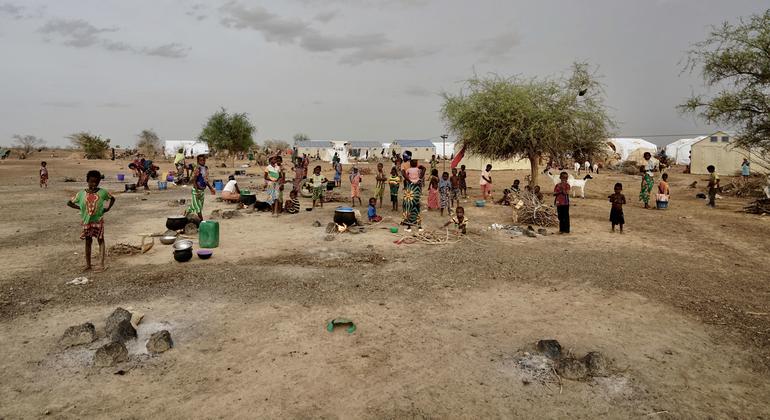
Burkina Faso’s escalating crisis: thousands displaced by violence
Humanitarian agencies are sounding the alarm as nearly 230,000 individuals have been forcibly displaced in Burkina Faso since the start of the year, a direct result of ongoing jihadist violence. This escalating security crisis continues to severely impact children and their families across the Central Sahel nation.
According to the Operational Coordination Group for Rapid Response (GCORR), approximately 37,000 households have been displaced following 48 separate displacement alerts. This figure marks a significant 92% increase compared to the same timeframe in 2024.
In May alone, the GCORR reported close to 41,000 individuals affected by 12 displacement incidents across the country.
The Boucle du Mouhoun region bears the heaviest burden, accounting for 45% of all internally displaced persons. Over 106,000 individuals, including more than 65,000 children, have been forced to leave their homes in 13 localities such as Dédougou, Di, and Tougan within this region.
“Considerable” humanitarian needs surge
The overall security landscape in Burkina Faso remains volatile, characterized by persistent attacks across the Sahel, Nord, Centre-Nord, Est, Centre-Est, and Boucle du Mouhoun regions. These assaults have targeted national defense and security forces, Volunteers for the Defense of the Homeland (VDP), and local communities.
As highlighted by UNICEF, these widespread acts of violence have generated “considerable” humanitarian needs across all sectors. The most pressing requirements include adequate shelter, robust food security, access to water, sanitation, and hygiene (WASH) facilities, as well as crucial protection services and educational opportunities.
In response to this deepening crisis, various organizations have stepped in to support those already on the ground. Despite ongoing efforts, substantial needs continue to persist.
From a nutritional standpoint, over 10,000 children were admitted nationwide for the treatment of severe acute malnutrition (SAM) in April. More than half of these cases originated from regions severely impacted by jihadist violence, including Boucle du Mouhoun, Nord, Est, Sahel, and Centre-Nord.
Severe acute malnutrition remains a critical concern
Between January and April, more than 36,000 individuals received treatment for malnutrition, with over 20,000 of them located in insecure areas.
By the end of May, a total of 179,000 people (representing 28% of the 1.3 million individuals in need), including over 25,000 children, had been treated for acute malnutrition. Within this group, more than 8,000 children were battling severe acute malnutrition.
More broadly, the deteriorating security situation significantly hampers humanitarian operations, impeding access to affected populations, increasing operational risks for aid workers, and escalating the overall need for assistance.
Following attacks in the Est and Sahel regions, essential local infrastructure, particularly in the health, education, water, and administrative sectors, has been destroyed, further exacerbating the crisis.
Djibo: a town under jihadist blockade
Among the hardest-hit areas is Djibo, located in the Soum province in northern Burkina Faso, where the entire population of approximately 48,000 people (comprising both displaced individuals and host communities) has been severely affected. The town has been under a jihadist blockade since December 2024, cutting off vital supply routes.
Through its local partners, UNICEF is actively implementing various programs in Djibo, addressing vital sectors such as water, sanitation, and hygiene (WASH), education, child protection, health, and nutrition.
Humanitarian workers, much like the vulnerable populations they serve, are “confronted with the risk of improvised explosive devices and kidnappings.” UNICEF emphasized that “beyond access difficulties, the scarcity of resources represents another significant challenge, profoundly impacting response capabilities in security-affected regions.”