
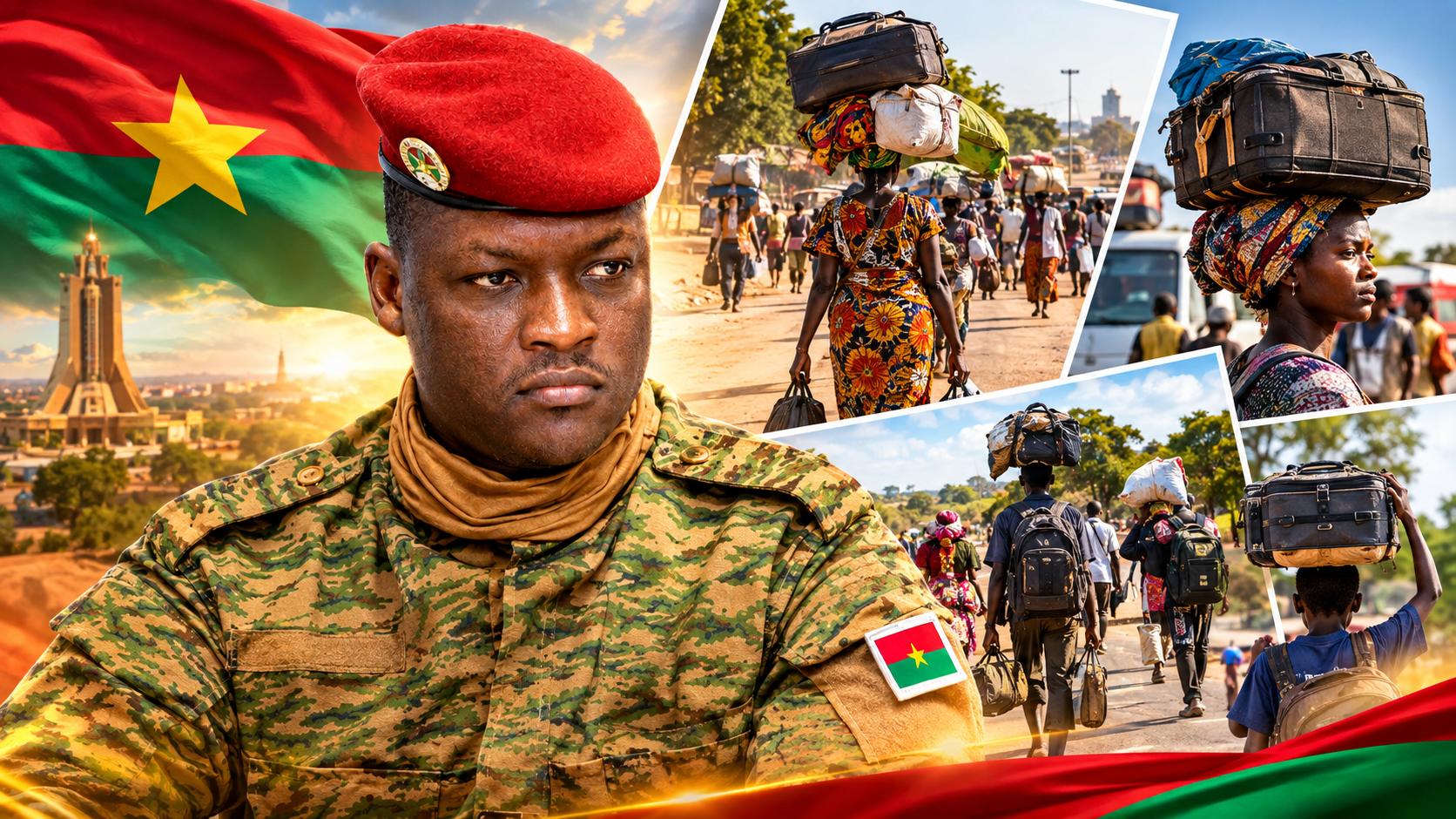
Burkina Faso’s turning point: four years of Traoré’s rule and the cost of territorial control
Ouagadougou — On September 30, 2022, Captain Ibrahim Traoré seized power in Burkina Faso, ousting Lieutenant Colonel Paul-Henri Sandaogo Damiba. Four years into his military rule, Traoré frames his tenure as a watershed moment: a bold bid to reclaim territory, bolster national defense, and assert sovereignty while severing ties with Western allies. Yet beneath the official narrative of progress, a starkly divided reality persists—one where security gains coexist with deepening human costs.
Security ambitions vs enduring violence
From the outset, Traoré’s administration declared war on armed groups its top priority. The strategy hinged on two pillars: expanding the national army’s firepower and mobilizing civilian volunteers through the Volontaires pour la défense de la patrie (VDP). The government touts restored territorial control in previously contested zones and boasts of enhanced military readiness. But the hard truth remains: violence hasn’t subsided. Armed factions continue to strike military outposts and villages alike, while the Armed Conflict Location & Event Data Project (ACLED) confirms their sustained operational capacity across Burkina Faso. Civilians remain the most frequent targets, with attacks showing no signs of relenting.
Displacement crisis: a nation uprooted
One of the most haunting consequences of the conflict is the staggering displacement of civilians. As of late 2025, over 2.06 million Burkinabè were internally displaced, according to UNHCR data, with many fleeing both militant violence and government-led operations. The crisis is multifaceted: while jihadist offensives displace communities, reports by Human Rights Watch detail abuses by state forces and VDP units against civilians accused of ties to armed groups. Between 2023 and 2025, the organization documented at least 1,800 civilian deaths in such incidents, underscoring the blurred lines between security operations and human rights violations.
When control comes at gunpoint
The displaced bear witness to a paradox: reclaiming land does not equate to restoring safety. Villages once liberated often become flashpoints of retaliatory violence, leaving returnees trapped between armed factions and state forces. The humanitarian toll—broken families, destroyed livelihoods, and shattered trust—highlights a critical failure of Traoré’s security model.
Press freedom under siege
Under Traoré’s rule, Burkina Faso’s media landscape has contracted sharply. Authorities cite wartime exigencies to justify restrictions, framing them as necessary to sustain morale among troops and citizens. Yet watchdogs like Reporters Without Borders (RSF) describe a stark erosion of press freedoms. In 2025 alone, the organization recorded multiple cases of journalists facing forced conscription, arbitrary arrests, and intimidation tactics. October 2025 saw eight reporters summoned by security services in a single month, while prominent editor Atiana Serge Oulon—publisher of L’Événement—was abducted in June 2024. Though authorities claimed he was deployed to the front, an RSF investigation in 2026 suggests he was secretly detained in Ouagadougou, raising alarms over disappearances.
Forced conscription: compliance or coercion?
The practice of forcing critics into military service has expanded beyond journalism. Human Rights Watch reports dozens of cases involving activists, opposition figures, and even magistrates, all conscripted under vague national security pretexts. This weaponization of mobilization blurs the line between patriotic duty and political punishment. While states may legitimately recruit citizens in wartime, human rights advocates argue such measures must adhere to legal safeguards—allowing affected individuals to challenge their assignments. The lack of transparency fuels suspicions that the tactic is being used to silence dissent.
Sovereignty at what cost?
Traoré’s government has aggressively pursued an independent foreign policy, distancing Burkina Faso from France, deepening ties with Russia, and co-founding the Alliance of Sahel States with Mali and Niger. The push for resource sovereignty—particularly in mining—has been framed as an economic victory. Yet this drive for autonomy has coincided with a contraction of political and civic space. Journalists, activists, and opposition leaders now face arrests, detentions, or forced exile, painting a picture of a government prioritizing control over pluralism.
A crossroads for Burkina Faso’s future
Four years into Traoré’s rule, Burkina Faso stands at a crossroads. His administration can point to military gains, civilian mobilization, and strategic shifts as proof of progress. Yet the human cost—displacement, unchecked violence, and repression—undermines these achievements. The central question lingers: Can the state reclaim its territory without sacrificing the rights and dignity of its people? As the conflict grinds on, the answer remains as elusive as the peace Burkina Faso desperately seeks.