
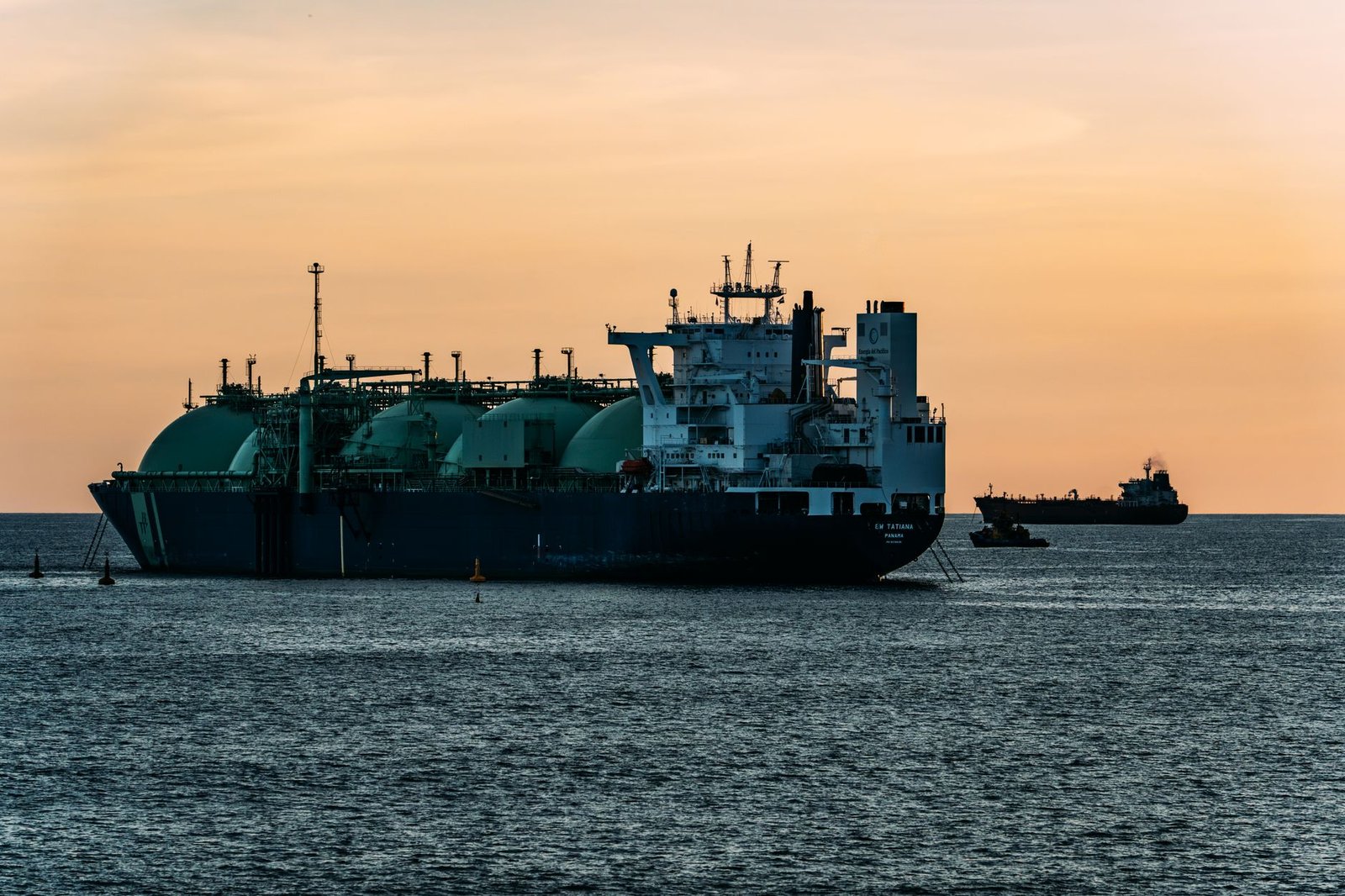
The clock is ticking for Cameroon’s economy. The Hilli Episeyo, a floating liquefaction unit moored off the coast of Kribi since 2018, will depart national waters in July 2026 when its contract with the national hydrocarbons company SNH expires. The National Economic and Financial Committee (CNEF) has flagged this departure as a pivotal factor in the anticipated economic slowdown, alongside persistent geopolitical tensions and stagnation in key export sectors.
According to CNEF’s first-quarter 2026 outlook, Cameroon’s gross domestic product is projected to grow by around 3.2% in 2026, down from 3.5% the previous year, and to further decelerate to 3.1% in 2027. A slightly more optimistic scenario in the same report suggests growth of 3.3% and 3.2% respectively. In both cases, the decline in the extractive sector—particularly oil and gas—is the driving force behind the slowdown, dragging GDP down by 0.4 percentage points in each year. The oil and gas GDP component is expected to contract by 16.1% in 2026 and 18% in 2027.
Declining LNG revenues well before the floating plant exits
The exit of the Hilli Episeyo coincides with a weakening liquefied natural gas market. In 2025, LNG export earnings totaled 350.2 billion XAF, down from 381 billion in 2024, 421 billion in 2023, and a peak of 622 billion in 2022—a year-on-year drop of 8.1%. The downward trend persisted into early 2026: first-quarter exports fell 23.6% year-over-year to 606.9 billion XAF, with LNG shipments down 28.4% and crude oil exports down 14.4%.
Despite the slump, LNG still accounted for 11.4% of Cameroon’s total export earnings in 2025. Its departure will strip the economy of a major revenue pillar at a time when other sectors are also under strain. Cocoa and cocoa derivative sales plunged 37.7%, timber exports fell 11.5%, aluminum exports dropped 53.7%, and raw rubber exports declined 16.7%. The cumulative decline across these sectors magnifies the impact of the coming gas sector shock.
Current account deficit widens as fiscal space tightens
Macroeconomic balances will bear the brunt of the transition. The CNEF forecasts a current account deficit of 5.4% of GDP in 2026 and 6.1% in 2027, up from an estimated 3.2% in 2025. The fiscal deficit is expected to follow a similar path, rising from 1.7% to 2.1% of GDP. These projections factor in a slowdown in global trade, higher shipping costs, and only modest growth in public revenue.
The volatility of global oil prices adds another layer of complexity. Keeping domestic pump prices stable would require increased fuel subsidies, straining the budget. Alternatively, adjusting retail prices could reignite inflation and erode household purchasing power. While the CNEF does not take a definitive stance, it underscores the limited room for maneuver available to policymakers.
Yoyo-Yolanda and new blocks offer no quick fix
The SNH is pushing a strategy to diversify its upstream portfolio in anticipation of the Hilli Episeyo departure. The most promising venture is the transboundary Yoyo-Yolanda field, shared with Equatorial Guinea, which holds an estimated 2,500 billion cubic feet of gas and requires an investment of nearly 4 billion USD. However, the project remains on hold pending finalization of technical and commercial agreements, financing mobilization, and the construction of dedicated infrastructure.
In parallel, the state-owned company is proceeding with the allocation of new exploration blocks in the Rio del Rey and Douala-Kribi-Campo basins. While negotiations for production-sharing contracts are underway, there is no guarantee of commercially viable discoveries or swift production ramp-up. The central risk lies in the length of the transition: the longer the gap between the floating plant’s exit and the start of new production, the more protracted and damaging the negative impact on Cameroon’s economic growth will be. Industry observers note that none of the announced projects are positioned to offset the near-term decline in LNG exports.