
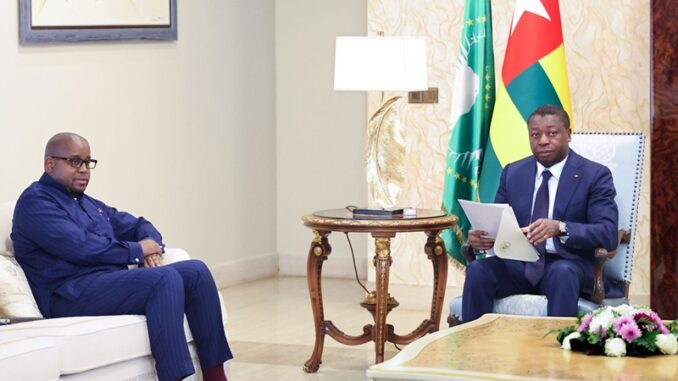
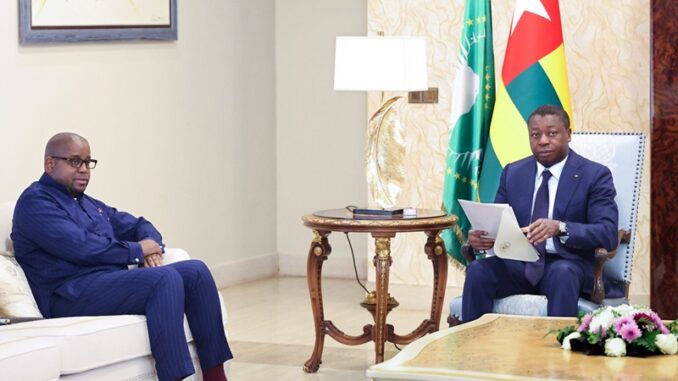
The political chessboard in the Democratic Republic of the Congo (DRC) has shifted significantly this week as Congolese officials delivered a high-stakes diplomatic message to Togo’s President Faure Gnassingbé — a pivotal figure in continental efforts to stabilize the eastern DRC.
In a carefully orchestrated engagement in Lomé on September 29th, Floribert Anzuluni, the DRC’s Minister of Regional Integration, presented President Gnassingbé with a formal written communication from President Félix-Antoine Tshisekedi Tshilombo. The contents? A renewed appeal to advance peace across eastern DRC, where long-standing security crises have flared anew since late 2021.
This diplomatic maneuver signals more than a routine outreach. It marks a deliberate acceleration in President Tshisekedi’s strategy to revitalize the stalled peace process — one now entrusted to Togo’s leader, who has led African Union (AU) mediation efforts since April 2025, succeeding Angola’s previous envoy. The shift comes as militants regroup, ceasefire agreements falter, and civilian casualties rise, underscoring the urgent need for decisive action.
New momentum in a stalled peace process
The message delivered by Minister Anzuluni wasn’t just ceremonial. Behind closed doors, he briefed President Gnassingbé on the DRC’s latest initiatives to de-escalate tensions through the demobilization and reintegration of armed groups — a core pillar of Kinshasa’s plan to regain control and restore stability in the troubled eastern provinces.
The eastern DRC has been embroiled in violence despite multiple regional and international mediation attempts. Earlier efforts from Doha and Washington failed to yield lasting peace, leaving communities trapped in cycles of displacement and economic collapse. With security deteriorating and rebel factions reconstituting, the AU’s renewed mediation — led from Lomé — represents a critical turning point.
From Angola to Togo: a changing of the guard in African mediation
The transition from Angolan to Togolese leadership in the AU peace process wasn’t merely symbolic. It reflected a strategic recalibration: the need for a fresh diplomatic approach, closer regional proximity to DRC, and greater leverage with key stakeholders. Since taking the helm in April 2025, President Gnassingbé has prioritized high-level shuttle diplomacy, convening talks in capitals across the Great Lakes.
His mandate? Secure a durable ceasefire and lay the groundwork for long-term stabilization across the Great Lakes region — a goal that now hinges on Tshisekedi’s latest overture and the Congolese government’s commitment to meaningful disarmament and dialogue.
Can this be the breakthrough eastern DRC has waited for?
The stakes couldn’t be higher. Eastern DRC remains one of Africa’s most volatile regions, with over 7 million displaced persons and economies crippled by conflict. Previous peace accords crumbled under the weight of political divisions and unmet promises. Yet this moment is different: both leaders are under immense pressure to deliver tangible results.
As President Gnassingbé receives the message from Kinshasa, observers are watching closely. Will Tshisekedi’s renewed commitment to peace, combined with Gnassingbé’s ongoing mediation, finally break the deadlock? Or will history repeat itself, leaving yet another chapter of violence unfinished?
One thing is clear: the push for peace in eastern DRC has entered a decisive phase — and this time, failure is not an option.