
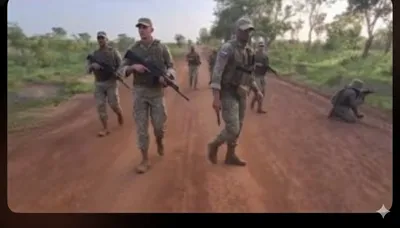
A peaceful evening in Obo, a town in the southeastern reaches of the Central African Republic, was shattered after a group of armed individuals stormed the home of Thierry, a local father, in the early hours of Tuesday. Witnesses report that the intruders, believed to be linked to Russian mercenary factions operating in the region, forcibly entered the residence and systematically looted valuables and essential belongings.
The attack left Thierry’s family traumatized, with no physical harm reported but significant material losses. Among the items taken were household appliances, cash savings, and personal documents—irreplaceable items that underscore the severity of the breach. Neighbors, who requested anonymity for safety reasons, described the assailants as heavily armed and moving with tactical precision, suggesting a coordinated rather than opportunistic raid.
Local authorities have yet to issue an official statement regarding the incident, though whispers in the community point to growing concerns over the presence and behavior of foreign armed groups in the area. The Central African Republic has seen an escalation in security challenges, with mercenary outfits playing an increasingly visible role in the conflict dynamics. Residents of Obo, a town already grappling with instability, now face heightened anxiety over their safety and property.
Community reaction and unanswered questions
The incident has sparked outrage among locals, who see it as a brazen violation of their rights. Community leaders are calling for urgent action to hold those responsible accountable and to prevent further incidents of this nature. “This is not just about Thierry’s loss—it’s about the safety of every family here,” remarked a local elder, who declined to be named.
Questions linger about the motives behind the attack. Some speculate it may be tied to ongoing tensions between armed factions vying for control in the region, while others suggest it could be a deliberate act of intimidation. Whatever the case, the lack of transparency from both local and international actors involved in the region’s security efforts has only fueled distrust among the populace.
What’s next for Obo’s residents?
For now, Thierry and his family are staying with relatives, too afraid to return to their home until they are assured of their safety. The broader question remains: How will the Central African Republic address the growing influence of mercenary groups and the chaos they bring? With no clear answers in sight, the people of Obo are left to navigate a precarious future, where the next threat could come at any moment.