
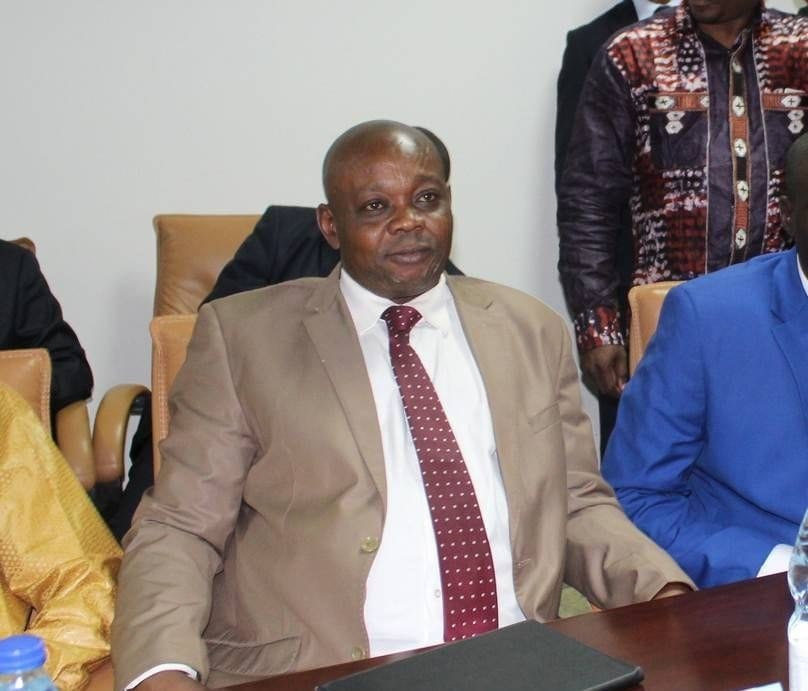
Tchad : l’affaire du général Abdoulaye Miskine déprogrammée, le procès toujours bloqué
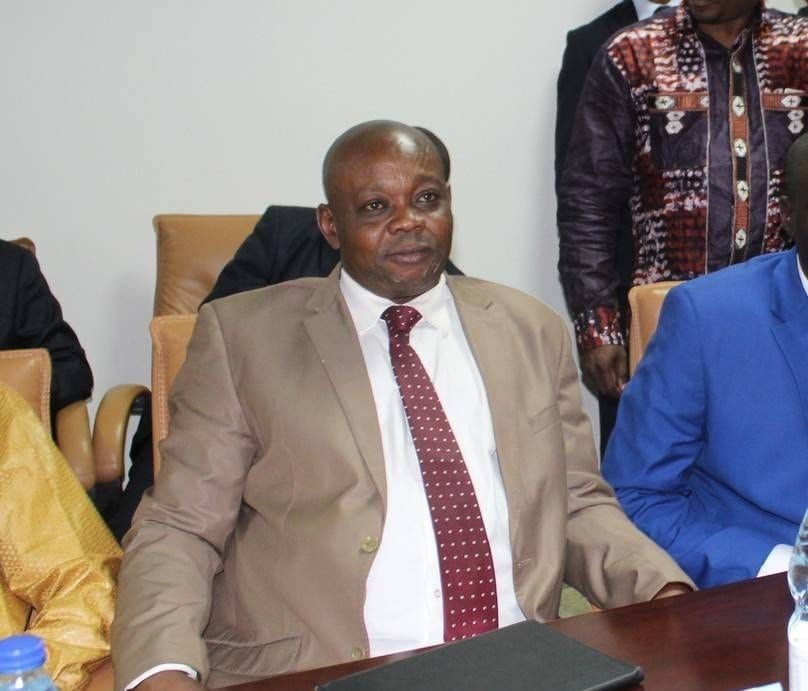
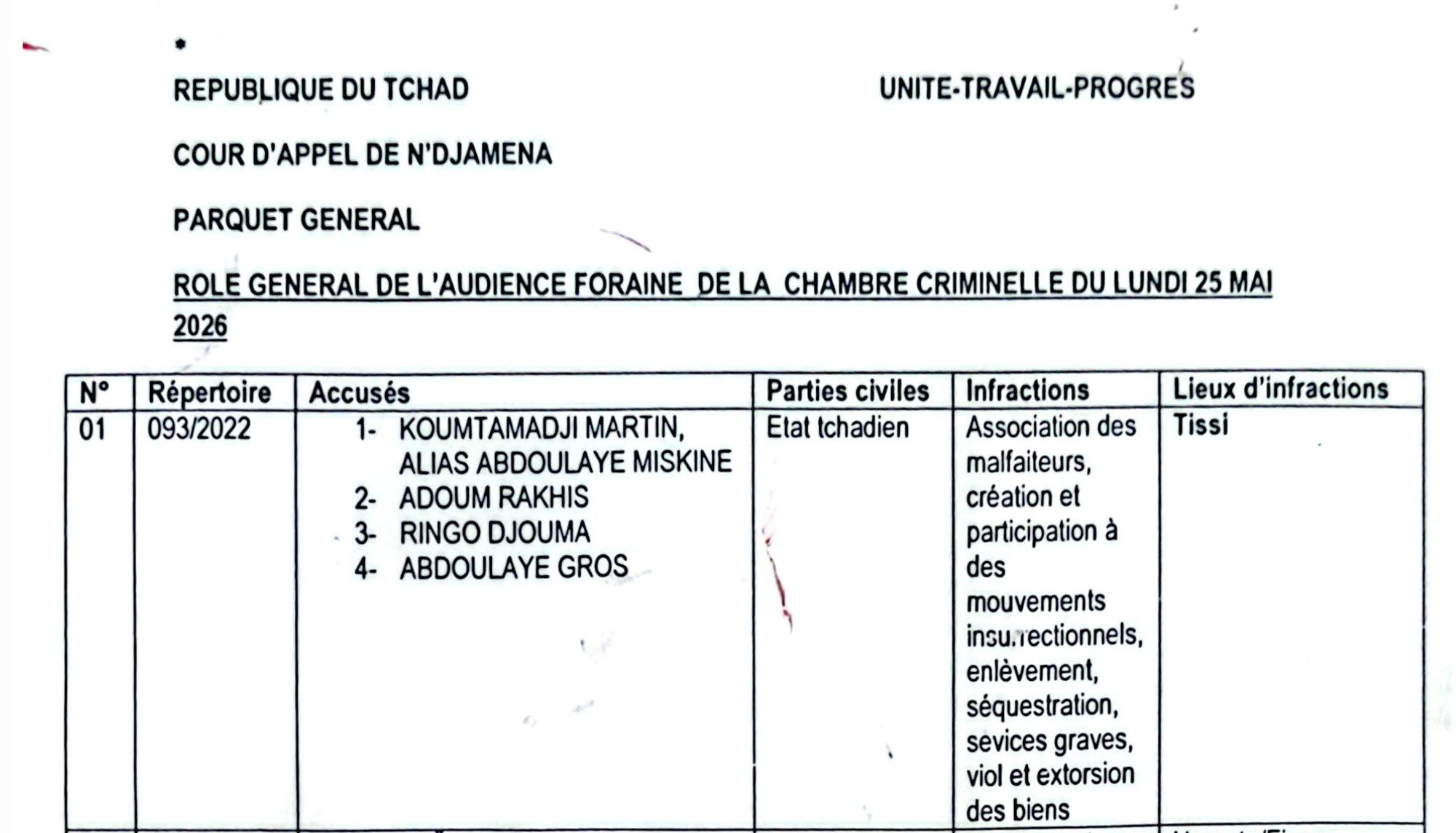
The judicial proceedings concerning General Abdoulaye Miskine, whose birth name is Martin Koumtamadji, continue to face an unresolved deadlock in Chad. Originally slated for the itinerant session of the criminal chamber at the N’Djamena Court of Appeal on Monday, May 25, 2026, his highly anticipated hearing was unexpectedly removed from the schedule. This decision comes after years of detention without a formal judgment.
Records indicate that the case, identified under file number 093/2022, listed Abdoulaye Miskine alongside co-accused individuals such as Adoum Rakhis, Ringo Djouma, and Abdoulaye Gros. The charges are severe, encompassing criminal association, the creation of and participation in insurrectional movements, kidnapping, unlawful confinement, grievous bodily harm, rape, and extortion of property. The alleged location of these offenses is Tissi.
General Miskine was apprehended in N’Djamena in November 2019 and has since been held at the Klessoum detention facility for over six and a half years without his case being heard. The most recent scheduled hearing on May 25, 2026, was reportedly suspended. While some attributed the postponement to the sudden passing of a court clerk, no subsequent date has been announced, intensifying concerns surrounding this already sensitive matter.
Local observers suggest that the case has been indefinitely withdrawn from the court calendar. Individuals close to the proceedings hint at political pressures as a significant impediment to the trial of the former leader of the Front Démocratique du Peuple Centrafricain (FDPC), despite the extensive duration of his incarceration and repeated appeals from his legal counsel and family.
The Central African Republic had previously sought his extradition, a request Chad ultimately declined. His involvement in the 2019 Khartoum Peace Accord further complicates this intricate legal matter, adding a notable political and regional dimension.
Concerns regarding his health are also mounting. For several years, his relatives have highlighted his struggles with renal insufficiency, arterial hypertension, visual impairments, and significant weight loss. He has undergone multiple hospitalizations, including in 2025, a year during which he also initiated a hunger strike following the confiscation of his medications.
For his proponents, this protracted situation exemplifies detention without due process. Conversely, judicial authorities officially maintain that the case remains active within the justice system. Nevertheless, the abrupt de-scheduling of the May 25, 2026, hearing reignites criticism over the persistent stagnation of this high-profile case, which intersects crucial judicial, security, and political interests between Chad and the Central African Republic.
As of now, no new trial date has been publicly communicated. The case of Abdoulaye Miskine thus remains in a state of indefinite suspension, devoid of any clear path toward judgment, release, or extradition.