
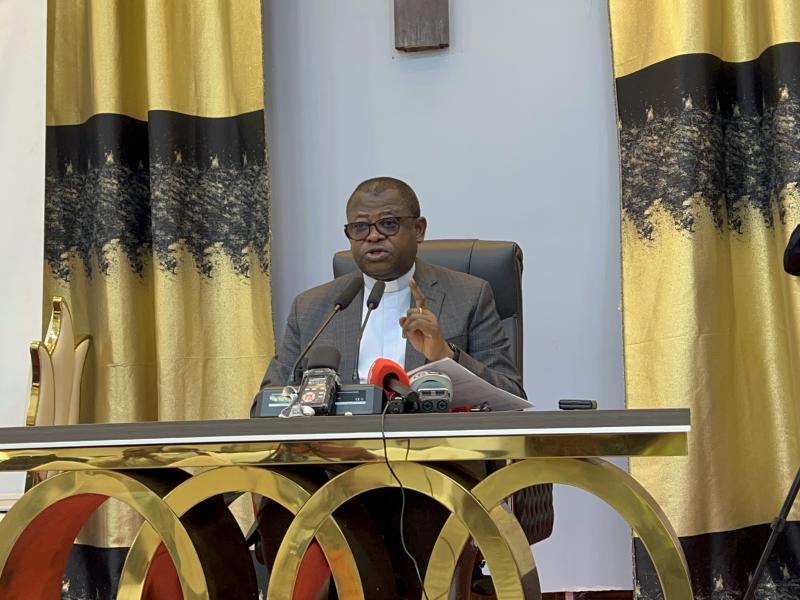
The National Episcopal Conference of the Congo (CENCO) has issued a strong warning against proposed constitutional changes, describing them as a threat to the country’s democratic foundations.
CENCO Secretary-General Mgr Donatien Nshole
Historic compromise under threat
The Catholic Church, through its spokesperson Mgr Donatien Nshole, has forcefully rejected amendments to the nation’s 2006 constitution. The proposed changes would allow modifications to articles previously locked to prevent future abuses, including term limits for the presidency.
The Episcopal Conference argues that these amendments would “breach the republican pact” painstakingly established after decades of political turmoil. The Church specifically targets the recently enacted referendum law, which it claims creates a legal loophole for constitutional amendments that should remain untouchable.
Dangerous precedents
Mgr Nshole warned that tampering with these locked provisions could trigger “severe consequences, including the country’s fragmentation” and potentially reignite ethnic-based conflicts. He emphasized that article 220, which protects these constitutional safeguards, serves as “the last barrier against dictatorship and state capture.”
The Church’s statement comes after months of escalating political tensions, with opposition groups accusing authorities of attempting to extend presidential terms through legal maneuvers.
Peace and stability prioritized
CENCO concluded its statement by reiterating that constitutional reform holds “neither necessity, urgency, nor opportunity” in the current national context. Instead, the Church called for prioritizing “peace, social welfare, national unity, and cohesion.”
The Episcopal Conference’s intervention amplifies growing concerns about political stability in a nation still grappling with the aftermath of decades of conflict and governance challenges.