
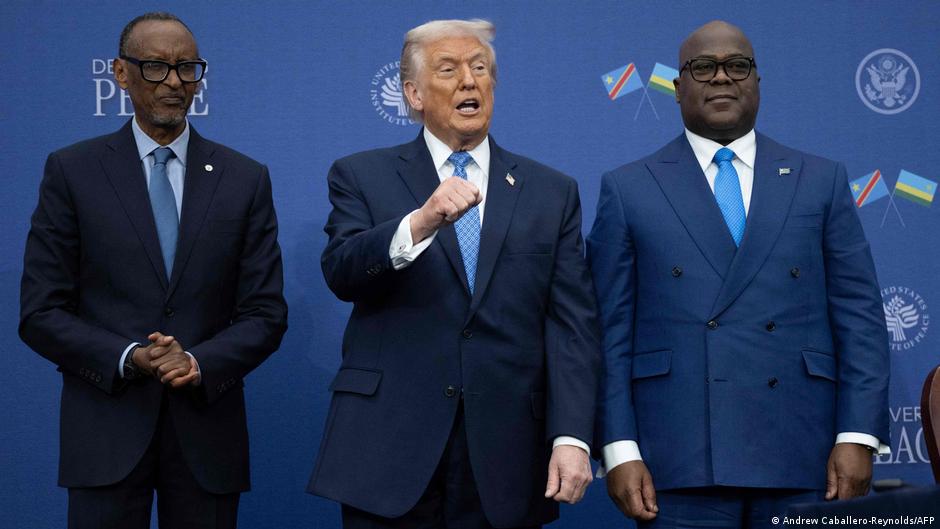
The République démocratique du Congo has formally approached the International Court of Justice to file a case against Rwanda, citing the latter’s support for armed factions like the AFC-M23 in the eastern provinces. This legal move comes at a symbolic moment, as June 27 marks the first anniversary of the peace agreement signed between the two nations in Washington. Despite that diplomatic effort intended to halt the violence, heavy fighting persists between the Congolese military and the AFC-M23 rebels, who receive backing from Kigali.
In a parallel move, the États-Unis have implemented sanctions against several Rwandan officials. These individuals are accused of involvement in the illicit trade of minerals extracted from territories currently under rebel control.
Diplomatic promises versus the reality of war
While Kinshasa and Kigali originally pledged to cooperate for the restoration of security in eastern Congo, where AFC-M23 rebels have held significant territory for over a year, there is little evidence of progress. On the ground, the situation remains stagnant and dangerous.
Residents in Bukavu, the capital of Sud-Kivu, are vocal about their frustration. Many expected the Washington accord to lead to the reopening of essential services like banks and airports. Instead, they report that daily life remains defined by hardship and misery. There is a growing skepticism regarding the influence of the États-Unis, with locals questioning why the pressure applied during diplomatic summits does not translate into holding neighboring aggressors accountable. While leaders display good intentions during meetings, the reality for those on the front lines is an unending cycle of warfare.
Kigali faces legal pressure and economic sanctions
The Congolese government maintains that Rwanda has spent nearly three decades supporting armed groups linked to severe human rights atrocities in the east. By taking the matter to the Cour internationale de Justice, Kinshasa is seeking formal recognition of Kigali’s liability and demanding reparations for the victims of the conflict.
Simultaneously, Washington has targeted the financial roots of the rebellion. Sanctions have been imposed on the Rwandan refinery Gasabo Gold, its leadership, and several mining firms. These entities are accused of facilitating the smuggling of minerals from AFC-M23-controlled zones, which serves as a primary funding source for insurgent activities. However, conflict experts like Yvon Muya from Saint-Paul University suggest that these measures may not be enough to change the strategic behavior of those involved, as the benefits of maintaining the status quo currently outweigh the costs of making concessions.
Signs of a major military escalation
With daily skirmishes reported in multiple areas, the prospect of peace seems increasingly remote. Academic observers, including Professor Bob Kabamba of the University of Liège, suggest that both sides are utilizing this period to reorganize and rearm for a decisive confrontation.
The central question remains whether government forces can reclaim the territories seized by the rebellion or if the AFC-M23 will push further toward Katanga, posing a direct threat to the administration in Kinshasa. Currently, the rebels maintain control over Goma and Bukavu, along with various other towns in Nord-Kivu and Sud-Kivu. This ongoing occupation continues to fuel a dire humanitarian crisis, displacing thousands of civilians across the region.