
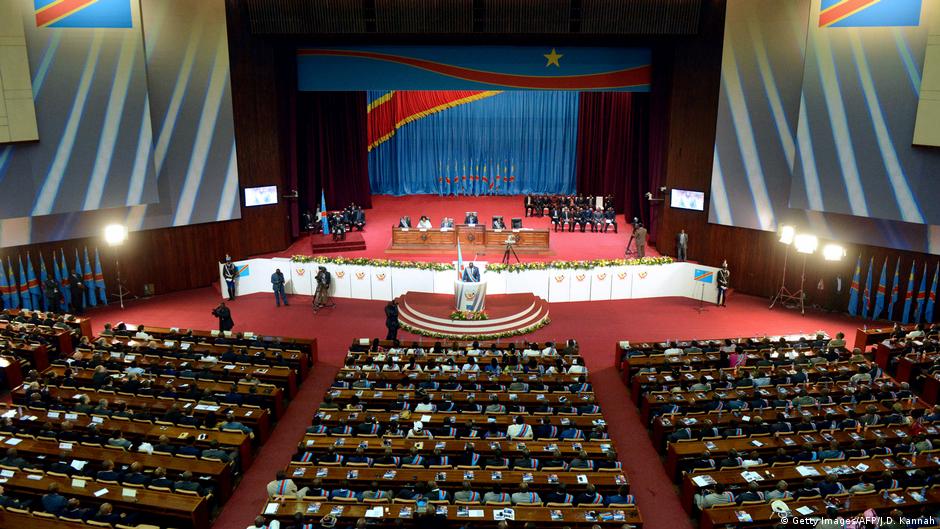
The examination of the draft law on the conditions for organizing a referendum has exposed deep divisions between the ruling majority and the opposition in Kinshasa.
During the May 27 plenary session, the opposition group Ensemble pour la République walked out, signaling their strong opposition to the proposed legislation. The bill, spearheaded by lawmaker Paul-Gaspard Ngondankoy, aims to modernize the legal framework for referendums, replacing a system inherited from the 2005 political transition. It seeks to clarify the conditions under which popular consultations, as outlined in the Constitution, can be held.
The ruling coalition defends the initiative as a legitimate parliamentary process. Steve Mbikayi, a Member of Parliament representing Mont-Amba in Kinshasa and President of the Labour Party (allied with the Union Sacrée de la Nation), argues that constitutional reforms fall solely under the authority of the ruling majority.
“The power to decide on the necessity of constitutional or legal reforms belongs to the ruling majority. The opposition has no constitutional right to initiate or challenge such reforms. Only the parliament, the Head of State, or a petition signed by over 5,000 Congolese citizens can do so. Anything else is nothing but political theatrics,” he stated.
opposition slams referendum plans amid security crisis
The opposition, however, views the timing as highly inappropriate, given the ongoing insecurity in the eastern regions of the country. Christian Mwando, a member of the Ensemble pour la République parliamentary group, warns that debating a referendum now could legitimize rebel groups in the East and pave the way for unconstitutional constitutional changes.
“Our parliamentary group calls on the President to halt these dangerous initiatives that risk legitimizing rebellion in the East. We urge the Congolese people to reject this sinister project, which threatens the very survival of our nation. We see this process as a conspiracy against the Constitution of the Democratic Republic of the Congo,” he declared.
political tensions escalate with planned protests
Aimé Boji Sangara, President of the National Assembly, clarified that the bill’s sole purpose is to establish a legal framework allowing citizens to directly express their views on national issues when conditions permit. Despite the opposition’s withdrawal, the report from the Political, Administrative, and Legal Commission was deemed admissible following amendments.
The political confrontation is now shifting beyond parliamentary walls. The opposition has called for a nationwide “ghost town” day on June 3 to protest what they perceive as an attempt to revise the Constitution. Meanwhile, a counter-march organized by ruling coalition supporters is scheduled for the same day in Kinshasa and several provinces.