
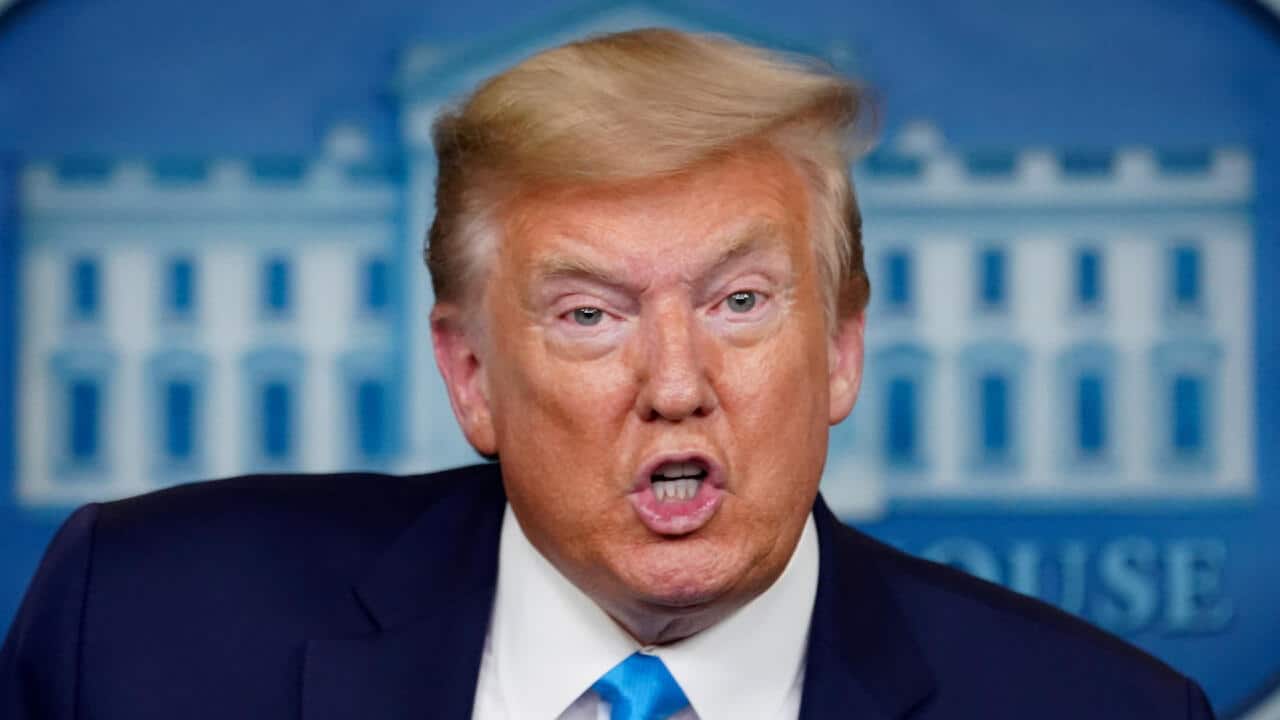
Washington has systematically overhauled its approach to Cameroon, positioning the Central African nation as a cornerstone in the effort to dismantle Chinese dominance in the global supply chain.
Since his initial term in office, Donald Trump has fundamentally restructured United States foreign policy to challenge China, identifying Beijing as the primary competitor to American global leadership. A central pillar of this offensive is the urgent strategic mandate to eliminate dependence on Chinese-controlled rare earth elements. To spearhead this initiative, the administration is leveraging the expertise of GreenMet.
GreenMet is led by CEO Drew Horn, who recently conducted high-level discussions in Yaoundé. Horn is no stranger to the inner circles of American power, having previously served as a senior advisor to the Director of National Intelligence and as a national security official under Donald Trump. He represents the public face of a broader American program involving several of Trump’s long-time associates, including former legal advisor Georges Sorial and Keith Schiller, the former security director for the Trump Organization.
This strategic delegation visited Cameroon to finalize various Memoranda of Understanding (MoUs). While the specific details remain confidential, it is clear that American Renaissance Minerals (ARM), a subsidiary of GreenMet, has secured a dominant position in the Nkamouna nickel and cobalt project. Beyond these metals, Washington is also intensely focused on securing Cameroon’s rare earth deposits.
Bypassing trade barriers and ensuring transparency
Donald Trump’s commitment to this partnership is so strong that he has successfully navigated around Congressional restrictions that previously excluded Cameroon from the AGOA trade program. Instead, the American President is utilizing the American Chamber of Commerce in Cameroon (AmCham) as the primary vehicle for bilateral trade agreements.
In a direct contrast to China’s heavy presence in the Democratic Republic of Congo, the United States is conditioning its support on rigorous transparency within the legal and extractive sectors. This approach is partly driven by a desire to domesticate processing and reduce carbon footprints. Furthermore, American intelligence services have reportedly stepped in following reports of illegal gold trafficking, collaborating with Yaoundé to identify and stop those exploiting the nation’s resources.
Strengthening security and diplomatic ties
The diplomatic relationship is also tightening. The United States has significantly restricted the number of African nations eligible for American visas, yet Cameroon remains one of only 20 countries on the continent still granted this privilege. Security cooperation has reached new heights as well; in a span of just eight months, President Paul Biya hosted General Dagvin Anderson, then-commander of AFRICOM, in September 2025, followed by Lieutenant General John William Brennan Jr., AFRICOM’s deputy commander, in May 2026.
Improving the local business environment is a top priority for Washington. Earlier this year, following a meeting with President Paul Biya, Christopher Lamora expressed a strong desire to see more American firms investing in Cameroon. He noted that such partnerships and joint ventures would be mutually beneficial, supporting American industry—a core priority for Donald Trump—while simultaneously accelerating the Cameroonian economy.
By engaging so deeply, Washington aims to counter the massive $700 billion investment China has spread across 49 African nations. Some political analysts suggest that Trump’s ultimate goal is to transform strategic partners like Cameroon, Nigeria, and Kenya into economic powerhouses, mirroring the rapid development of the “Asian Tigers” in previous decades.