
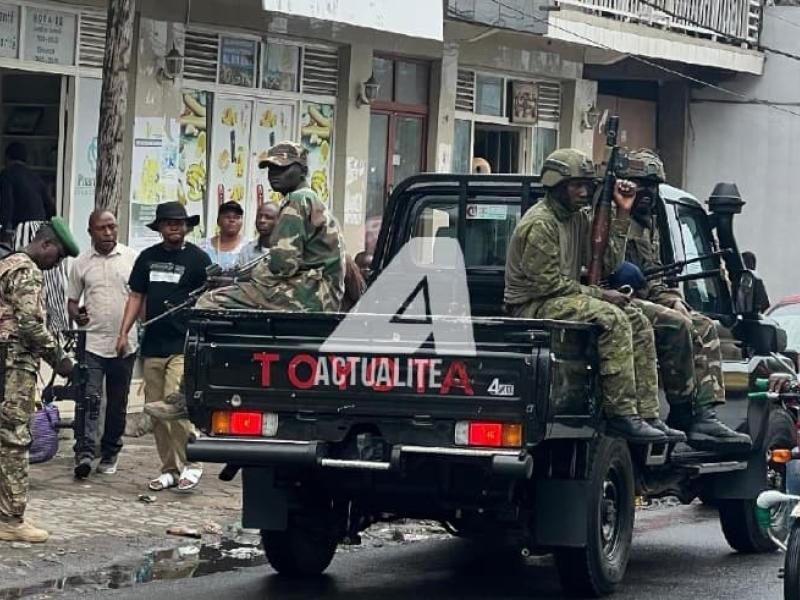
The East of the Democratic Republic of the Congo (DRC) continues to grapple with a persistent security crisis, now complicated by fresh accusations of foreign interference. During a joint press conference in Bujumbura, Burundi, on Friday, July 10, 2026, Russian Foreign Minister Sergei Lavrov pointed a finger at Ukraine, alleging its involvement in supporting the M23 rebel group operating in the North Kivu and South Kivu provinces.
The accusations come amid escalating tensions in the region, where the Alliance of the Congo River Forces (AFC/M23), a politico-military movement, has been accused by the United Nations and the DRC government of receiving military backing from Rwanda. According to Lavrov, Ukraine’s alleged support for the rebels is part of a broader strategy to undermine governments perceived as close to Moscow while expanding its own influence across Africa.
Russia’s allegations and their implications
Speaking alongside his Burundian counterpart, Édouard Bizimana, Lavrov condemned what he described as “blatant interference in African affairs”, particularly in the DRC. He stated that Kinshasa, with support from Bujumbura, is facing an aggression led by the M23, which he claims is bolstered by foreign actors, including Ukrainian operatives.
“We observe such attempts at flagrant interference in African affairs, particularly in the Democratic Republic of the Congo. The legitimate authorities of this Republic, with the support of Burundi, are today facing an aggression led by the so-called M23 group, which is backed by foreign representatives, among them Ukrainians. We are aware of this, and our Burundian friends are as well.”
The Russian foreign minister further alleged that Ukraine’s involvement in African conflicts is driven by a desire to weaken countries allied with Russia and position itself as a key player on the continent. He emphasized that Ukrainian operatives are increasingly active in training and advising rebel factions, including the use of armed drones—a tactic that has raised serious concerns about escalating violence and its humanitarian toll.
International reactions and diplomatic deadlock
The accusations have added another layer of complexity to the already fragile peace processes in the DRC. Despite the signing of the Washington Agreement and ongoing negotiations under Qatari mediation in Doha, the conflict shows no signs of abating. Disputes over the interpretation of the agreement between Kinshasa and Kigali, as well as the failure of the Montreux meeting in Switzerland to produce tangible progress, have left the crisis unresolved.
Russia’s representative to the United Nations, Anna Evstigneeva, echoed Lavrov’s concerns during a UN Security Council session on June 26, 2026. She highlighted the growing use of combat drones in the conflict, including a deadly strike in Goma on March 11 that killed a UNICEF staff member. Evstigneeva also raised alarms about the presence of foreign mercenaries—some with military experience in Ukraine—who are reportedly deployed as drone operators or military instructors in the DRC.
“We are also concerned by reports of the involvement of foreign mercenaries, some of whom gained experience in Ukraine and are now employed as drone operators or instructors.”
As diplomatic efforts stall, the humanitarian and security situation in eastern DRC remains dire. Civilian populations continue to bear the brunt of the conflict, with reports of intensified drone strikes and the presence of foreign fighters fueling instability. The international community’s calls for adherence to peace agreements have yet to translate into concrete action, leaving the path to resolution uncertain.
Key takeaways
- Escalating accusations: Russia accuses Ukraine of supporting the M23 rebels in eastern DRC, alleging this is part of a broader strategy to undermine Russian influence in Africa.
- Diplomatic impasse: Despite agreements like the Washington Accord and negotiations in Doha, the conflict persists due to unresolved disputes between Kinshasa and Kigali.
- Humanitarian crisis: The use of combat drones and foreign mercenaries has worsened the security situation, with civilians bearing the heaviest burden.
- International concern: Russia and other actors are increasingly vocal about the risks posed by foreign interference, but meaningful action to address the crisis remains elusive.