
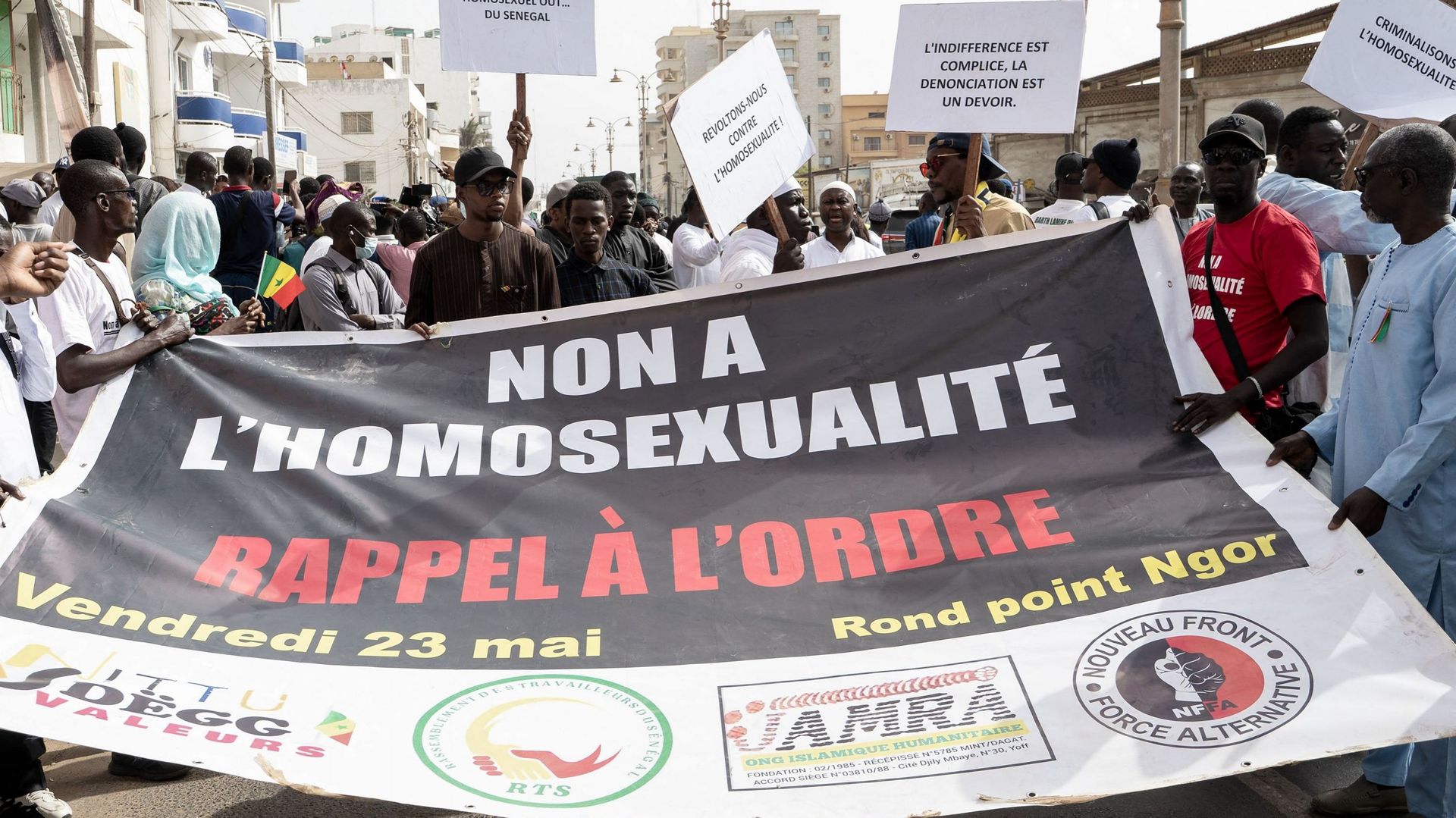
As Brussels prepares to mark three decades of Pride celebrations this weekend, the contrast with the reality in Senegal couldn’t be more stark. While Europe reflects on progress in human rights and LGBTQ+ visibility, a new wave of repression is sweeping through Dakar. A recently enacted law has dramatically intensified the persecution of homosexual individuals, positioning Senegal among Africa’s most hostile nations for LGBTQ+ rights.
The legislation, signed by President Bassirou Diomaye Faye, doubles the maximum prison sentence for “acts against nature” from five to ten years. Fines have been multiplied tenfold, now reaching up to 10 million West African CFA francs—equivalent to more than €15,000. The bill, presented as a “sovereignty project” by Prime Minister Ousmane Sonko, passed unanimously through Senegal’s National Assembly on March 11, 2026, with 135 votes in favor and none against, sealing the fate of countless lives.
climate of terror and vigilante violence
The consequences of this legislation are already visible. In recent weeks alone, over a hundred individuals suspected of homosexuality have been detained. Some choose imprisonment over facing the wrath of mobs seeking to administer their own form of justice. “You live in constant fear. At any moment, they could come for you. You’re forced to hide. This isn’t living“, confides a young Senegalese man under anonymity.
He reveals how public discourse has been weaponized: “They’ve convinced people that hating homosexuals makes you more pious. That killing a gay person sends you straight to paradise. Who you love—men or women—is a personal matter. It’s between you, God, and no one else.“
The atmosphere of paranoia has even ensnared foreigners. The arrest of a French engineer, reportedly taken from his home in a raid-like operation, has sent shockwaves through Dakar’s expatriate community. “When we heard how it happened—police banging on his door, dragging him out—it terrified us. Now, no one is safe,” shares a close associate.
political and religious exploitation
This climate of fear is being actively cultivated from the highest levels of power. The religious group And Sàmm Jikko Yi, which lobbied aggressively for the law’s passage, has labeled LGBTQ+ individuals as “public dangers“. Its president, imam Babacar Sylla, has publicly claimed without evidence that homosexuals “deliberately spread disease“, displaying complete lack of empathy for the community.
Government officials have seized on this rhetoric to divert attention from growing economic recession, framing homosexuality as a “Western import” incompatible with Senegalese values. The strategy mirrors patterns seen in other African nations, where social issues are exploited to consolidate power while fundamental freedoms erode.
human rights under siege
The International Federation for Human Rights (FIDH) has sounded the alarm. “This law doesn’t protect anyone—it exposes already vulnerable people to arbitrary arrests, violence, and humiliation“, warns Drissa Traoré, FIDH’s Secretary General. The legislation also criminalizes any form of advocacy or support for LGBTQ+ rights, effectively silencing freedom of expression.
Public health is another casualty. Anonymous sources from Senegalese LGBTQ+ rights organizations report plummeting HIV testing rates. “People fear carrying condoms or lubricants could be used as evidence against them. Even those who know they’re positive now hesitate to seek treatment, putting decades of progress at risk,” explains a health worker.
Senegal is not alone in this regression. With 31 of Africa’s 54 nations criminalizing homosexuality—alongside 21 Asian countries—the continent is witnessing a dangerous rollback. While Uganda and Nigeria are often cited as the most repressive, Senegal, long considered a bastion of stability, has now joined their ranks. For those affected, exile or silence become the only viable options.