
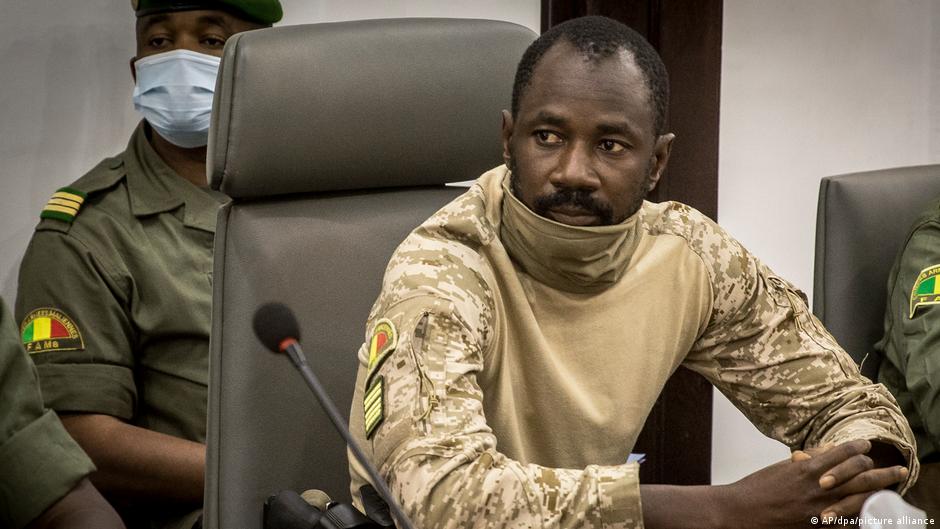
Five years ago, Colonel Assimi Goïta seized power in Mali through a military takeover. Since then, the country has faced intense scrutiny over his leadership. Yet, public opinion remains divided—while some criticize his rule, others still rally behind him. This is the complex reality of Mali today.
From hope to disillusionment: tracking Mali’s trajectory
When Assimi Goïta and his military allies took control in 2021, many hoped for stability and progress. Yet, five years later, Mali’s landscape tells a different story. Security has deteriorated in key regions, while freedom of speech and press freedom have sharply declined. Critics argue that the promise of a new dawn has faded into authoritarianism and stagnation.
Self-censorship and shrinking space for dissent
Public discourse has become increasingly restricted. While private conversations among trusted individuals may still take place, the atmosphere of fear is undeniable. Several journalists and political opponents now face imprisonment, while others have fled into exile. The government’s tightening grip on media and civil society has left little room for open criticism.
Security in retreat: the jihadist threat deepens
Initially, there were glimmers of hope in certain areas. Roads like the route to Ségou remained open for extended periods, allowing farmers to return to their land. Today, those gains have vanished. The country’s struggles—exacerbated by rapid population growth, climate change, and unrelenting insecurity—have overwhelmed any progress made. The jihadist groups Jama’at Nusrat al-Islam wal Muslimin (JNIM) and the Islamic State in the Greater Sahara (ISGS) now control vast territories, particularly in the north. Military interventions, including those by foreign forces, have failed to reverse their advance.
The limits of foreign support
Russia’s Wagner Group, once touted as a game-changer, deployed around 1,500 to 2,000 mercenaries—far fewer than the French forces that preceded them. Their presence, marked by brutality, did little to improve security and ultimately withdrew from key northern cities like Kidal without a fight. The much-touted solidarity within the Alliance of Sahel States (AES)—comprising Mali, Burkina Faso, and Niger—has proven largely symbolic. While these nations share a political and ideological alignment, their ability to provide tangible military or logistical support remains constrained by their own internal challenges.
The coordinated attacks in late April, involving both jihadists and Tuareg rebels, underscored Mali’s vulnerability. This assault, the most significant since 2012, was a direct challenge to the state’s authority. Though the government retained control, the loss of territory in the north dealt a severe blow to its credibility. The absence of meaningful support from Niger and Burkina Faso during the crisis further exposed the fragility of regional cooperation.
Public sentiment: fear of the unknown
Despite widespread frustration with the military leadership, many Malians remain reluctant to embrace alternatives. The populace is acutely aware of the risks: the prospect of jihadist rule or a return to the corrupt, France-aligned political elite of the past is deeply unappealing. This sentiment has helped sustain support for the current government, even amid growing hardships.
The average age in Mali is just 15 years old, and access to education is limited. Many young people rely on social media for information, where propaganda—including false narratives promoted by foreign actors—shapes perceptions. While discontent simmers, mass protests have been conspicuously absent. After the late April attacks, which weakened the government’s standing, the opportunity for public outcry arose. Yet, no significant demonstrations materialized. The reason is clear: the people fear the alternative far more than they resent the current leadership.
Can dialogue offer a way forward?
There is growing recognition that a purely military solution is unsustainable. Even among jihadist factions, there are moderate voices willing to engage in dialogue under certain conditions. The goal isn’t to legitimize extremist ideology but to explore pragmatic compromises that address local grievances—such as access to land and water—while gradually restoring state authority. Inspiration may be drawn from Mauritania’s approach, which combined military action with negotiated concessions to curb extremism.
The path ahead is fraught with challenges. The government’s legitimacy hinges on its ability to deliver tangible improvements in security and livelihoods. Yet, with limited resources and escalating threats, the odds are stacked against it. For now, Malians find themselves trapped between the devil they know and the one they fear even more.