

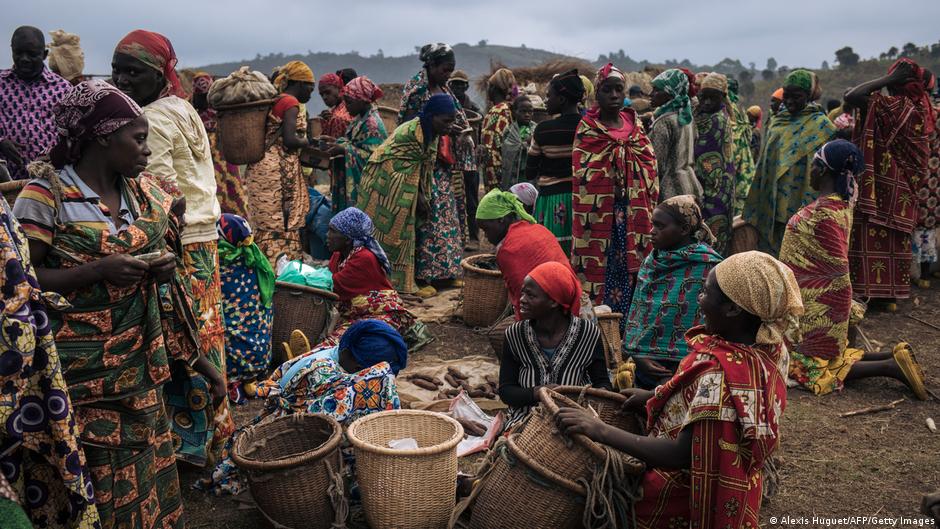
Fizi’s civilian population trapped by escalating conflict in eastern drc
In the highlands and mid-plateaus of Fizi territory, located in the eastern Democratic Republic of Congo’s South Kivu province, fierce clashes are underway. These confrontations pit the AFC/M23-Twirwaneho rebel coalition, which Kinshasa claims is backed by the Rwandan army, against the FARDC-Wazalendo coalition, reportedly supported by the Burundian army.
While both sides assert significant military advancements, local residents are primarily concerned by the heavy militarization of Baraka and Fizi-Centre. These two strategically important towns are experiencing increasing disruption to daily life.
Strategic zones become focal points of intense combat
On the ground, rebel forces declare they have pushed forward from Mulima village to the “Point Zéro” sector, moving towards Mukera. However, the Armed Forces of the Democratic Republic of Congo (FARDC) refute these claims, stating that they have, in fact, retaken several localities and pushed the combatants further south.
Beyond these conflicting reports, the stakes in this region are profoundly strategic. Baraka, situated on the shores of Lake Tanganyika, serves as Fizi territory’s main administrative hub. The town is a crucial link connecting the Uvira territory to the north with Tanganyika province to the south.
Following the AFC/M23 rebel attack on Uvira and their subsequent retreat northward, Baraka has emerged as a critical node for both civilian and military supplies. Its airfield and ports facilitate the transportation of reinforcements across Lake Tanganyika. Meanwhile, Fizi-Centre offers a key access route into the Minembwe Highlands, as well as towards the Maniema and Tanganyika provinces.
Residents gripped by pervasive fear
In this government-controlled area, inhabitants now live to the rhythm of relentless gunfire and explosions. Shots echoing almost every evening have sparked widespread panic. Businesses in the area now operate on a reduced schedule, opening around 9 AM and closing abruptly by 5 PM.
“Soldiers are numerous in the town; they have descended from the mountains. Every evening, activities cease abruptly. Bullets crackle in every direction… Recently, a bomb dropped by a drone injured people. We are living in insecurity, and it worries us, but we believe our government will find a solution,” described Justin, a resident of Fizi, conveying the palpable tension.
Army pledges to restore full control
In response to the deteriorating security situation, the FARDC has announced the launch of an offensive to reclaim villages that have fallen under rebel control in the highlands of Fizi, Uvira, and Mwenga. This particular region is notoriously difficult to access, with telecommunication networks remaining extremely limited.
“To the populations of Fizi, Mwenga, Uvira, and the entire South Kivu, the Armed Forces of the Democratic Republic of Congo extend a message of confidence and reassurance. We assure you that all operational measures are being undertaken to ensure your protection, continue the reconquest, and progressively restore state authority across every position in the national territory,” affirmed Lieutenant Reagan Mbuyi Kalonji, spokesperson for Operation Sukola 2 South-South-Kivu, emphasizing the military’s commitment.
Human rights advocates face mounting pressure
Despite military assurances, civil society organizations report a growing climate of intimidation. Several human rights defenders claim to be victims of arbitrary arrests, detentions, and abductions.
One anonymous activist stated: “Human rights defenders are enduring death threats, arbitrary arrests, and various forms of intimidation. They are frequently equated with allies of the AFC/M23 rebel movement. We urge the Congolese authorities to guarantee our safety and to cease all forms of intimidation against us, as we are not participants in the armed conflict.”
On the ground, the fighting persists without either side achieving a decisive advantage. The AFC/M23-Twirwaneho and the FARDC, supported by the Wazalendo, continue to accuse each other of using drones to bomb densely populated villages in the Minembwe region.
As these clashes prolong, the residents of Fizi and Baraka dread a further deterioration of the security situation and urgently appeal for a lasting return to peace.