
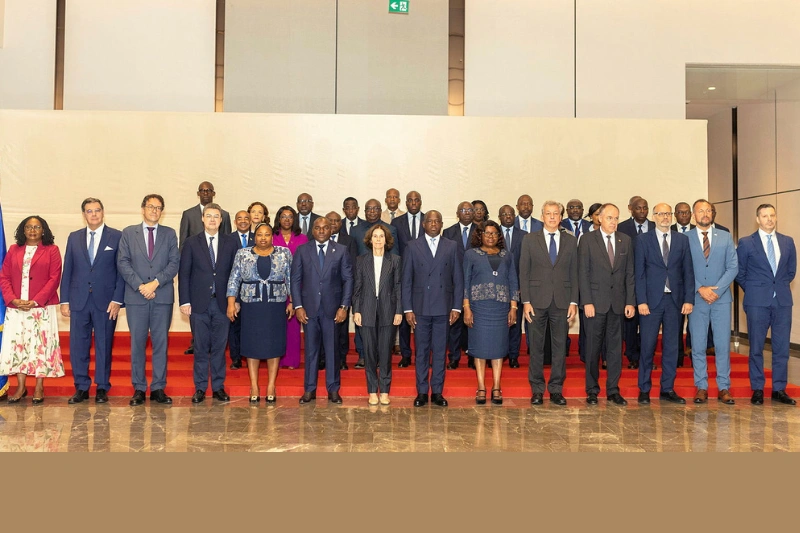
The Palais des Congrès Omar Bongo Ondimba in the Cité de la Démocratie recently hosted the second session of the strategic partnership dialogue between Gabon and the European Union (EU). This high-level meeting was co-led by the Vice President of the Government, Hermann Immongault, and the EU Ambassador to Gabon, Cécile Abadie, following their initial discussions held in October 2024.
A framework for concrete impact
Hermann Immongault highlighted that these discussions are rooted in the Samoa Agreement, which serves as the legal cornerstone for relations between the EU and members of the African, Caribbean, and Pacific (ACP) states. He noted that this framework seeks to establish a more balanced and operational partnership, specifically designed to produce tangible results through public policies and strategic investments.
Key pillars of cooperation
The working session focused on four primary areas of interest: political reforms and governance, economic outlooks, environmental protection and sustainable resource management, and regional and multilateral cooperation.
Both delegations expressed satisfaction regarding the institutional reforms implemented during Gabon’s current Transition period. The dialogue also provided a platform to address human rights and fundamental freedoms. Hermann Immongault remarked that no topics were off-limits, allowing for a transparent exchange that clarified various points of concern.
Economic growth and the Global Gateway
Economic discussions centered on Gabon’s structural reforms and efforts to enhance the local business climate to attract more international capital. The European Global Gateway strategy was also a key point of conversation, highlighting potential avenues for future development.
Environmental issues remained a priority. Both parties confirmed their shared vision for sustainable forest management and explored collaborative opportunities in sustainable fishing, renewable energy, and waste processing.
Regional security and integration
Finally, Gabon and the EU reaffirmed their commitment to multilateralism. They found common ground on several international challenges, particularly regarding maritime security and regional integration. Moving forward, both partners intend to deepen their ties and continue consulting on shared priorities within a framework of mutual trust and openness.