
Gabon’s strategic vision for economic emergence is yielding significant milestones. With the goal of becoming a premier mining and industrial powerhouse in Central Africa by 2030, the nation is making substantial investments in its infrastructure. Following the recent strategic agreement with Africa Global Logistics (AGL) for the Kobe-Kobe development, the government has moved swiftly into the implementation phase.
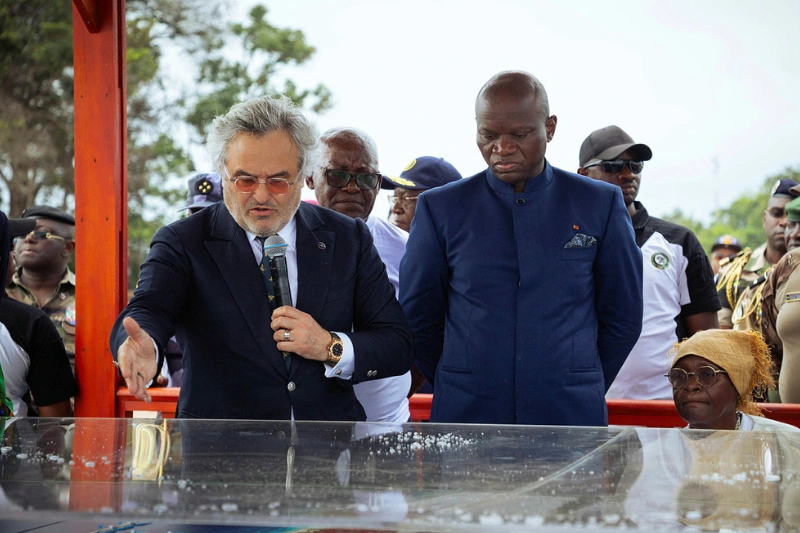
On Monday, June 8, 2026, President Brice Clotaire Oligui Nguema officially launched the construction of the Kobe-Kobe deep-water port by laying the first stone of this transformative project.
A comprehensive industrial and logistics complex
The ambitious Kobe-Kobe project is designed as an integrated hub that will include a mineral terminal, a multipurpose quay, and a specialized railway loop. The site will also feature a dedicated residential district, cargo storage zones, and modern administrative offices. This initiative underscores Gabon‘s commitment to processing its raw materials locally, moving toward full economic sovereignty.
This vision is being realized through collaborations with international economic partners from five continents. Each stakeholder is expected to contribute to a unified value chain, spanning from mining and iron ore extraction to processing plants. “Everyone must work and deliver tangible results,” the Head of State emphasized during the ceremony.
Strategic impact for Central Africa
The Minister of Transport and Merchant Marine, Ulrich Manfoumbi Manfoumbi, noted that the project represents more than just infrastructure. It serves as the foundation for a new development model centered on industrialization, local value addition, and logistics independence. The objective is to position Gabon as a vital logistics gateway and a strategic hub for the entire Central Africa region.
Recognized as one of the five largest mining endeavors globally, the Kobe-Kobe port is expected to begin export operations in April 2031, according to Philippe Labone, Director General of AGL. A crucial part of this network is a 550 km railway corridor that will link production sites to the port, with a transit time of approximately eight hours.
Economic growth and social development
The project’s scale is matched by its projected impact on the Gabon economy. Key expectations include:
- The creation of more than 100,000 jobs.
- An increase in the national Gross Domestic Product (GDP) by over 50%.
- An expected annual value generation exceeding 10 billion dollars.
To ensure the sustainability of this project, AGL has confirmed that young Gabonese citizens will receive specialized training to lead the operational processes. While technical studies are already in progress, the focus remains on integrating local talent into every stage of this industrial revolution.