
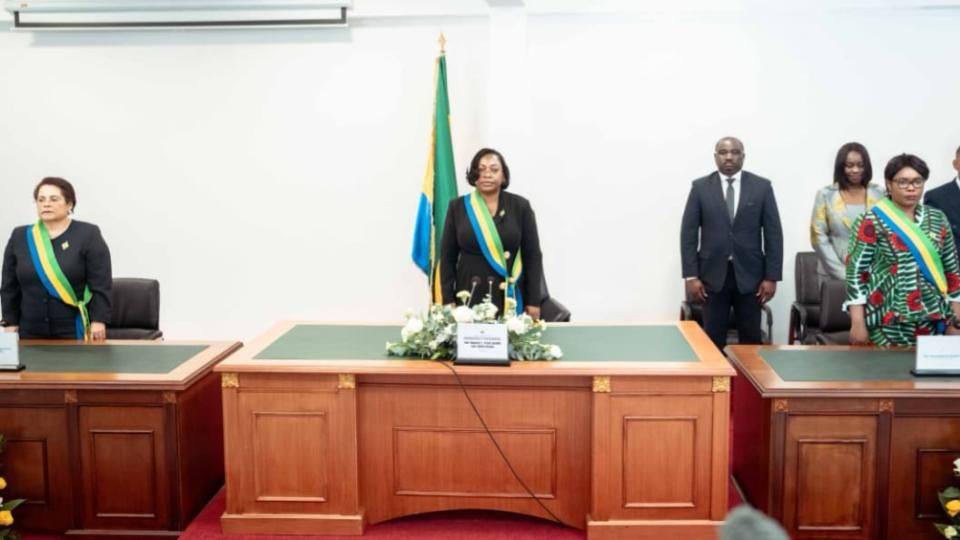
During the formal conclusion of the Senate’s inaugural ordinary session, the institution’s leadership issued a firm appeal to the Executive branch. Huguette Yvonne Nyana Ekoume-Awori, presiding over the upper house, advocated for a fundamental restructuring of parliamentary operations. She specifically highlighted the need for an equitable distribution of legislative drafts between the National Assembly and the Senate, strictly adhering to the principles of a bicameral system.
The Senate President emphasized that the constitutional framework should not relegate the upper house to a mere rubber-stamping body. She argued against the Senate simply reacting to the government’s shifting timelines. While acknowledging that certain documents, such as budget laws and constitutional amendments, follow specific priority rules, she insisted on a new approach for filing general bills to ensure both chambers are involved from the outset.
The Senate seeks respect for its legislative mandate
Addressing an audience that included Vice-President Hermann Immongault and several cabinet members, Nyana Ekoume-Awori urged for greater efficiency and speed in the legislative process. By sharing the workload fairly between both chambers from the start, the government could resolve structural bottlenecks that currently hinder parliamentary effectiveness. This shift is essential to prevent the legislative process from becoming lopsided.
Restoring this balance aims to solve two major issues: the chronic backlog of cases in a single chamber and the decline in the quality of laws caused by a “dictatorship of urgency.” Such haste often undermines the depth of parliamentary debate and the rigor required for law-making. This institutional reminder serves as a call for better cooperation to ensure that the legislative process respects the Senate’s essential role and guarantees high-quality legal standards for the nation.