Gabon’s digital sovereignty: navigating the landscape with global tech platforms
Libreville, Tuesday, July 14, 2026 – The digital economy, once viewed as an expansive virtual realm largely beyond national borders and sovereign control, is now entering a transformative phase. States are increasingly determined to reclaim authority over critical aspects such as citizen protection, content regulation, and the accountability of global platforms.
At Genève, amid the global “AI for Good” summit and the World Forum on the Information Society, Gabon delivered an unequivocal message to technology giants. The nation demonstrated its resolve to safeguard its digital sovereignty while simultaneously embracing the vast opportunities presented by the ongoing digital revolution.
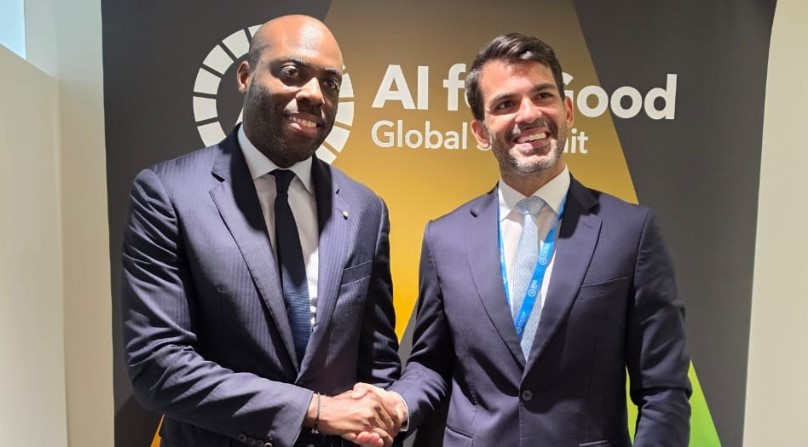
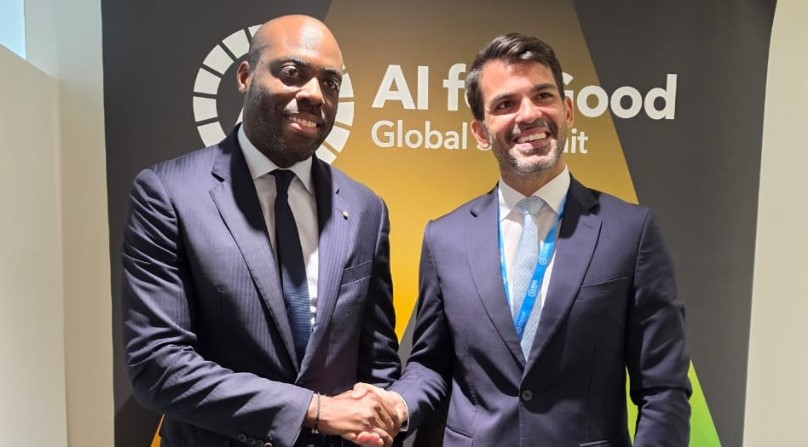
The pivotal meeting between Gabon’s Minister of Digital Economy, Mark-Alexandre Doumba, and regional representatives from TikTok transcended the scope of a mere institutional dialogue. It signaled the commencement of a new chapter in relations between Libreville and one of the most influential platforms among African youth.
From confrontation to collaborative engagement
The high-level gathering gains significant importance from its immediate context. Just months after tensions culminated in the temporary suspension of several social media networks across Gabon in February 2026, Gabonese authorities and TikTok have opted to re-establish communication, driven by a shared objective: to cultivate a digital environment that is safer, more responsible, and effectively regulated.
For Libreville, this issue extends far beyond mere technological considerations. Disinformation, hate speech, cyberharassment, the manipulation of information, and the exposure of minors to inappropriate content now pose significant public safety challenges and major societal concerns.
In this evolving landscape, Mark-Alexandre Doumba reiterated to the platform’s executives that the protection of young Gabonese users’ mental health, the fight against digital violence, and the preservation of social cohesion remain paramount governmental priorities. This strategic approach aligns with the broader national digital sovereignty strategy initiated by Gabonese authorities.
TikTok reveals extensive moderation efforts in Gabon
Responding to the concerns articulated by the authorities, TikTok embraced transparency by presenting concrete figures. Data shared during the Genève discussions indicated that the platform removed 23,504 videos and other content deemed sensitive or in violation of its community guidelines within Gabonese territory during the first quarter of 2026.
Beyond the sheer volume of removals, TikTok highlighted the efficiency of its technological framework. Nearly 99.8% of illicit content was reportedly detected automatically, even before any user reports were made. Furthermore, an impressive 92.9% of this content was suppressed before it could be viewed by internet users.
These statistics underscore the extensive application of artificial intelligence in the mechanisms for detecting, filtering, and removing sensitive content. They also illustrate the rapid advancement of moderation tools employed by leading global platforms to meet the escalating demands from sovereign states.
Digital sovereignty emerges as a strategic imperative
The Genève meeting between the Gabonese Minister and Emir Gelen, TikTok’s regional director, coincides with Gabon’s recent implementation of a strengthened legal arsenal for regulating digital platforms. A new ordinance governing digital spaces notably grants major international platforms a one-year period to comply with new national requirements concerning security, data protection, and content moderation.
The message emanating from Libreville is unambiguous: technological innovation cannot sustainably thrive without social responsibility. Global platforms can no longer operate merely as content hosts; they are progressively evolving into critical stakeholders in social stability, informational security, and the protection of vulnerable populations.
This paradigm shift extends well beyond Gabon’s borders. Across the globe, diverse states such as the European Union, Australia, Brazil, and numerous African nations are now seeking to establish new regulatory frameworks for American and Chinese technology giants.
Gabon clearly intends to participate in this global redefinition of digital governance. Rather than perpetual confrontation or a systematic reliance on access restrictions, Libreville appears to favor a co-regulation strategy founded on dialogue, shared responsibility, and an obligation to achieve results.
This choice is profoundly strategic. In an Africa where over 70 percent of the population is under thirty, the struggle for digital sovereignty will likely emerge as one of the most significant political, economic, and cultural challenges of the coming decades.
The Genève meeting could, in retrospect, be seen as a foundational moment in the development of this new Gabonese digital doctrine. A doctrine that seeks not to impede innovation but to frame it, not to close platforms but to hold them accountable, and not to oppose the state to technology giants but to forge a new equilibrium between digital freedom, collective security, and national sovereignty.
Gabon has thus initiated a significant undertaking whose repercussions are expected to extend far beyond its own frontiers, potentially inspiring other African nations grappling with similar challenges.
