
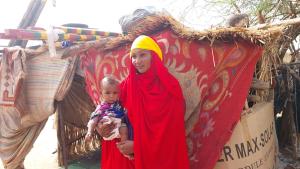
In the heart of N’Djamena’s outskirts lies the Mandjafa nomadic camp, where Afia recently traveled with her four-month-old daughter Fatma to access integrated health services designed for mobile communities. For this mother of five, whose livelihood depends on seasonal livestock movements, these health interventions are vital: “Vaccines keep my children healthy, and I always rush them to the nearest health center at the first sign of illness,” she shares.
Nomadic families like Afia’s make up approximately 3.5% of Chad’s population, facing unique challenges in accessing essential services due to their mobile lifestyle. The One Health approach, which unites health, livestock, environmental, and agricultural sectors, has emerged as a game-changer. On June 9, 2026, this strategy delivered integrated services to 134 individuals—including 11 children—at Mandjafa, combining human and animal vaccination (with 96 animals immunized), vitamin A supplementation, deworming, and insecticide-treated mosquito net distribution.
addressing health gaps through collaborative strategies
Dr. Mahamat Béchir, National Coordinator for One Health at the Ministry of Public Health, highlights why this approach was necessary: “Early 2000s studies revealed alarmingly low vaccination coverage among nomadic groups. We realized traditional methods wouldn’t suffice—our strategies had to align with their way of life.”
The initiative capitalizes on the existing trust nomadic communities have in veterinary services. By bundling animal and human health interventions, teams can reach more families efficiently, reducing travel burdens. Youssouf Idriss, a local herder with sheep, cattle, and camels, emphasizes the importance: “Our animals are our lifeline—they feed our families and sustain us. Their health is non-negotiable.”
transforming lives through coordinated health campaigns
Raphaël Neni, a veterinary officer with the Ministry of Livestock, has witnessed the impact firsthand over five years: “Post-vaccination, disease rates have dropped noticeably. Herders themselves report healthier livestock.” Beyond livestock benefits, these campaigns reduce zoonotic disease risks, bolstering community safety. The national One Health platform strengthens collaboration across sectors to tackle health threats like zoonoses, climate change, and environmental hazards.
Dr. Tamadji Mbaïhol, WHO Chad’s routine immunization lead, echoes this sentiment: “Nomadic communities actively seek health services when delivered on their terms. The challenge lies in meeting them where they are—when we adapt, participation soars.” This model’s success hinges on cross-ministerial and partner collaboration, with WHO’s support enhancing the platform’s capacity and aligning priorities.
As Afia prepares to return home with Fatma, she leaves with more than just health supplies—she carries a simple but powerful message for other parents: “Act fast when a child falls ill. Early care saves lives and keeps them strong.”
The One Health approach in Mandjafa is reshaping how Chad’s nomadic families access critical services, merging health, prevention, and livelihood protection into seamless interventions.