
Ivorian Union of Journalists Responds to Court Ruling with Urgent Extraordinary Congress
The Union Nationale des Journalistes de Côte d’Ivoire (UNJCI) faced a critical challenge on February 20 when a court issued an injunction suspending the organization’s ordinary Congress, which was set to renew its leadership. The ruling came after a collective claiming to uphold legal standards filed a writ of summons. In response, the UNJCI filed an appeal to contest the decision while avoiding a statutory void.
Extraordinary Measures to Preserve Institutional Continuity
With the original deadline for leadership terms set to expire on February 26, the UNJCI swiftly convened an extraordinary Congress on February 25. Under its constitutional framework, delegates voted by the required majority to extend existing mandates until the ordinary Congress could proceed without interference. This decision was framed as a necessary step to prevent institutional fragility rather than a concession to external pressure.
Violent Clashes Follow Leadership Vote
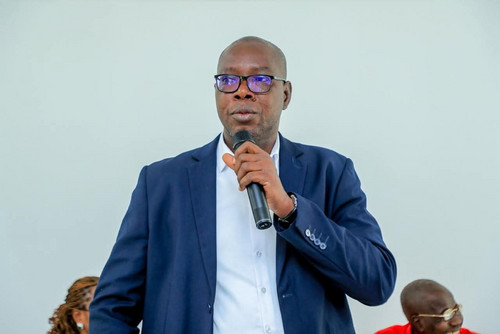
Post-vote tensions escalated into violent incidents, highlighting the volatile climate surrounding the dispute. Jean Claude Coulibaly, President of the UNJCI, emphasized the organization’s commitment to continuity in a public statement: “We acknowledged the court’s decision to suspend our Congress while pursuing an appeal, but allowing a leadership vacuum would have endangered our union. The mandate extension was a responsible move to safeguard institutional stability. The UNJCI stands as a collective home for Ivorian journalists and cannot be weakened or placed under external control.”
International Press Freedom Organizations Condemn Interference
The Fédération Internationale des Journalistes (FIJ) and the Fédération Africaine des Journalistes (FAJ) have condemned what they describe as a deliberate attempt to undermine the UNJCI’s autonomy. Omar Faruk Osman, FAJ President, criticized the situation: “Blocking a union from convening to renew its leadership and then exploiting the resulting vacuum constitutes a severe violation of trade union freedoms. This contradicts Côte d’Ivoire’s commitments to African and international labor standards. No political authority has the right to dictate the leadership of a journalists’ organization.”
Anthony Bellanger, FIJ Secretary-General, reinforced the gravity of the allegations: “This is a blatant breach of the right to association and an unacceptable interference in internal union affairs. Alongside the FAJ, we will file formal complaints with relevant international bodies—particularly the International Labour Organization—to address these abuses. The principle of union autonomy, enshrined in international law, is non-negotiable.”
Call for Respect of Democratic Principles
The FIJ and FAJ have urged Ivorian authorities to uphold the UNJCI’s independence, ensure the safety of its members, and facilitate the organization of a transparent and peaceful ordinary Congress at the earliest opportunity. The situation remains under close scrutiny by global press freedom advocates, who view the unfolding events as a test of Côte d’Ivoire’s adherence to democratic values and labor rights.