
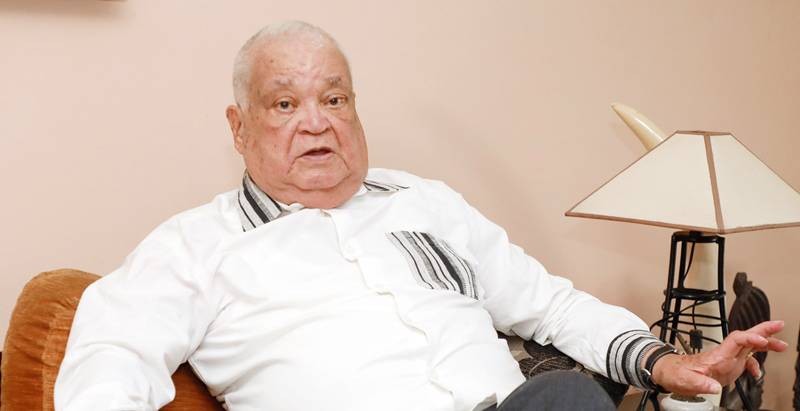
In a recently published biography titled « Auguste Miremont, from Houphouët to Ouattara, candidly… », the former Ivorian Minister of Communication and longtime director of Fraternité Matin shares intimate insights into the country’s modern political history. Now 85 years old, Auguste Miremont offers a rare perspective as a firsthand witness to decades of leadership transitions in Côte d’Ivoire.
Preserving history through personal testimony
Auguste Miremont initially resisted the idea of documenting his life story, preferring to maintain a low profile after decades in public service. However, persistent encouragement from colleagues, family, and even local authorities—who requested he record his memoirs during an official ceremony—convinced him of the value his experiences could offer future generations. The resulting book, crafted over 18 months of interviews totaling 30 hours, is presented not as a personal celebration but as a transmission of knowledge to Ivorians and beyond.
From stability to turbulence: Côte d’Ivoire’s political evolution
Miremont reflects on the contrasting eras of Ivorian leadership. Under President Houphouët-Boigny, he highlights a period of remarkable stability despite challenges like mutinies and social tensions. The late president’s political genius, characterized by patience, careful listening, and decisive action at critical moments, enabled the nation to navigate crises. In contrast, the subsequent transitions—particularly between Bédié and Ouattara—unfolded amid legal ambiguities and deep societal fractures, culminating in the 1999 coup d’état and prolonged instability.
The former minister describes the 1999 rupture as the most painful episode of his career. As president of a significant parliamentary group, he witnessed the abrupt collapse of the country’s institutions, a moment that shattered the image of Côte d’Ivoire as a stable, respected regional model. The post-coup violence, including the tragic deaths of figures like Robert Guéï and Emile Boga Doudou, left a lasting mark on Miremont, who was in France when news reached him.
>« I wept at the airport, » he recalls, « because I saw the collapse of everything we had built under Houphouët-Boigny—a nation admired for its stability and generosity, now reduced to international mockery. For someone of my generation, who contributed to this construction, it was unbearable. »
Leaders under the microscope: Houphouët-Boigny’s enduring influence
The biography explores Miremont’s relationships with Côte d’Ivoire’s post-independence leaders, revealing nuanced perspectives on their governance styles. While he denies having intimate access to Houphouët-Boigny, Miremont acknowledges the president’s respect for his candor and journalistic integrity. The late leader’s habit of addressing him as « De Miremont »—rather than a familial or noble title—reflects, in Miremont’s view, the president’s deep appreciation for the country’s diverse heritage.
Miremont’s rapport with President Bédié was equally cordial, rooted in shared history and mutual trust. Though their interactions became less frequent after Bédié’s presidency due to his demanding schedule, Miremont describes him as consistently responsive to requests. The former minister expresses profound sadness over Bédié’s passing, underscoring the personal and professional bonds they shared.
His dynamic with President Gbagbo evolved from initial political rivalry to friendship, particularly during negotiations for an economic consensus government—a collaboration Miremont believes could have stabilized the country had it not been derailed by subsequent conflicts. Gbagbo later supported Miremont financially, a gesture the former minister gratefully acknowledges.
Ouattara’s leadership: lessons from a master
When asked to compare Côte d’Ivoire’s leaders, Miremont credits President Alassane Ouattara with having absorbed the most from Houphouët-Boigny’s political playbook. « He embodies the finger-pointing patience, deep listening, and timely decision-making that defined Houphouët-Boigny’s approach, » Miremont observes. However, he notes a shift in Ouattara’s leadership style as he transitioned from Prime Minister to President: « He was once uncompromising with errors, dismissing collaborators swiftly for deviations. Today, his leadership reflects maturity and a more measured approach—a natural evolution with experience. »
The former minister’s admiration for Ouattara is unwavering. « I have always held him in high regard for his courage and tenacity. As Prime Minister, he made difficult yet necessary decisions that saved our economy. His courtesy is legendary; I recall his staff following up within the hour to address any concerns raised in a call. And his compassion—whether for personal or professional issues—sets him apart, » Miremont reflects.
Legacy and the road ahead
Now in his final term, Ouattara’s focus remains on uniting and developing Côte d’Ivoire. Miremont praises the tangible progress in infrastructure—such as the Champs-Élysées-inspired boulevard in Daloa and ongoing road projects connecting regions like Bin-Houyé to Toulépleu. « These aren’t just roads; they’re symbols of a nation moving forward, » he states.
Yet Miremont acknowledges the challenges: « Progress is undeniable, but so are the costs. Inflation and poverty persist, and economic norms can strain social fabric. The government’s response, through social nets and vocational programs like the « Second Chance Schools, » demonstrates a commitment to balance growth with equity. In my community alone, 25 apprenticeship grants have been awarded—this is the kind of inclusive policy that matters. »
The biography closes with Miremont’s hopeful outlook: « Ouattara is still steering the ship with vigor. Let’s give him the time to complete his mission. The Côte d’Ivoire of tomorrow is being built today—not through speculation, but through action. »