
How the JNIM’s evolving tactics are redefining Mali’s security landscape
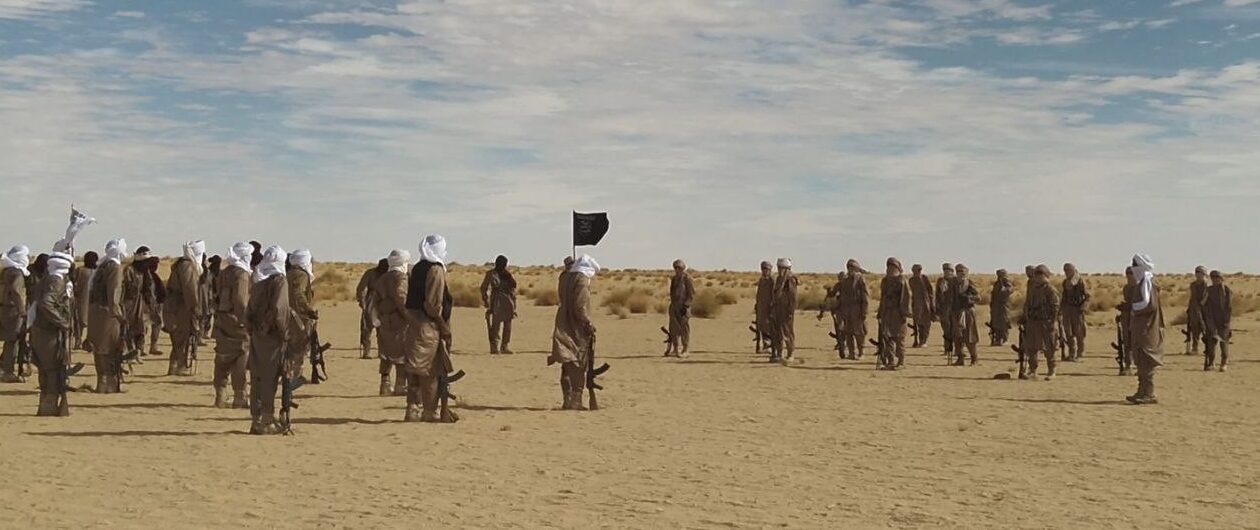
The Group for the Support of Islam and Muslims (JNIM) has quietly shifted its strategy in Mali, moving beyond high-profile attacks to a long-term campaign of territorial erosion. Recent offensives against military outposts, supply convoys, and critical roadways signal a calculated move to stretch Bamako’s already strained governance to its breaking point.
From spectacle to suffocation: the new face of insurgency
No longer content with seizing towns or staging dramatic assaults, the JNIM now focuses on dismantling Mali’s ability to function. By targeting transport arteries and administrative movements, it seeks to create zones where the state’s presence is felt only intermittently—primarily through military patrols. Roads that once connected markets, clinics, and government offices now require armed escorts, turning mobility itself into a privilege reserved for the few.
The group’s approach exploits a critical weakness: in a nation fractured by years of political upheaval, economic decline, and insecurity, fatigue becomes a weapon. Each disrupted supply line and abandoned checkpoint erodes public confidence further, while forcing the military junta to divert resources from rebuilding to mere survival.
The limits of a military-first response
Since seizing power, Mali’s ruling junta has staked its legitimacy on restoring security, often framing foreign military partnerships as acts of sovereignty. The withdrawal of French forces and the growing influence of Russian Wagner Group were sold as steps toward self-determination. Yet sovereignty cannot be measured solely by firepower.
The paradox is stark: increased military operations have not stabilized the country. Instead, they coexist with a creeping fragmentation in rural areas, where schools close, clinics shutter, and local justice systems collapse. As public services vanish, communities increasingly rely on parallel systems—some informal, others outright controlled by armed groups. The JNIM doesn’t need to hold territory to weaken the state; it only needs to prevent it from functioning.
A regional crisis with no regional solutions
The Malian crisis is no longer confined to Mali’s borders. The Sahel’s porous frontiers allow armed groups to move freely between Mali, Burkina Faso, and Niger—yet these countries’ shared alliance, the G5 Sahel, has proven ineffective in mutual defense. When the JNIM and the Azawad Liberation Front (FLA) launched coordinated strikes, Mali’s military found itself isolated, dependent almost entirely on Africa Corps mercenaries for support.
This asymmetry favors groups that can adapt quickly. The JNIM thrives in areas where it can blend into local networks, exploit economic vacuums, and manipulate long-standing grievances—poverty, land disputes, communal tensions. Its strategy isn’t about conquering land; it’s about making governance impossible. The result is a war of endurance, where the goal isn’t victory in battle, but the slow unraveling of state authority.
Beyond counterterrorism: the roots of resilience
Reducing this conflict to a simple counterterrorism fight obscures its deeper causes. In rural Mali, the absence of the state has fueled resentment for decades. When roads deteriorate, schools close, and officials arrive only in armored vehicles, trust erodes. The JNIM doesn’t create these fractures—but it knows how to widen them.
The real test for Mali’s future lies not in a single decisive battle, but in the ability to restore a stable, visible presence beyond military operations. A war of attrition doesn’t just destroy positions—it corrodes roads, economies, administrations, and the very idea of a governed territory.