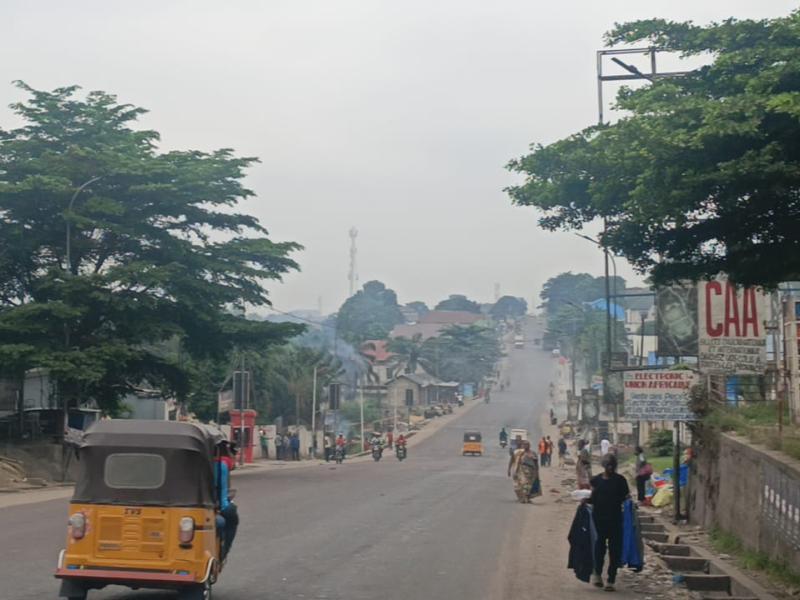
Kinshasa paralyzed by opposition strike against constitutional change
- Politics
Kinshasa, the bustling capital of the Democratic Republic of Congo, woke up unusually quiet this Wednesday, June 3, following the opposition’s call for a ghost town protest to reject the government’s plan to amend the Constitution, potentially allowing President Félix Tshisekedi to extend his mandate.
Kinshasa, the vibrant heart of the Democratic Republic of Congo, experienced an unusual calm this Wednesday morning, June 3, as opposition forces called for a ghost town protest to reject the government’s proposed Constitution amendment that could enable President Félix Tshisekedi to remain in power beyond current term limits.
Typically alive from dawn with bustling markets, schools, and traffic, the city stood eerily still early Wednesday. Taxis were scarce, students were absent from school gates, most shops remained shuttered, and the usual crowds causing monumental traffic jams were nowhere to be seen.
In the Mont-Amba district, a reporter observed an almost empty Intendance Road near the University of Kinshasa, a route usually teeming with students by 7:50 AM. Instead, police officers lined the streets, military vehicles patrolled nearby avenues, and public transport stops were deserted. Even gas stations hesitated to open; the Salongo station remained closed.
Several police jeeps were seen heading toward the University of Kinshasa, while military vehicles were spotted on Bypass Avenue. The usually busy Ngaba roundabout remained nearly empty until 8:00 AM.
In Limete, a commune known for its heavy traffic along Lumumba and Poids Lourds boulevards, few people ventured outside. Public transport was scarce—only one bus operated until 7:00 AM, connecting to downtown. Many vehicle owners chose to keep their cars off the streets to avoid unrest. Police patrols were reinforced, with officers stationed at key locations, particularly near the first street in Limete.
Samyr Lukombo
In the same category
Smooth traffic between Mariano and Victoire, noticeable police presence in Kalamu
Kinshasa/Tshangu: no activity, major military and police deployments, morning under close surveillance
Kinshasa paralyzed in key areas as opposition calls for ‘ghost town’ protest against Constitution change
General population census: DRC begins recruiting agents for census mapping; main operation scheduled for July 2027
Wednesday, June 3: Provincial Commissioner warns against public order disruptions and urges citizens to resume normal activities
