
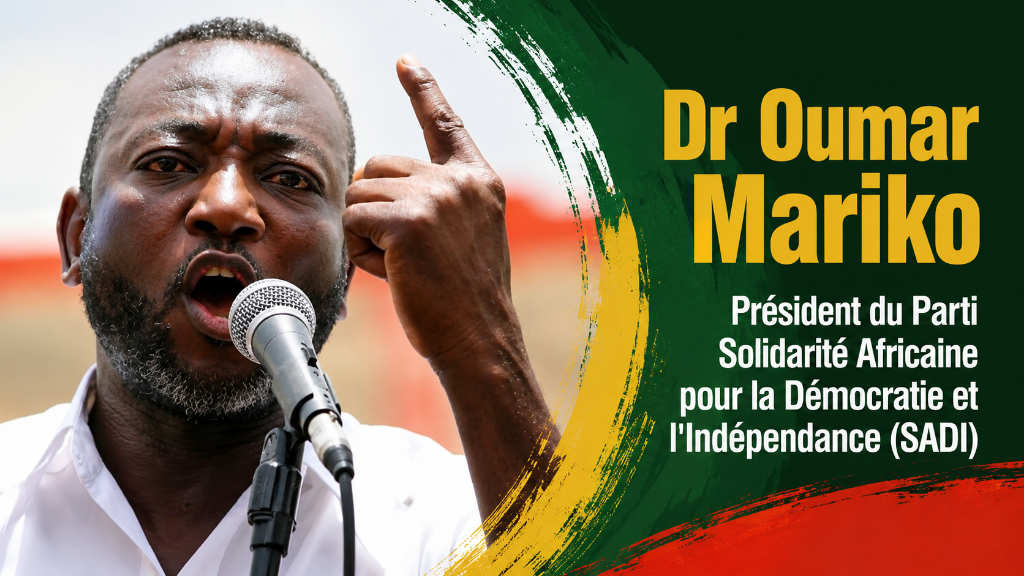
Security forces storm Bamako residence of outspoken critic Oumar Mariko
In a nighttime operation that sent shockwaves through the Malian capital, heavily armed and masked men raided the Bamako home of opposition leader Dr. Oumar Mariko on May 30. The three-hour search, which involved forced entry into locked rooms, concluded with the confiscation of numerous documents but no physical confrontation with residents. The incident unfolds against a backdrop of escalating political tensions, as military authorities tighten their grip on dissent amid mounting battlefield setbacks.
A calculated move to silence a vocal opponent
The coordinated raid targeted the residence of the founder of the Solidarité Africaine pour la Démocratie et l’Indépendance (SADI), a party known for its unyielding criticism of the transitional government. While family members reported no injuries, the sheer force deployed—including a battered front door—underscored the authorities’ determination to extract sensitive material. Analysts view this as a deliberate attempt to intimidate a figure who continues to challenge the regime from abroad, sending a chilling message to other dissenting voices across the country.
Military defeats fuel crackdown on internal critics
The timing of the raid is no coincidence. Just days prior, on May 25, an unprecedented offensive by the Forces Libérées de l’Azawad (FLA) and the Jamaat Nusrat al-Islam wal Muslimin (JNIM) dealt a crushing blow to government forces. The loss of key villages and the symbolic city of Kidal shattered the official narrative of territorial control, exposing the fragility of Bamako’s security strategy. With public confidence in the junta eroding, the leadership appears to be turning inward, scapegoating perceived traitors to deflect blame for battlefield failures.
Systematic repression targets activists, journalists, and politicians
The crackdown has expanded beyond traditional opposition figures. Rights groups and civil society organizations now document a surge in arbitrary detentions, often carried out by plainclothes agents under the cover of night. Leaders of political parties, human rights advocates, and independent journalists have been systematically targeted, with many held incommunicado. The raid on Mariko’s home exemplifies this broader campaign to eliminate dissent, whether at home or from exile.
Mali at a crossroads: repression or national unity?
The erosion of democratic norms in Bamako is accelerating. By prioritizing repression over dialogue, the transitional authorities are deepening the country’s divides at a time when unity is critical. As economic hardship and social unrest grow, the strategy of fear risks backfiring, pushing more citizens toward disillusionment. For Mali, the path forward demands addressing the root causes of insecurity—not silencing those who dare to speak the truth.