
The Republic of Mali is grappling with one of its most turbulent phases in recent memory. Since seizing power through a military coup in 2020 and reinforcing control with another takeover in 2021, the self-proclaimed General Assimi Goïta vowed to restore national security and sovereignty. Yet, years into his leadership, his regime faces unprecedented fragility.
Military setbacks expose systemic flaws
Confidence in brute force has proven to be a flawed strategy. On April 25, coordinated assaults by the Group for the Support of Islam and Muslims (JNIM)—an Al-Qaeda affiliate—and the Azawad Liberation Front (FLA) struck multiple military positions, including areas near Bamako. The Defense Minister, Sadio Camara, lost his life in the attacks, while strategic northern strongholds like Kidal slipped from government control.
These events have laid bare the vulnerabilities of a regime that once staked its legitimacy on territorial dominance and military prowess.
Sovereignty claims overshadow deepening insecurity
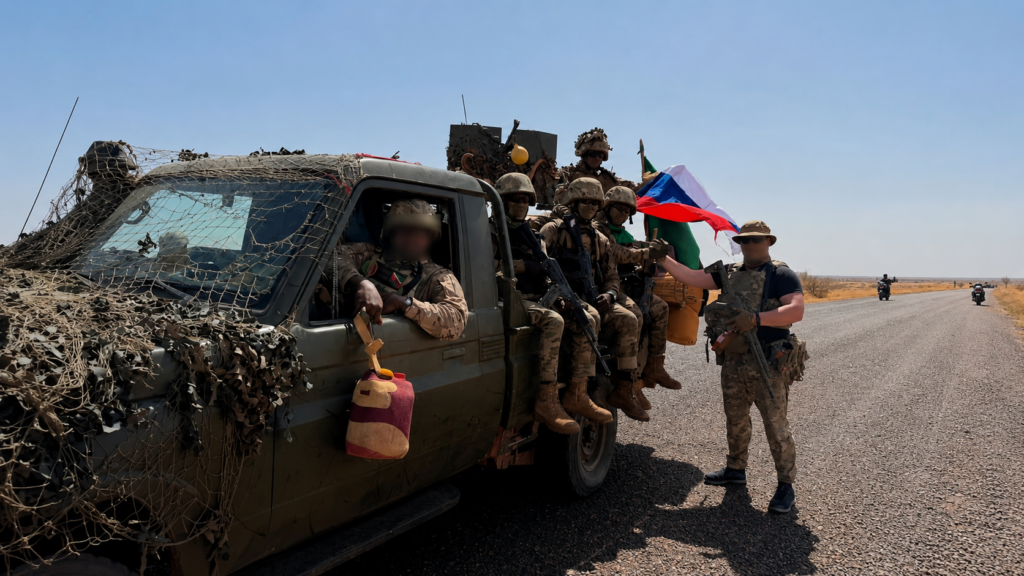
By severing ties with France, accelerating the withdrawal of the MINUSMA peacekeeping mission, and aligning with Russian mercenary group Africa Corps, the junta promised a Mali free from foreign interference. Instead, the situation has worsened. Jihadist factions and Tuareg rebels from the Azawad Liberation Front continue to expand their influence, while Bamako remains under persistent threat and civilians bear the heaviest consequences.
The rhetoric of sovereignty has merely served as a smokescreen for authoritarian consolidation. Political opposition has been suppressed, journalists silenced, and dissent equated with treason.
A nation trapped between external and internal pressures
Mali now finds itself in an inescapable bind. Its military and political capital has dwindled to critical levels. Externally, jihadist groups maintain their operational capacity, while internally, the regime’s exhaustion and internal rivalries deepen instability.
What was once hailed as a path to national renewal has devolved into a crisis of governance. General Goïta, who positioned himself as the architect of Mali’s revival, risks being remembered as the leader whose decisions accelerated the country’s fragmentation.