
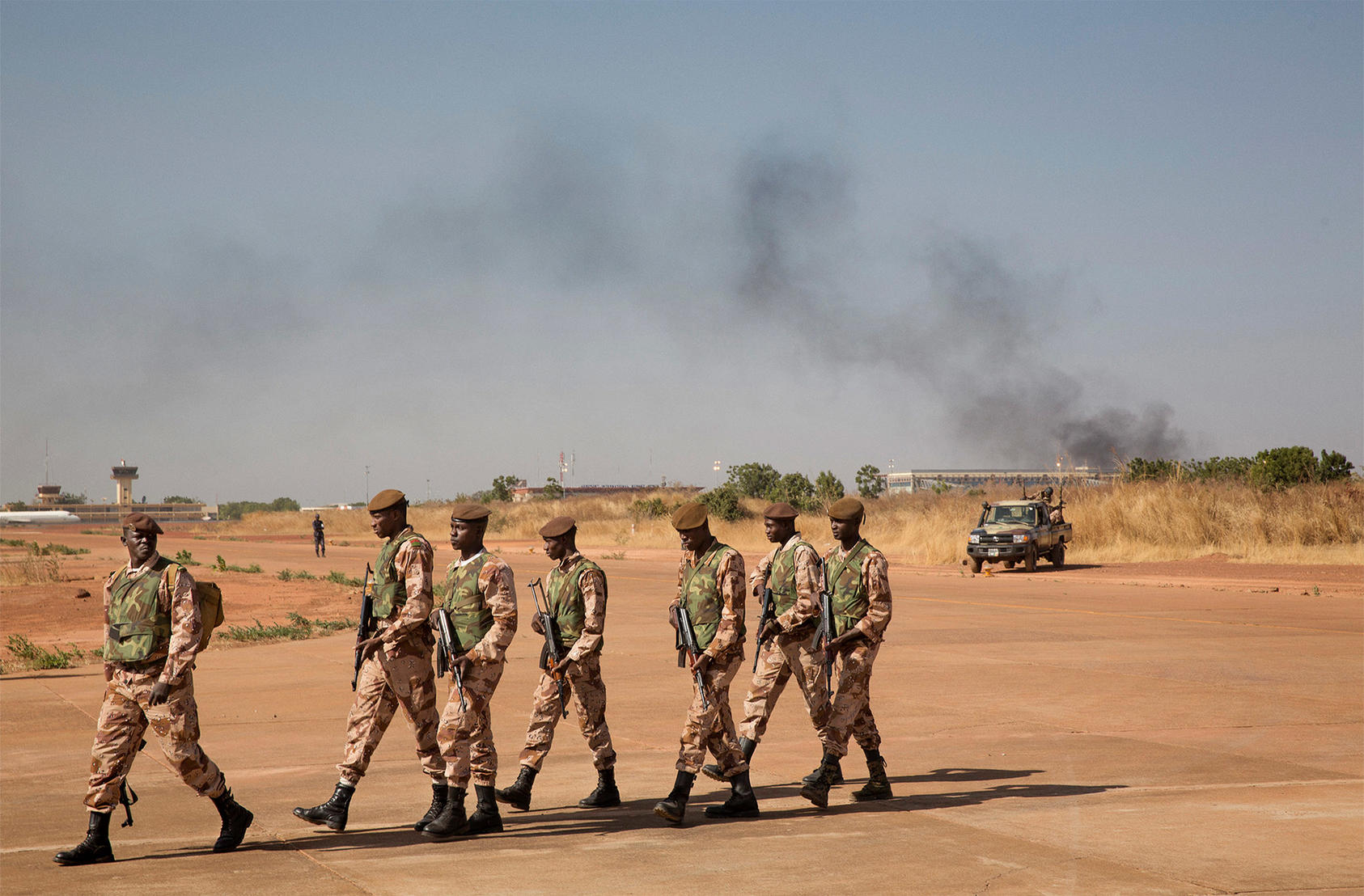
The security situation in Mali has reached a critical turning point following years of turmoil and consecutive coups. On April 25, a massive and synchronized offensive was launched by Touareg insurgents from the Front de libération de l’Azawad (FLA) alongside militants from the Groupe de soutien à l’islam et aux musulmans (JNIM), an Al-Qaïda affiliate. This joint operation targeted seven strategic urban centers, including the capital Bamako, its military hub Kati, as well as Gao, Kidal, Mopti, Sévaré, and Konna.

Strategic losses and insurgent tactics
The city of Kidal, a vital stronghold in the north, has reportedly fallen completely into the hands of the insurgents. The attackers utilized a sophisticated array of weaponry, including kamikaze drones, explosive-laden vehicles, and indirect fire to overwhelm military positions. According to reports, the JNIM and FLA targeted high-value locations such as the presidential residence, the Modibo Keita international airport, and the Ministry of Defense.
High-level casualties within the junta
The transitional government suffered a devastating blow with the death of the Minister of Defense, Sadio Camara. He was killed during a suicide attack on his home in Kati, which also claimed the lives of his family members and several civilians. Camara, widely seen as the second-in-command of the military regime, was instrumental in forging the partnership with Russia. Additionally, Modibo Koné, head of national security, was wounded, while the transition leader, Assimi Goïta, was evacuated to safety.
Russian forces and the retreat from Kidal
The Africa Corps, the Russian paramilitary group that succeeded Wagner, confirmed its withdrawal from Kidal alongside the Malian army. While Russian sources claim the retreat was a tactical decision to regroup, rebel forces suggest an agreement was reached to allow the Russians to depart safely. Despite the loss of Kidal, Malian Chief of Staff Oumar Diarra maintains that the national forces are still operating in the region, characterizing the move as a “redeployment” to enhance operational flexibility.
The Touareg-jihadist alliance and international links
This offensive highlights the strengthening ties between the FLA and JNIM, who formed a non-aggression pact in early 2024 to combat their common enemies: the Malian junta and Russian mercenaries. Analysts also point to potential external influence, specifically from Ukraine. Reports suggest that the Ukrainian military intelligence (GUR) may have provided tactical training and information to the Touareg rebels, a move intended to undermine Russian interests in Africa. Mali has since severed diplomatic ties with Kyiv over these allegations.