
The april 25 firestorm and its devastating impact on Mali
On Saturday, April 25, 2026, Mali experienced one of its most catastrophic security failures in recent history. Despite assurances from transitional authorities regarding gradual stabilization, coordinated terrorist offensives simultaneously struck critical government institutions and strategic locations, dismantling the perceived invulnerability of the Russian military partnership.
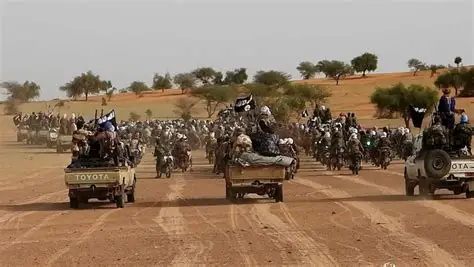
The assaults targeted vital infrastructure and military strongholds, including the outskirts of Bamako, the strategic garrison of Kati, Sévaré, and the northern bastions of Gao and Kidal. These attacks, attributed to a coalition of JNIM (Al-Qaeda’s regional affiliate) and armed rebel factions, underscored a harsh truth: national security remains precariously fragile, regardless of official assurances.
a security paradigm under scrutiny
The attacks were not isolated to remote or peripheral regions; they penetrated the very core of Mali’s military command in Kati and disrupted essential services such as Bamako’s international airport. The failure to anticipate or prevent such a large-scale offensive—particularly within one of the country’s most fortified zones—has cast doubt on the efficacy of the current security framework.
Analysts and observers now question the reliability of intelligence networks and mobile defense mechanisms that were supposed to provide robust protection. The inability to counter this coordinated assault raises serious concerns about the long-term viability of Mali’s security strategy.
the russian partnership: a double-edged sword
In the wake of these events, criticism of Mali’s strategic alignment with Russia has intensified. Prominent pan-African commentator Kémi Séba, despite his past associations with Moscow, had previously cautioned against overestimating Russian support. His warnings now appear prophetic:
- Geopolitical pragmatism: Séba emphasized that Russia’s engagement in Africa is driven by self-interest, particularly access to mineral resources, rather than a commitment to regional stability. His assertion that “Russia can never be Africa’s messiah” has gained renewed relevance.
- The myth of external salvation: The activist warned that outsourcing national security to foreign mercenaries—often marketed as an immediate solution—creates new dependencies that undermine long-term sovereignty. A sovereign nation cannot rely on transient alliances for its defense.
- The specter of renewed colonialism: Séba cautioned that if Russia were to replicate historical patterns of domination, it would necessitate decisive resistance from African nations to break free from such cycles.
the hard truths exposed by a black saturday
The April 25 attacks serve as a stark reminder that the Russian military presence is not the impenetrable shield that proponents had claimed. Instead, it has contributed to escalating regional tensions without delivering a sustainable solution to the terrorism crisis.
For the people of Mali, the lesson is clear: foreign alliances, whether from the West or the East, cannot substitute for a robust and self-reliant national defense. The events of this day have exposed the limitations of outsourcing security to external actors, reinforcing the need for Mali to reclaim full sovereignty over its defense and governance.
As the nation stands at this critical juncture, the fundamental question remains: can Mali achieve lasting peace and stability without perpetuating cycles of foreign dependence? The answer will shape the country’s future for generations to come.