
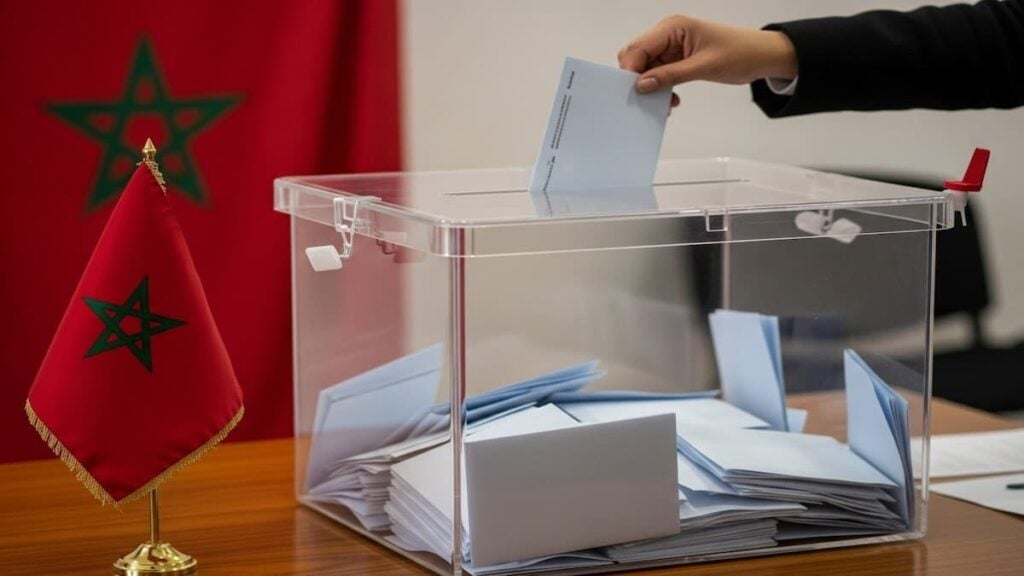
Morocco’s 2024 census and electoral map: growing divide in democracy
Rapid urban expansion revealed by 2024 census challenges the fairness of Morocco’s electoral representation system ahead of 2026 legislative elections

The 2024 General Population and Housing Census (RGPH) has exposed dramatic demographic shifts across Morocco. The most striking trends include the explosive growth of urban peripheries, the hollowing out of historic city centers, and the relative stagnation of rural areas—all occurring within a single decade.
These sweeping changes now pose a critical question as the nation prepares for the 2026 legislative elections: Is the current electoral map still capable of ensuring fair representation? When we examine the intersection of demographic data and electoral boundaries, glaring disparities in representation emerge between different regions of the Kingdom.
Extreme representation gaps: where one vote can weigh 70 times more than another
An analysis of the electoral map reveals how the number of eligible voters per parliamentary seat varies wildly across the country. Morocco’s electoral system operates on two fundamental principles:
- Demographic proportionality: The number of seats allocated to each region should correspond to its population size.
- Territorial equity: A minimum threshold of two seats is guaranteed to each province to prevent marginalization of less populated or remote areas.
This dual approach creates significant representation gaps. In several southern provinces and sparsely populated regions, the ratio of eligible voters per seat remains remarkably low:
- Aousserd: 2,992 eligible voters per seat
- Tarfaya: 5,368 eligible voters per seat
- Assa-Zag: 10,178 eligible voters per seat
- Es-Semara: 19,712 eligible voters per seat
- Boujdour: 20,185 eligible voters per seat
At the opposite end of the spectrum, Morocco’s major urban hubs and their sprawling suburbs face dramatically different circumstances:
- Tanger-Assilah: 213,980 eligible voters per seat
- Ménara (Marrakech): 176,256 eligible voters per seat
- Sidi Bernoussi (Casablanca): 174,501 eligible voters per seat
- Nouaceur (Casablanca periphery): 155,172 eligible voters per seat
- Inezgane-Aït Melloul: 151,978 eligible voters per seat
This means a single ballot cast in Aousserd or Tarfaya carries substantially more weight in electing a representative than the same vote cast in major cities like Tangier or Marrakech.
Urban-rural asymmetry and the rise of peripheral zones
The 2024 census data confirms Morocco’s accelerating urbanization trend. With a total population of 36.8 million, the urban population has grown to 23.1 million—an increase of nearly 2.7 million over the past decade. Meanwhile, the rural population totals 13.7 million, having grown by just 302,000 in the same period. Notably, 71.2% of Morocco’s population is concentrated in just five regions: Greater Casablanca-Settat, Rabat-Salé-Kénitra, Marrakech-Safi, Fès-Meknès, and Tanger-Tétouan-Al Hoceïma.
Geographer David Goeury highlights a particularly significant phenomenon: the mass migration from historic city centers to peripheral municipalities. Casablanca’s Anfa district alone has lost nearly a quarter of its population over the past decade, dropping from 453,000 to 332,000 residents. Yet it maintains its historical allocation of four seats—translating to a ratio of 68,707 eligible voters per seat.
In stark contrast, the peripheral province of Nouaceur has seen its population double during the same period, reaching 665,000 inhabitants. With only three seats allocated to it, the ratio stands at 155,172 eligible voters per seat.
If the current electoral boundaries remain unchanged for 2026, this imbalance will intensify within metropolitan areas. Similar disparities appear in Rabat, where the central districts of Rabat-Océan and Rabat-Chellah show ratios of 55,856 and 59,598 eligible voters per seat, respectively, while the rapidly growing periphery of Skhirat-Témara records 141,832 eligible voters per seat.
Political implications of potential electoral boundary adjustments
Redrawing electoral boundaries to align with 2024 census data presents complex political challenges for parties preparing for the 2026 elections.
If Morocco’s Interior Ministry opts to rebalance seats without increasing the total number of parliamentary seats, it would need to reduce allocations in declining urban centers like Anfa or Rabat’s historic districts while transferring seats to expanding peripheries such as Nouaceur or Skhirat-Témara.
Reducing seats in any constituency automatically intensifies electoral competition. Fewer seats to fill typically favor established large parties with substantial financial resources and well-organized mobilization structures—such as the current coalition parties including RNI, PAM, and Istiqlal.
Conversely, increasing the number of seats per constituency lowers the threshold for parliamentary entry through the ‘largest remainder’ mechanism, potentially benefiting smaller political formations.
Rural anchoring and participation distortions
Despite growing urbanization, many city residents maintain their electoral registration in their rural hometowns to preserve local influence networks. This explains the traditionally high turnout rates in rural areas—sometimes exceeding 90% of registered voters—contrasting sharply with urban centers where abstention rates can surpass 70-80% in middle-class districts.
This transitional context frames the ongoing electoral registration and list revision campaigns. Beyond registering new voters, these efforts aim to update records for citizens who have relocated from urban centers to rapidly expanding peripheries, correct registration errors, and clean the electoral roll to enhance its reliability for the September 23, 2026 legislative elections.
Countdown to 2026: the middle class and urban abstention equation
The 2024 census data presents strategic challenges for the upcoming elections, as David Goeury’s analysis suggests.
- Mobilizing the urban middle class: Hard-hit by inflation and feeling disconnected from recent targeted social aid reforms aimed at the poorest households, Morocco’s urban middle class largely abstained from voting in 2021. Their potential return to polling stations in 2026—whether as a protest vote or in support of alternative platforms—could significantly reshape current political balances.
- Political positioning: Major coalition parties will need to defend their economic and social records in a post-inflation context, while opposition groups like the PJD may seek to capitalize on urban discontent and reactivate their historical activist base disillusioned by past local governance.
Ultimately, reconciling demographic realities revealed by the 2024 census with the maintenance of territorial balances will require precise navigation from policymakers. Though no official announcement regarding electoral boundary revisions has been made, the publication of new population figures has set the stage for an inevitable technical and political debate ahead of the 2026 legislative elections.