
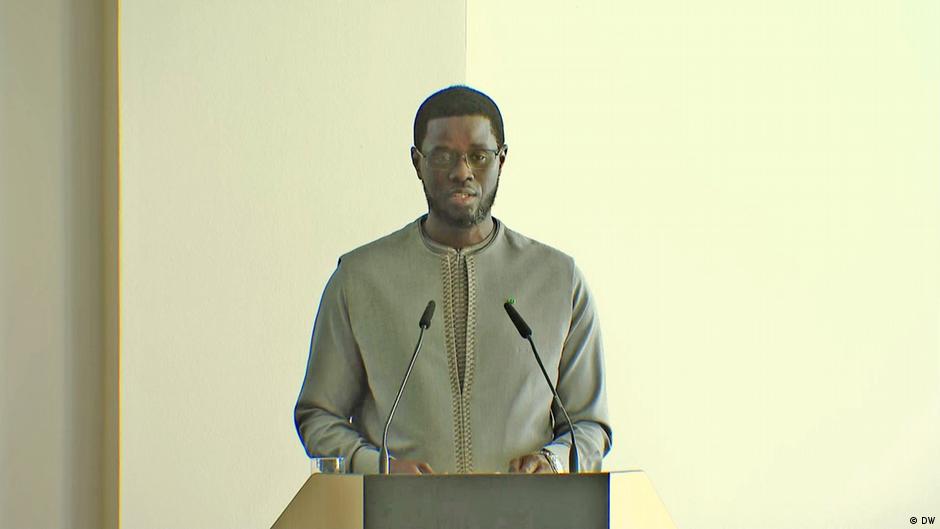
Senegal’s head of state arrived in Berlin this week with a clear mission: to position his nation as a prime destination for foreign investment. The visit follows his participation in a high-profile economic forum where Bassirou Diomaye Faye outlined the country’s growing appeal to international businesses, particularly from the private sector.
On Tuesday, Faye is scheduled to meet with German Chancellor Friedrich Merz, capping off a two-day program that also includes discussions with German President Frank-Walter Steinmeier. The diplomatic push comes as Dakar seeks to deepen economic ties and attract fresh capital amid rising global competition for investment.
Strategic reforms and investment climate improvements
During his address in Berlin, the Senegalese president emphasized the country’s ongoing reforms designed to create a more business-friendly environment. He pointed to the modernization of the national investment code and a soon-to-be-updated customs framework, both aimed at streamlining procedures and removing bureaucratic bottlenecks. “Our goal is to eliminate inefficiencies that have long discouraged investors,” Faye stated.
He also highlighted the administration’s commitment to fighting corruption and reinforcing the rule of law, positioning Senegal as a stable and predictable partner for international investors.
Natural resources and regional connectivity
Faye underlined Senegal’s strategic geographic position, describing the country as a gateway to markets totaling more than 300 million consumers within the Economic Community of West African States (ECOWAS), and nearly one billion across the African Continental Free Trade Area. “Our location offers unmatched access to both Atlantic trade routes and Africa’s rapidly expanding consumer base,” he noted.
The president also showcased Senegal’s growing natural resource wealth, citing recent oil and gas discoveries now entering production phases. He highlighted the country’s phosphate, iron, gold, zirconium, and uranium reserves, while emphasizing the availability of a young, skilled workforce as a key asset for foreign investors.
Germany eyes Senegal’s workforce and energy sector
For Germany, the visit carries particular significance. With a shrinking labor force and rising demand for skilled workers, German companies are increasingly looking toward Africa for talent. Senegal’s demographic dividend—marked by a dynamic, educated youth population—has caught the attention of Berlin’s policymakers and corporate leaders.
Energy security remains another priority for German firms, and Senegal’s expanding hydrocarbon sector offers promising opportunities for collaboration in renewable and fossil fuel energy projects.
IMF assessment points to economic resilience
The International Monetary Fund recently concluded a review of Senegal’s economic performance, acknowledging the country’s resilience in the face of a challenging global environment. While growth last year was buoyed by the hydrocarbons sector, authorities have reaffirmed their interest in securing a new financial support program from the Fund—a move that remains a subject of national debate.