
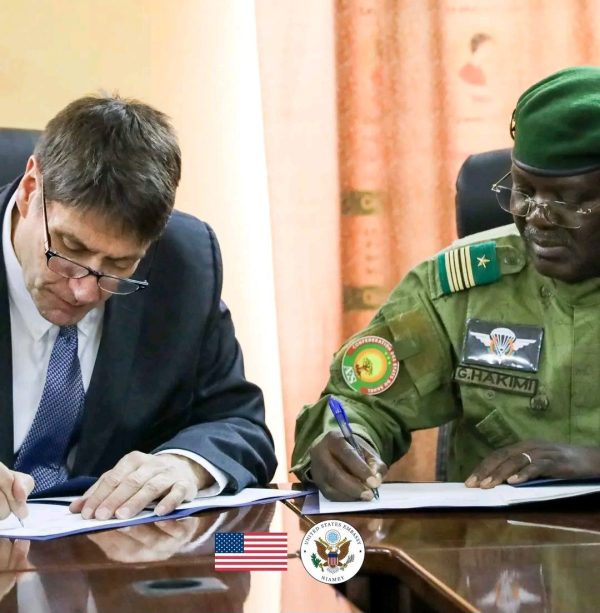
The Nigerien government’s recent agreement with the United States has sparked intense debate: is it a bold step toward strengthening healthcare systems or an opening for new discussions about digital sovereignty? Signed in Niamey on February 26, 2026, the health cooperation protocol between Niger and the US has raised eyebrows in diplomatic circles.
With a total funding package of $178 million (approximately 99.6 billion FCFA), the deal aligns with the America First global health strategy under former US President Donald Trump. The stated priorities include malaria control, infectious disease surveillance, polio prevention, and improvements in maternal and child health. Yet, beyond these widely supported goals, serious concerns have emerged.
Massive funding in a constrained budget landscape
The US commitment could reach $107 million over five years, complemented by Niger’s pledge to increase domestic health spending by over $71 million. This represents a significant shift, especially as Niger faces persistent budgetary strains and diverts substantial public funds toward security challenges.
Critical questions remain: Will this financial commitment be sustainable in the long term? Which sectors will need to be adjusted or reduced to meet this obligation?
Health cooperation or influence diplomacy?
While officially framed as a technical partnership to strengthen Niger’s health system, the agreement extends beyond medical collaboration. Niger has been included in a US-led health data exchange initiative, which raises concerns about the handling and ownership of citizens’ medical information.
In an era where data is a strategic asset, health records are no longer just medical files—they are geopolitical currency. Does this protocol open the door to the mass transfer of Nigerien health data to US databases? If so, what legal safeguards are in place? These are pressing questions that require clear answers.
Lessons from Africa: caution or skepticism?
Several African nations have recently pushed back against similar agreements. Zimbabwe declined the offer entirely. In Kenya, a comparable initiative was suspended by the courts last year. Zambia rejected a billion-dollar deal, citing concerns that data-sharing clauses violated national interests.
These precedents fuel doubts: Has Niger secured stronger guarantees, or has it made a pragmatic choice to prioritize urgent health needs over legal caution?
An opportunity to build health autonomy?
Yet, reducing the analysis to data concerns overlooks Niger’s structural health challenges: endemic malaria, epidemic vulnerabilities, underdeveloped rural infrastructure, and persistently high maternal mortality rates. If funds are used effectively, the potential impact is substantial—modernized surveillance systems, improved vaccination coverage, and stronger community health centers.
However, recent history shows that external funding, no matter how generous, does not guarantee lasting change without internal reforms and strong governance.
The balance between sovereignty and necessity
Ultimately, the Niamey agreement captures a familiar dilemma for African states: how to attract strategic investments while maintaining decision-making autonomy. In a time of shifting geopolitical alliances, Niger appears to be adopting a pragmatic stance. The real question is whether this approach will fortify its healthcare system or ignite broader debates on data governance and digital sovereignty.
At the end of the day, the true cost of this partnership may not be measured solely in dollars or FCFA—but in the principles it upholds and the sovereignty it preserves.