
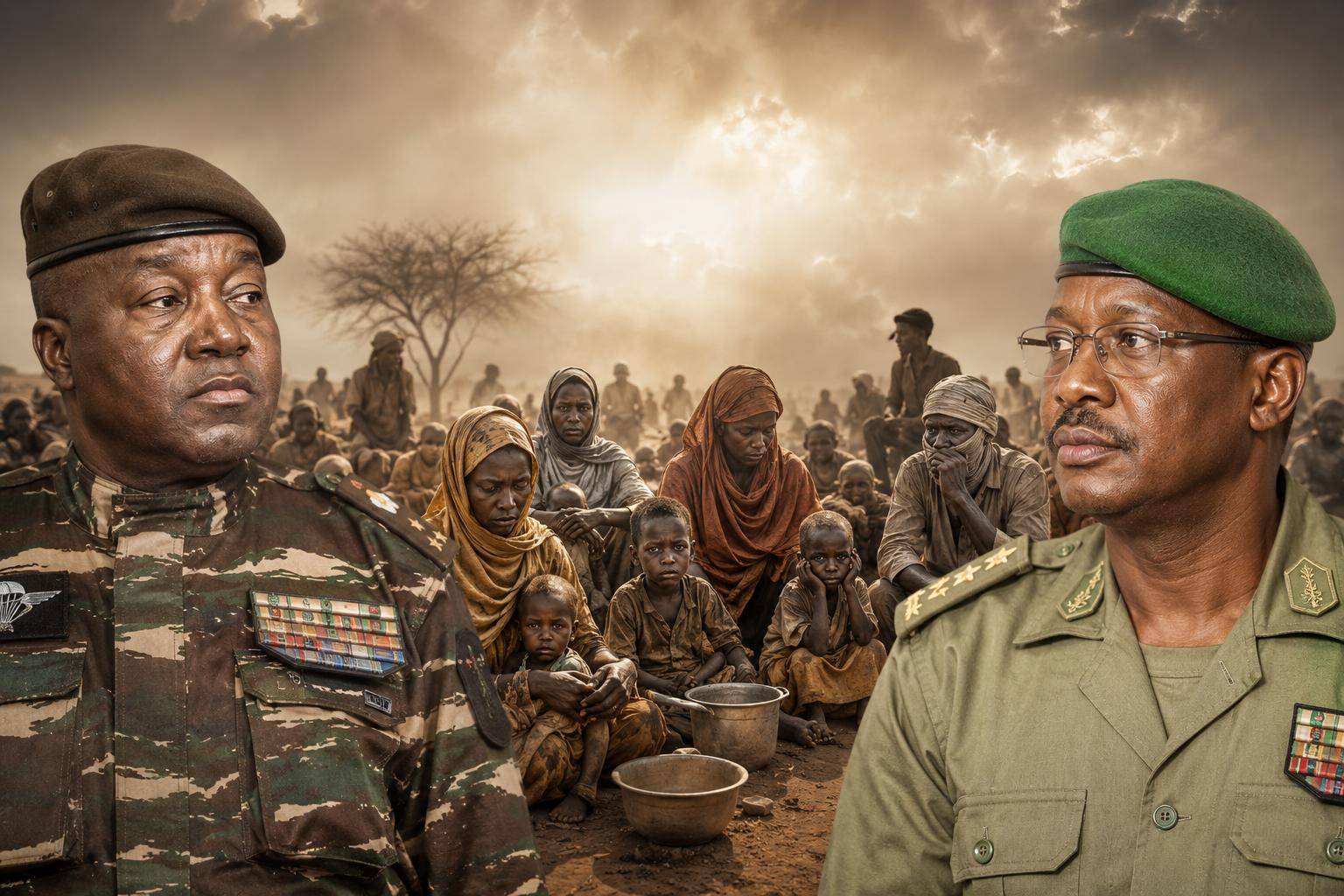
Military restructuring raises concerns over financial mismanagement and security failures
The Nigerien military’s recent decision to split the Garkoi operation into two new tactical headquarters—Akarasse along the Algerian border and Klafoki along the Chadian border—has sparked intense debate among governance and security analysts in the Sahel. While official statements frame the move as an effort to enhance efficiency and coordination, critics argue it is little more than a costly bureaucratic maneuver masking deeper strategic flaws.
Ethical and economic contradictions in military expansion
Analysts highlight a troubling paradox: as the country grapples with unprecedented social crises, the creation of two new command structures demands the recruitment of additional high-ranking officers, detachment leaders, and an entire parallel hierarchy. Critics condemn this expansion as a political tactic to distribute lucrative promotions and financial perks to military elites, all while public funds are diverted from urgent social needs.
The contrast is stark. While the state prioritizes funding two lavish headquarters in Bilma and Arlit, Niger’s education sector collapses under the weight of unpaid teachers. Thousands of contractual educators have gone months without salaries, plunging their families into destitution. The decision to invest in military infrastructure at the expense of essential public services is widely criticized as a reckless misuse of taxpayer money.
A fragmented defense reveals a besieged military
The military’s reorganization exposes a harsh reality: Niger’s armed forces are increasingly overwhelmed by armed terrorist groups. If security were stable, the existing command structure would suffice. Instead, the creation of two specialized fronts—one in the north near Algeria and another in the east near Chad—signals an alarming inability to contain the threat from a centralized position.
This fragmentation suggests the army is struggling to patch critical breaches across distant borders, confirming that terrorist groups, including affiliates of Al-Qaeda, the Islamic State, and Boko Haram, have intensified their operations. The move underscores a troubling reality: Niger’s military is stretched thin, forced to divide its already limited resources to defend two critical but distant fronts. Far from a proactive strategy, this restructuring appears as a desperate attempt to manage an escalating crisis—one that places an unsustainable burden on both the national budget and the civilian population.
The implications are clear: a costly gamble for taxpayers, a humanitarian toll on a starving population, and a stark admission of security vulnerability that raises serious questions about the country’s long-term stability.