
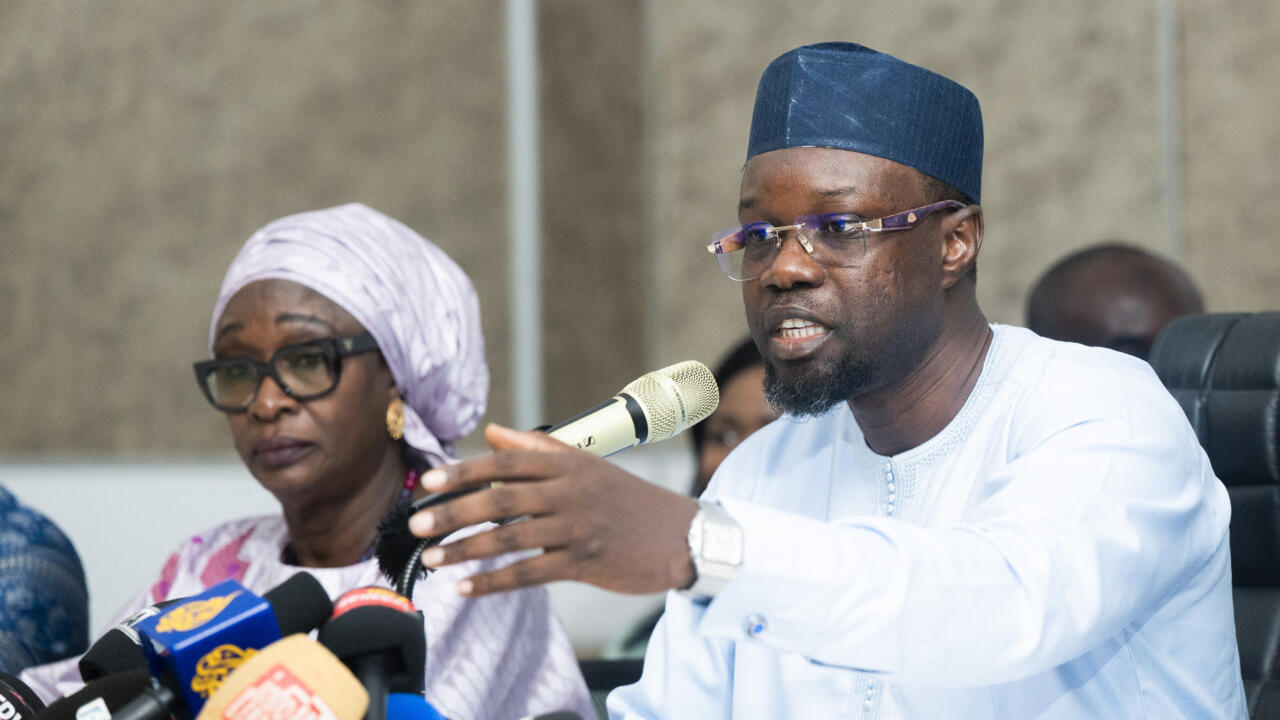
Just days after his removal from office, former Prime Minister Ousmane Sonko launched a sharp political offensive against President Bassirou Diomaye Faye. In a press conference held in Dakar on June 2, Sonko delivered a scathing assessment of the new government led by Al Amine Lô, questioning its legitimacy and political foundation.
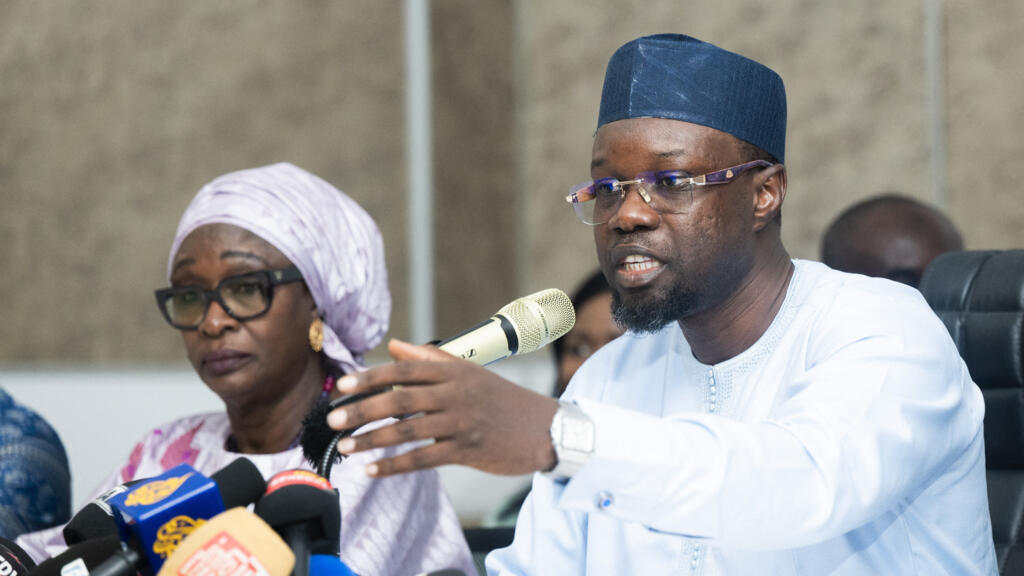
Sonko’s fiery response to his dismissal
Ousmane Sonko, leader of the Pastef party and former Prime Minister, made no attempt to soften his criticism. “The government lacks fundamental political legitimacy,” he declared, dismissing the coalition backing it as ineffective. “We have a government with no political base,” he asserted, emphasizing that Pastef, the party he leads, remains the strongest political force in Senegal, as proven by its electoral victory.
The dismissal of Sonko has created a precarious situation for President Bassirou Diomaye Faye. With Pastef holding 130 of the 165 parliamentary seats, the absence of the party from the government raises serious questions about governance. Sonko warned that his party could trigger a vote of no confidence at any time, leveraging its parliamentary majority. He also accused the president of ignoring his earlier warnings about the potential for political tension.
Political instability looms over Senegal
The new government, described by Sonko as a “technocratic” cabinet, faces an uphill battle. Analysts point out that without the support of Pastef, implementing key reforms and passing legislation could become nearly impossible. The situation is further complicated by the fact that this is not a traditional opposition-led cohabitation but an internal split within the ruling party.
Senegal now finds itself in uncharted political territory. The president’s decisions have left his administration isolated, while Sonko’s party maintains its stronghold in the legislature. Some observers describe the current dynamic as a “narrative orphan,” where legitimacy is derived solely from constitutional processes rather than popular support.
A battle for political dominance
Sonko’s stance reflects more than just policy disagreements—it is a struggle for control over the political narrative. With 130 seats, his party remains the dominant force in Parliament, and he positions himself as the guardian of the movement’s original vision. The government, meanwhile, must navigate a delicate balance, relying on technical expertise while lacking the broad political backing necessary for sustained governance.
Will this internal conflict lead to further instability, or can the president and Sonko find a way to reconcile their differences? The answer may unfold in the streets, the halls of Parliament, and the corridors of power in Dakar over the coming weeks and months.